
We have been lied to about the nature of excellence. For decades, the corporate and academic zeitgeist has championed the 'maximizer'—the individual who exhaustively analyzes every available variable to ensure the absolute best possible outcome. This pursuit of the optimum is presented as the gold standard of leadership. But in the trenches of global operations, this obsession often manifests as a sophisticated form of procrastination. When you spend six months searching for the perfect vendor in a volatile market, you aren't being diligent; you are losing ground to the competitor who chose a 'good enough' partner in six days and is already iterating on the product.
Enter the concept of satisficing. Coined by Nobel laureate Herbert Simon, the term blends 'satisfy' and 'suffice.' It suggests that human beings are not rational calculators capable of processing infinite data, but are instead bounded by cognitive limits. Rather than searching for the optimal solution, a satisficer establishes a set of minimum criteria and selects the first option that meets those thresholds (Source: Nobel Prize, 1978). This isn't about settling for mediocrity. It is about the strategic allocation of cognitive resources. Why spend 80% more effort to achieve a 2% increase in quality when that effort could be deployed elsewhere?
The Bounded Rationality Trap
The modern professional is drowning in a sea of 'more.' More data, more options, more comparative analytics. We believe that more information leads to better decisions, but the opposite is often true. This is the paradox of choice. When the cost of searching for the 'best' option exceeds the marginal benefit of that option over a 'good' one, the maximizer is effectively operating at a loss. This systemic inefficiency is rampant in everything from procurement in Southeast Asian manufacturing hubs to software architecture pivots in Berlin's tech scene.
"The human mind is not a supercomputer. We operate under bounded rationality, meaning our ability to make optimal decisions is limited by the information we have, the cognitive limitations of our minds, and the finite amount of time available to make a decision."— Herbert Simon, Nobel Laureate in Economic Sciences
Consider the psychological toll of maximization. Research indicates that while maximizers might technically achieve objectively 'better' outcomes—such as a slightly higher salary or a marginally faster server—they are consistently less satisfied with those outcomes than satisficers (Source: Psychological Science, 2006). They are haunted by the 'ghost of the unchosen option,' wondering if a better deal existed just one more search query away. In high-stakes leadership, this mental friction creates a culture of hesitation and second-guessing that can paralyze an entire organization.
This brings us to a critical realization: speed is a feature, not a bug. In a global economy characterized by rapid shifts, the ability to reach a 'functional' decision quickly is a competitive advantage. The satisficer recognizes that a decision made today is often more valuable than a perfect decision made next month. This is the core of systemic agility. By lowering the barrier to entry for a decision, the organization can move into the execution phase faster, where real-world feedback provides the data that no spreadsheet could ever predict.
The Practitioner's Friction: Theory vs. The Boardroom
Having spent fifteen years analyzing systemic shifts in organizational behavior, I have seen this tension play out in countless boardrooms. The debate usually centers on 'risk mitigation.' The maximizers argue that satisficing is reckless—that it ignores potential pitfalls. They want more reports, more consultants, and more validation. But on the ground, the practitioners—the project managers and engineers—are screaming for a direction. They know that the 'perfect' plan is a fantasy. The real friction isn't between 'right' and 'wrong,' but between the desire for certainty and the necessity of action.
I remember a specific instance involving a logistics overhaul for a firm operating across the GCC region. The executive team spent four months debating three different warehouse management systems, obsessed with finding the one with the absolute lowest latency. Meanwhile, the operational staff were using spreadsheets and manual logs, losing thousands of man-hours to inefficiency. The cost of the search was exponentially higher than the difference in performance between the top three software options. The moment the team shifted to a satisficing model—picking the first system that met 90% of their core requirements—the organization breathed again. They didn't find the 'perfect' system, but they found a working one, and the productivity gains were immediate.
| Dimension | The Maximizer (Optimization) | The Satisficer (Sufficiency) |
|---|---|---|
| Decision Speed | Slow (Exhaustive search) | Fast (Threshold-based) |
| Cognitive Load | High (Decision fatigue) | Low (Preserved energy) |
| Emotional State | Regret-prone / Anxious | Content / Decisive |
| Resource Cost | High (Time/Money spent searching) | Low (Rapid deployment) |
| Outcome Quality | Marginally Higher (Theoretically) | Sufficiently High (Practically) |
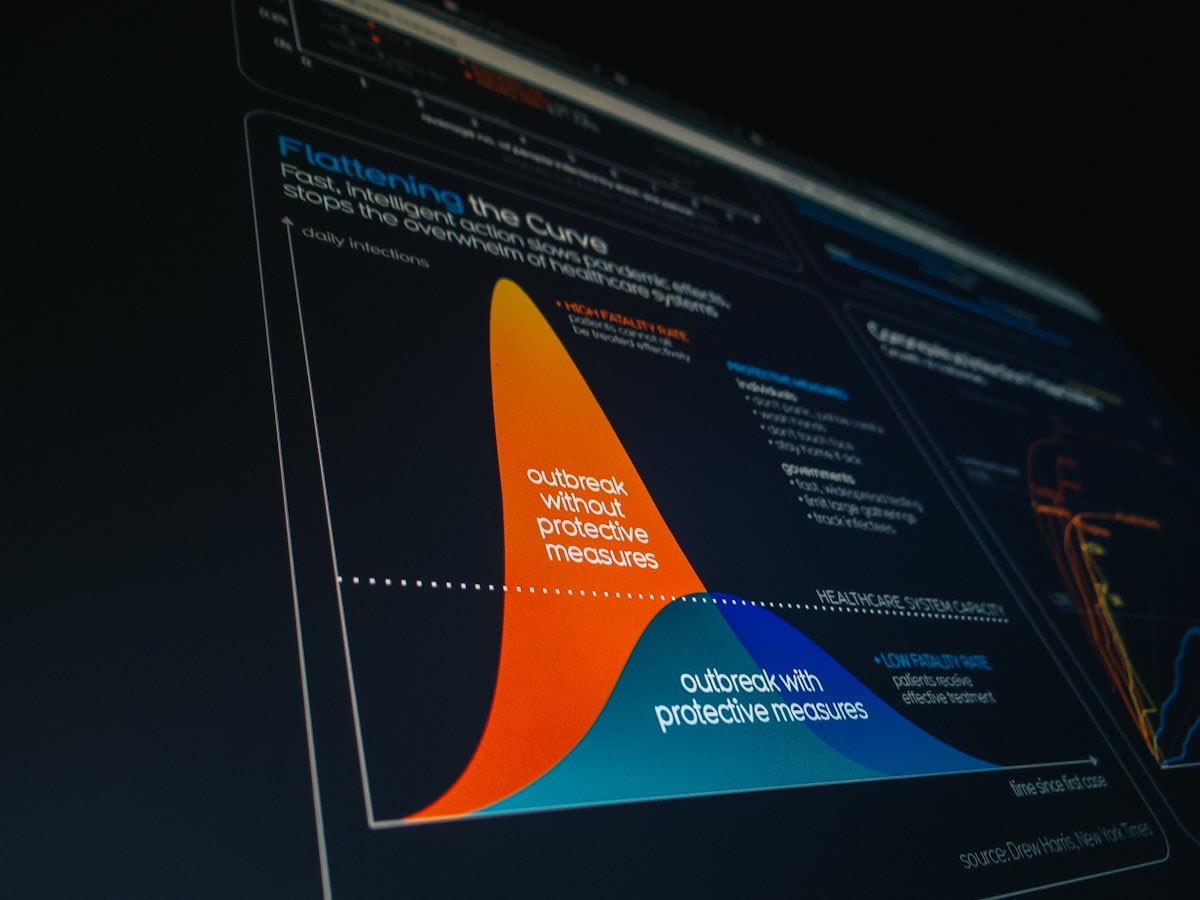
Why does this shift happen? Because we are moving from an era of scarcity to an era of abundance. In a world where options are limited, maximizing makes sense. If there are only three ships leaving for a new continent, you want the best one. But when there are ten thousand options, the cost of evaluating them all becomes a tax on your intelligence. The most effective decision-makers today are those who can define their 'enough' point with precision and have the discipline to stop searching once they hit it.
Implementing the Satisficing Framework
To transition from a maximizing culture to a satisficing one, a leader must first redefine what 'success' looks like. It is no longer about finding the best possible answer, but about finding the most efficient path to a viable result. This requires a rigorous definition of thresholds. If you cannot define what 'good enough' looks like before you start searching, you will inevitably fall back into the maximization trap. You need a checklist of non-negotiables and a list of 'nice-to-haves' that are explicitly discarded if they delay the decision.
- Define 'Minimum Viable Success': What are the 3-5 criteria that must be met for this to work?
- Set a 'Search Ceiling': Limit the number of options evaluated (e.g., 'We will look at exactly five vendors, then pick the best of those five').
- Time-Box the Analysis: Assign a hard deadline for the decision, regardless of whether 'all' data has been collected.
- Calculate the Cost of Delay: Quantify how much money or opportunity is lost for every day the decision is postponed.
Is this approach risky? Yes. By definition, you are ignoring the possibility that a slightly better option exists. But the risk of a slightly sub-optimal choice is almost always lower than the risk of total stagnation. In the context of global markets—where a regulatory shift in Brussels or a supply chain disruption in Shanghai can render a 'perfect' plan obsolete overnight—agility is the only real security. The satisficer is built for this volatility. They are used to making decisions based on sufficient data and iterating as they go.
Ultimately, the shift toward satisficing is a shift toward mental health and operational resilience. When we stop demanding the optimum, we reduce the chronic stress of decision fatigue. We free up the cognitive bandwidth required for the things that actually matter: creative problem solving, relationship building, and strategic foresight. The world's most effective decision-makers aren't the ones with the most data; they are the ones who know exactly when they have enough.
Fact-Check & Accuracy Note
This article's analysis of 'satisficing' is based on the foundational work of Herbert Simon and the concept of Bounded Rationality (Source: Nobel Prize, 1978). The psychological distinctions between maximizers and satisficers are derived from research published in Psychological Science (2006). While the theoretical framework is well-established, the application of these theories to modern corporate agility remains a subject of ongoing debate among management theorists and organizational psychologists.
Editorial Note
Editorial Note: This piece adopts a contrarian stance against the prevailing 'optimization' culture in business. The author argues that the pursuit of the absolute best is often a systemic failure of leadership rather than a virtue of diligence.