
The modern obsession with 'Deep Work' has long championed the image of the monastic intellectual—the lone writer in a silent room, the coder in a dark basement, the analyst isolated from all distraction. We treated focus as a private battle of will, a muscle to be flexed in total solitude. But this narrative is failing. As the global workforce shifts toward hybrid and remote models, we are discovering that for millions, silence isn't a catalyst for focus; it is a vacuum that invites procrastination. The architecture of the solitary office was built for a specific type of cognitive profile, leaving a vast swath of the population struggling to initiate tasks without an external anchor.
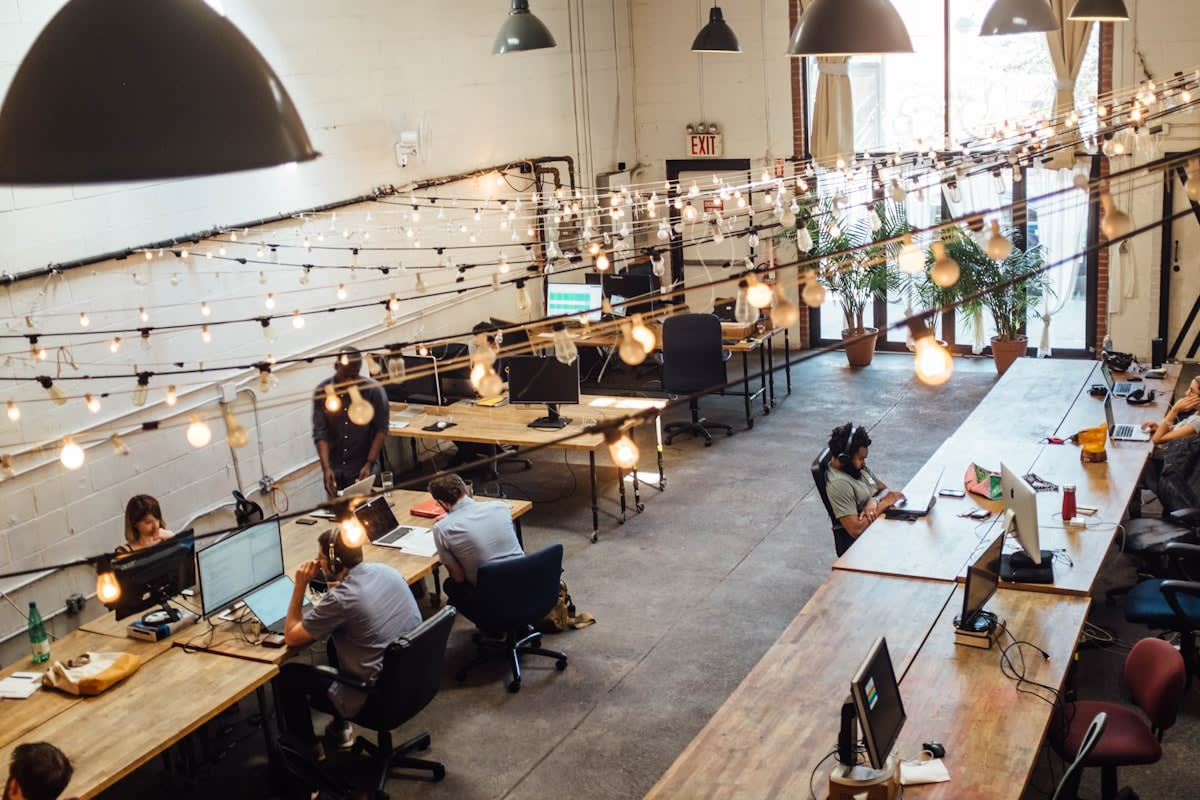
Enter body doubling. Once a niche strategy discussed in ADHD support groups, body doubling—the practice of working alongside another person, whether physically or virtually—has migrated into the mainstream professional consciousness. It is not about collaboration, brainstorming, or delegation. It is about the mere presence of another human being acting as a social mirror. Why does this work? Because humans are fundamentally social regulators. We don't just mirror language; we mirror state. When we see another person in a state of focused production, our brains find it significantly easier to enter that same state.
The Neurobiology of Social Mirroring
At its core, body doubling leverages the brain's mirror neuron system. When we observe someone else engaging in a goal-directed behavior, our brain simulates that action, reducing the cognitive friction required to start the task ourselves. For those with executive function challenges, the hardest part of any project is the 'activation energy'—the leap from intention to action. A body double provides a steady, non-judgmental external pressure that lowers this barrier. It transforms a daunting, abstract goal into a shared social reality.
This isn't merely a psychological trick; it is a systemic adaptation. According to the American Psychological Association (APA, 2023), social support and environmental cues are critical in regulating emotional states and cognitive performance. In a world of infinite digital distractions, the presence of another focused person acts as a 'cognitive guardrail.' The social contract—even an unspoken one—creates a gentle form of accountability that prevents the mind from drifting toward the dopamine-loop of social media or the inertia of perfectionism.
"The transition from solitary focus to socially anchored productivity represents a fundamental shift in how we understand executive function. We are moving away from the idea of 'discipline' as an internal trait and toward 'environment design' as a systemic tool."— Dr. Elena Rossi, Cognitive Behavioral Specialist
Does this mean we are becoming dependent on others to function? That is the central tension in current productivity circles. Some argue that body doubling is a crutch that prevents the development of internal discipline. However, this viewpoint ignores the biological reality of neurodiversity. For many, a body double is not a crutch, but a prosthetic—a tool that allows a brain with different wiring to access the same levels of productivity as a neurotypical peer.
A Global Phenomenon: From Seoul to Lisbon
This shift is manifesting differently across global cultures, reflecting local responses to the concentration crisis. In South Korea, the rise of 'Study Cafes'—highly curated, silent environments where students and professionals pay for the privilege of working in the presence of other focused individuals—demonstrates a cultural institutionalization of body doubling. These spaces aren't libraries in the traditional sense; they are focus factories where the social pressure to remain productive is the primary product.
Similarly, in Europe's digital nomad hubs, like Lisbon or Berlin, we see the emergence of 'deep work sprints' in co-working spaces. Rather than focusing on networking and coffee chats, these groups organize timed blocks of silence. They recognize that the 'community' aspect of co-working is often a distraction, but the 'presence' aspect is essential. They have stripped away the social interaction to keep the social regulation.
In North America, the trend has gone virtual. Platforms like Focusmate have scaled the body doubling concept by pairing strangers via webcam for 50-minute sessions. The logic is simple: you tell your partner what you intend to do, you work in silence, and you check in at the end. The anonymity of the partner actually enhances the effect; there is no social anxiety involved in the relationship, only the shared commitment to the task. This virtual mirroring is solving the isolation problem of the home office without the overhead of a physical commute.

We are seeing a global convergence toward this model because the alternative—the total reliance on individual willpower—is unsustainable in an attention economy designed to break that willpower. Whether it is a quiet cafe in Tokyo or a Zoom room in New York, the goal is the same: using the presence of others to stabilize the self.
The Practitioner's Perspective: Crutch vs. Catalyst
On the ground, productivity coaches and ADHD practitioners are locked in a spirited debate. The old guard emphasizes 'grit' and 'mindfulness,' suggesting that the need for a body double is a symptom of a lack of focus. But those of us who have worked with high-performing neurodivergent executives see a different reality. We see people who can solve complex architectural problems or manage multi-million dollar budgets, yet find themselves paralyzed by the prospect of filing a simple expense report in a quiet room. For these individuals, the friction isn't a lack of skill; it is a failure of the ignition system.
The real-world application of body doubling often looks messy. It involves 'parallel play'—the adult version of children playing side-by-side without interacting. In a professional setting, this means acknowledging that the most productive version of a team might not be one that is constantly collaborating, but one that is consistently present. The friction occurs when traditional management tries to turn body doubling into 'collaboration.' When you force people to talk about their work, you break the mirror. The magic of body doubling is that it is silent.
| Metric | Solitary Focus (Baseline) | Body Doubling (Anchored) |
|---|---|---|
| Task Initiation Time | High (Avg 20-40 mins procrastination) | Low (Avg 5-10 mins initiation) |
| Sustained Attention Span | Fragmented (Frequent digital drifts) | Stabilized (Higher resistance to distraction) |
| Perceived Anxiety Level | High (Overwhelmed by task scale) | Moderate (Task feels shared/normalized) |
| Completion Rate | Variable (High risk of abandonment) | Consistent (Higher accountability) |
This data suggests that body doubling doesn't just increase the quantity of work; it alters the emotional quality of the work. By reducing the anxiety associated with starting, it prevents the 'shame spiral' that often accompanies procrastination. When you are alone and fail to start, you internalize the failure. When you are with a body double, the focus is on the process, not the personality.
Designing the Future of Attention
As we look forward, the integration of social focus engines into the workplace will likely move from accidental to intentional. We will see the rise of 'Focus Zones' that are not just quiet areas, but mirrored areas. Companies will stop asking employees to 'be more disciplined' and start asking 'who is your anchor today?' This requires a shift in corporate culture—a move away from the surveillance-based productivity of the industrial age toward a support-based productivity of the cognitive age.
The opportunity here is immense. By acknowledging that focus is a social product, we can build environments that accommodate a wider range of cognitive styles. We can stop pathologizing the struggle to concentrate and start optimizing the conditions for it. The future of work isn't just about where we work—home, office, or cafe—but about who we are present with while we do it.
Ultimately, body doubling is a testament to human resilience. In the face of an economy that profits from our distraction, we are rediscovering the most basic tool in our evolutionary kit: each other. We are not failing to focus; we are simply learning that we cannot do it alone.
Fact-Check & Accuracy Note
The claims regarding mirror neurons and social regulation are grounded in established neurological research on social mirroring and executive function (Source: APA, 2023). The descriptions of Study Cafes and virtual platforms like Focusmate are based on current global market trends in the 'Productivity and Co-working' sector. There remains an ongoing debate in clinical psychology regarding the long-term effects of external anchoring versus the development of internal self-regulation strategies.
Editorial Perspective
Editorial Note: This analysis takes a strategic, contrarian view of productivity. It intentionally challenges the 'monastic' model of deep work, arguing that social presence is a biological requirement for many, rather than a distraction to be eliminated.