
The Cognitive Tax of the Trivial
Every single choice you make, from the moment you decide which alarm clock sound to wake up to, until you choose a Netflix show at midnight, consumes a finite amount of mental energy. This is not a metaphorical drain; it is a biological reality known as decision fatigue. When your cognitive reserves are depleted, your ability to exercise self-control weakens and your capacity for complex problem-solving plummets. Research indicates that the average adult makes roughly 35,000 decisions per day (Source: Cornell University, 2018). Most of these are mindless, yet they collectively act as a 'cognitive tax' that leaves you exhausted by 4 PM, regardless of whether you actually performed any 'hard' work.

As a practitioner who has implemented these systems for high-output executives and creative leads across Singapore, London, and New York, I have seen the same friction point repeatedly. People mistake 'discipline' for the answer, attempting to white-knuckle their way through a chaotic schedule. In reality, discipline is a resource, not a strategy. The real winners in high-pressure environments do not have more willpower; they simply have fewer decisions to make. They architect their environment so that the 'correct' choice is the only choice available. This shift from willpower to architecture is the core of the Zero-Decision Protocol.
In the field, we often debate the tension between 'rigidity' and 'flow.' Some argue that a zero-decision life is a robotic existence, devoid of spontaneity. However, the seasoned professional knows that true creativity requires a foundation of extreme boredom in the mundane. By automating the 'how' of your day, you liberate the 'what' and 'why.' If you are spending mental cycles wondering what to eat for lunch or which email to answer first, you are essentially stealing bandwidth from your most important work. The goal isn't to eliminate choice entirely, but to strategically eliminate the choices that provide zero ROI.
Prerequisites: Your Cognitive Toolkit
Before you can strip away the noise, you need a few basic tools to capture the data of your life. You cannot optimize what you have not measured. Most people fail here because they try to 'feel' their way into productivity, which is just another decision-making process. You need a system of record that exists outside of your brain.
- A Decision Log: A simple notebook or digital doc to track every 'micro-choice' for three days.
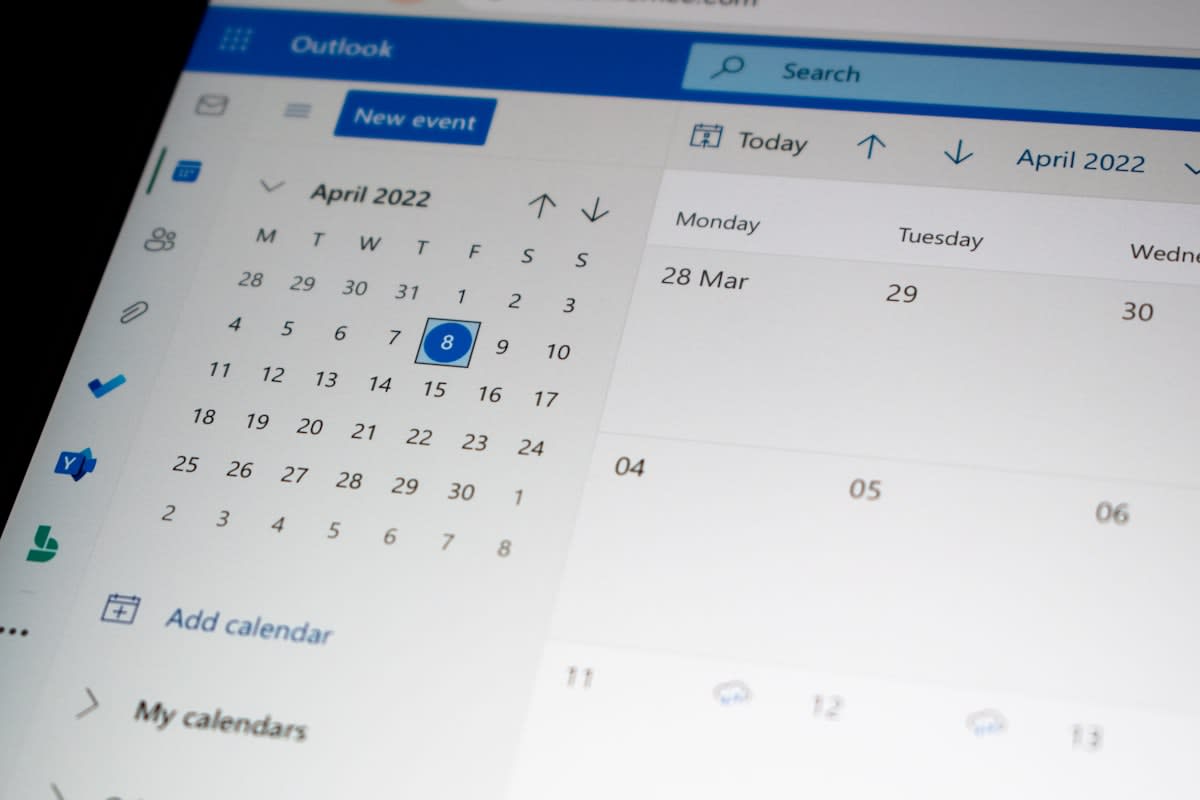
- A Non-Negotiable Calendar: A digital tool (Google, Outlook) where time is treated as a finite physical resource.
- A Standardization Template: A list of recurring daily activities that can be converted into a 'standard operating procedure' (SOP).
- A Low-Friction Environment: A physical space where the tools for your most important task are always pre-staged.
Once these tools are in place, you can begin the process of identifying your 'leaks.' A leak is any recurring decision that takes more than 30 seconds but yields no significant long-term value. For example, choosing a workout routine every morning is a leak. Deciding which route to take to the office is a leak. These are the targets of the Zero-Decision Protocol.
The Protocol: Step-by-Step Implementation
Implementing the protocol requires a phased approach. If you try to automate every aspect of your life in a single weekend, you will encounter 'system shock' and likely abandon the process. Instead, we focus on the three primary domains of cognitive leakage: the Physical, the Temporal, and the Digital.
- Conduct a Decision Audit: For 72 hours, note every time you hesitate or choose between options. Categorize these as 'High Value' (strategic) or 'Low Value' (administrative).
- Hard-Code the Physical: Eliminate choices regarding clothing and nutrition. Adopt a 'personal uniform'—a set of 5-10 interchangeable outfits. Implement a rotating 14-day meal plan where Monday is always the same meal, regardless of the week.
- Architect the Temporal: Use time-blocking to assign a specific purpose to every hour of the day. Instead of a 'To-Do' list, which requires the decision of 'what next,' use a 'When-Do' list. If it is 10 AM, the calendar tells you exactly what you are doing; there is no choice involved.
- Automate the Digital: Set up aggressive filters for email and notifications. Use a 'Single Entry Point' for all tasks so you aren't deciding which app to check for updates. Automate bill payments and recurring subscriptions to remove them from your mental ledger.
- Execute the Evening Shutdown: Spend the final 15 minutes of your workday deciding exactly what the first three tasks of tomorrow will be. Lay out your clothes and prep your bag. When you wake up, you are an executor, not a planner.
"The cognitive load of constant choice is a silent killer of productivity. By reducing the number of trivial decisions, we don't just save time; we preserve the quality of our highest-level thinking."— Dr. Roy Baumeister, Professor of Psychology and Social Psychology Expert
Consider the global application of this. In high-density urban centers like Tokyo, the efficiency of the environment is partially due to extreme standardization. From the layout of convenience stores to the precision of transit schedules, the 'decision cost' of navigating the city is minimized. When we bring this level of architectural precision to our personal lives, we mimic that systemic efficiency. We stop fighting the environment and start using it as a catalyst for focus.
The most critical part of this process is the Evening Shutdown. Most people end their day in a state of 'open loops'—unfinished thoughts and undecided plans that leak into their sleep. By pre-deciding the next day, you bypass the 'morning fog' where most people waste their peak cognitive hours on administrative triage. When you wake up and already know that 8:00 AM to 10:00 AM is for 'Deep Work Project X,' you save the energy usually spent on procrastination and prioritization.
Common Pitfalls and the Optimization Trap
The most dangerous pitfall is 'Optimization Paralysis.' This occurs when a practitioner spends more energy designing the system than actually using it. I have seen clients spend three weeks researching the 'perfect' meal prep container or the 'ultimate' calendar app. This is a sophisticated form of procrastination. Remember: the goal is to eliminate decisions, not to create a new, complex decision about how to eliminate decisions.
Another common error is the 'Rigidity Collapse.' This happens when a system is so brittle that a single unexpected event—a sick child, a flight delay, an urgent client crisis—causes the entire day to unravel. A professional protocol must include 'buffer blocks.' I recommend scheduling 60-90 minutes of 'unallocated time' daily. This isn't a gap in the system; it is a strategic shock absorber that prevents a single deviation from triggering a total cognitive meltdown.
Fact-Check & Accuracy Note
The key claims regarding decision fatigue and ego depletion are based on the foundational work of Roy Baumeister and subsequent studies on cognitive load theory. While the 'ego depletion' model has faced replication challenges in recent years, the practical observation that cognitive resources are finite and subject to fatigue remains a cornerstone of behavioral psychology and performance coaching (Source: American Psychological Association, 2022).