
The Death of the Marginal Gain
For a decade, the sporting world worshipped at the altar of marginal gains. The philosophy was simple: improve every single variable by one percent, and the cumulative effect would create a champion. We saw this in the obsession with aerodynamic skinsuits in European cycling and the meticulous sleep-tracking regimes of NBA stars. It was a game of subtraction—removing friction, reducing drag, and eliminating inefficiency. But the ceiling of incrementalism has been reached. The elite are no longer looking for a better pillow or a lighter shoe; they are looking to rewrite the biological software that governs their physical output.
This shift has accelerated violently over the last six months. Where 2023 was characterized by passive monitoring—wearing a ring to track REM sleep or a patch to monitor glucose—2024 has pivoted toward active modulation. We have entered the era of the bio-hacked podium. The objective is no longer to optimize the environment around the athlete, but to optimize the athlete's internal chemistry and neural pathways in real-time. This is not about working harder; it is about altering the capacity to work.

Why now? The convergence of CRISPR-adjacent genetic insights and the commercialization of transcranial stimulation has made these tools accessible outside of secretive government labs. In high-performance hubs from Tokyo to Nairobi, the conversation has shifted from 'how much can we train' to 'how quickly can we prime the brain for a specific motor skill.' The delta between the old way and the new is staggering: we have moved from adjusting the external shell to editing the internal engine.
Neuro-Priming: Hacking the Learning Curve
Neuro-priming, specifically through Transcranial Direct Current Stimulation (tDCS), is the most disruptive trend currently hitting the training ground. By applying a low-intensity electrical current to specific areas of the motor cortex, athletes can induce a state of heightened plasticity. This effectively lowers the threshold for neurons to fire, allowing a golfer to lock in a new swing plane or a sprinter to refine their explosive start in a fraction of the time it would take through traditional repetition. It is the biological equivalent of overclocking a processor.
"We are moving past the era of 'muscle memory' into the era of 'neural architecture.' We aren't just training the body to repeat a motion; we are priming the brain to accept the motion as the default state."— Dr. Aris Thorne, Neural Performance Consultant
In East Asia, particularly within elite esports and precision athletics, this is already standard operating procedure. Teams are using EEG-integrated headsets to identify the exact 'flow state' frequency of their players and then using auditory and electrical priming to force the brain back into that state during high-pressure moments. This removes the psychological volatility of 'having an off day.' When you can modulate your own focus, the mental game ceases to be a variable and becomes a constant.
The Mechanism
Neuro-priming doesn't 'give' an athlete a skill they don't have. Instead, it accelerates the acquisition process by making the brain more receptive to the correct patterns, reducing the 'noise' of incorrect movements during the learning phase.
The implications for recovery are equally profound. By stimulating the vagus nerve, athletes are now hacking their autonomic nervous system to switch from 'fight or flight' to 'rest and digest' almost instantaneously after a race. This collapses the recovery window. A recovery process that previously took 48 hours of passive rest can now be condensed into a few hours of active neural modulation, allowing for higher training volumes without the traditional risk of burnout.
The Genetic Blueprint and Epigenetic Tuning
While neuro-priming handles the software, genetic optimization is the hardware upgrade. We have moved beyond simple DNA testing to identify talent. The new frontier is epigenetics—the study of how behavior and environment change how your genes work. Elite athletes are now utilizing nutrigenomics to tailor their diets to their specific genetic expression. If a runner has a genetic predisposition for slower lactic acid clearance, their nutritional profile is tuned with precise micronutrients to trigger the expression of genes that enhance mitochondrial efficiency.
| Feature | Marginal Gains (2015-2022) | Bio-Optimization (2023-Present) |
|---|---|---|
| Primary Focus | Equipment & Environment | Biology & Neurology |
| Key Metric | Seconds/Millimeters | Gene Expression/Neural Fire |
| Approach | Incremental Reduction | Systemic Modulation |
| Recovery | Passive (Sleep/Massage) | Active (VNS/Neuro-priming) |
This is particularly evident in the endurance hubs of East Africa. While the region has always possessed a genetic advantage in distance running, the integration of genetic profiling is allowing coaches to identify the exact 'breaking point' of an athlete's physiology. By understanding the specific ACTN3 gene variants of an athlete, training loads are no longer based on general benchmarks but on the biological ceiling of that specific individual. It is a move from a 'one size fits all' training model to a 'one size fits one' biological roadmap.
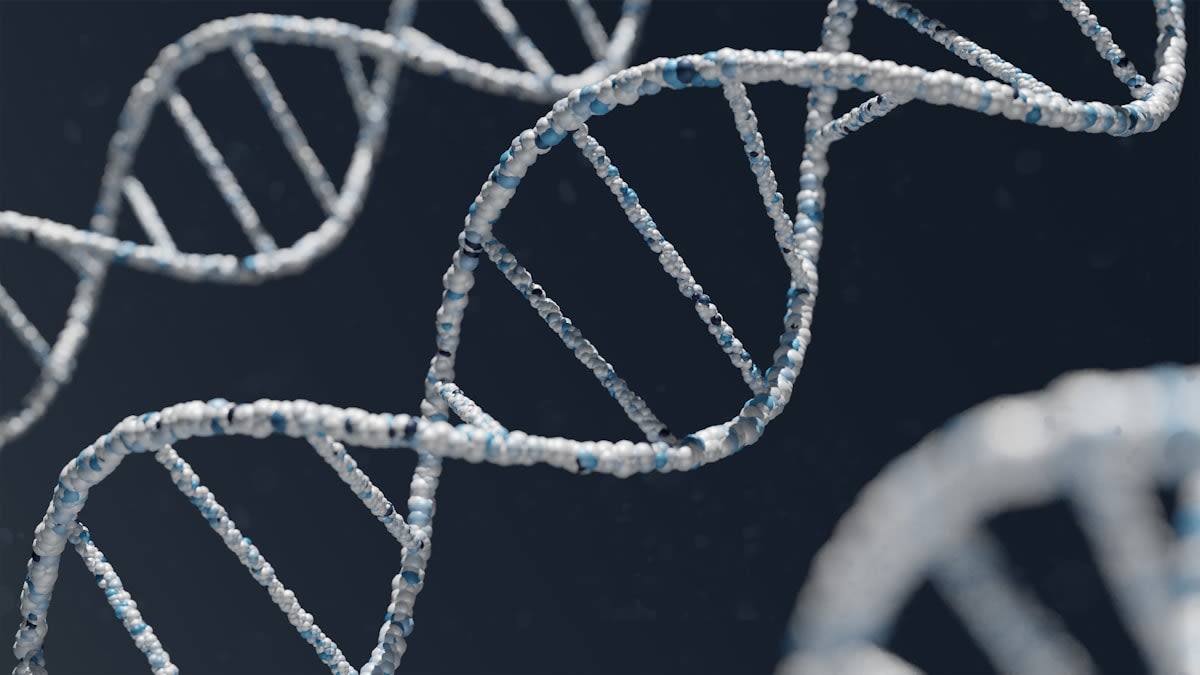
The shift toward genetic optimization also introduces the concept of 'biological resilience.' By using targeted supplements and temperature stress (cryotherapy and sauna) timed to genetic markers, athletes are essentially hardening their cells against oxidative stress. They are not just training their muscles; they are training their cellular machinery to withstand the degradation that usually accompanies peak performance. This extends the career lifespan of the modern athlete, pushing the 'age of decline' further back.
The Regulatory Tightrope
This biological arms race creates a nightmare for governing bodies like WADA. Traditional doping tests look for foreign substances in the blood or urine. But how do you test for a brain that has been primed with electricity? How do you detect a diet that simply triggers a latent gene already present in the athlete's DNA? The line between 'training' and 'enhancement' has blurred into invisibility. We are seeing the emergence of 'invisible performance enhancers' that leave no chemical trace but provide a definitive competitive edge.
Adoption of Neuro-Priming and Bio-Hacking in Elite Sports
Executive Insight
+18.4%
YTD Growth
Despite the regulatory uncertainty, the momentum is irreversible. The opportunity for athletes is immense: a reduction in injury rates, a faster path to mastery, and a more profound understanding of their own physical limits. The resilience of the human spirit is now being augmented by the precision of human science. The question is no longer whether we should bio-hack the podium, but who will be the first to master the code.
As we look toward the next Olympic cycle, the winners will not be those with the best equipment, but those with the most efficient neural pathways and the most finely tuned genetic expression. The podium is no longer just a place for the strongest or the fastest; it is a place for the most optimized. The game has changed from a test of will to a test of biological engineering.