
Does more data actually make you faster? The industry says yes. Coaches buy into the dream of the quantified human, believing that every heartbeat and cortisol spike can be mapped to a podium finish. They are wrong. We have entered an era of biometric dependency where the athlete no longer listens to their own lungs or the scream of their muscles. Instead, they check a wristband. This shift creates a dangerous asymmetry between physical capability and psychological permission. When an athlete refuses to push because a dashboard says they are under-recovered, the tether to raw instinct snaps.
The Illusion of the Perfect Read
The danger lies in the gap between a digital score and biological reality. Wearables often lull users into a false sense of security. One practitioner found that despite wearables suggesting a health age eight years younger than their actual age, critical markers like high cholesterol remained undetected for years (Source: CNET, 2026). In a sports context, this creates a leak in the athlete's self-awareness. They trust the app over the ache. If the data says the body is prime, the athlete ignores the subtle warnings of a looming injury. This is not optimization; it is a mechanical failure of the body's natural alarm system.
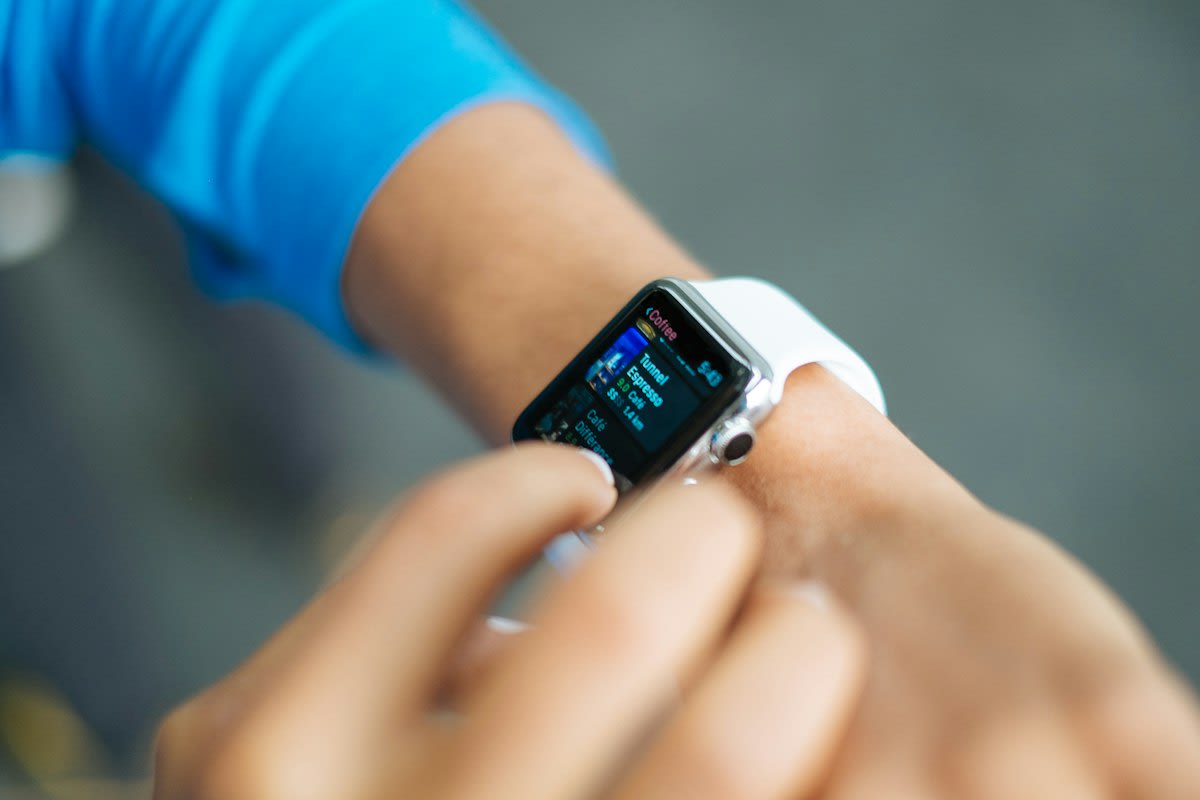
Consider the impact of blood panel integration. Companies like Whoop, Oura, and Apple now offer deep-dive blood metrics to supplement heart rate and sleep data (Source: CNET, 2026). While this seems like a win for precision, it often leads to a cognitive lag. Athletes begin to treat their bodies as a series of chemistry experiments rather than a cohesive unit of power. They optimize for a number on a screen, not for the terrain of the race. The result is a sanitized version of performance that lacks the aggressive edge required to win.
The Surveillance State of the Locker Room
The locker room has become a panopticon. This trend mirrors a broader corporate shift where 78% of U.S. employers now utilize digital tools to monitor employees, including biometric tracking and AI-driven productivity analysis (Source: ExpressVPN, 2025). In professional sports, this monitoring is total. Coaches can now measure not just the output, but how an athlete moves and even how they appear to feel. This constant observation siphons away the autonomy of the competitor. When every movement is tracked, the athlete stops experimenting. They play to satisfy the algorithm, not to break the record.
"Workplace stress and burnout experiences vary across institutions and over time, often embedded not only in occupational demands but also in identity-related workplace processes, including exclusion and limited recognition."— Research Findings on Identity-Based Stressors, Dergipark (2026)
This creates a specific type of identity-based stress. The athlete is no longer 'the fastest man in the room'; they are 'the athlete with the best HRV (Heart Rate Variability) score.' This shift in identity leads to invisible emotional labor. They spend more energy managing their data profile than they do managing their competition. The collision between the human ego and the digital profile creates a friction that slows down decision-making in high-pressure moments.
I have seen this in the trenches. There is a quiet, bitter war between the 'old guard' coaches and the data analysts. The old guard sees a runner who looks sharp, explosive, and hungry. The analyst sees a red flag on a sleep tracker and demands a rest day. The athlete is caught in the middle. They start to doubt their own vitality. I have watched world-class sprinters hesitate at the blocks because their wearable told them their recovery was only at 60%. That hesitation is a millisecond of lag that costs gold medals.
The Biological Cost of Over-Monitoring
Stress is not a binary state. It is a complex biological web. Research into biomarkers shows that stress physiology involves intricate coordination, such as cortisol flexibility (Source: Frontiers in Psychology, 2026). When we over-monitor these biomarkers, we risk inducing a state of hyper-awareness that actually increases stress. The act of measuring the stress becomes a stressor itself. This creates an inertia where the athlete is too afraid to enter the 'red zone'—the place where true growth and peak performance occur.
| Performance Metric | Intuitive Approach | Biometric-Led Approach | Resulting Lag |
|---|---|---|---|
| Recovery | Subjective feel/energy | Readiness score | Decision inertia |
| Intensity | Effort-based output | Heart rate zones | Performance siphon |
| Health | Symptom-based awareness | Blood panels/Apps | False security |
| Psychology | Competitive instinct | Data-driven identity | Identity stress |
Even the most advanced genetic markers can be misleading. Studies on DNA methylation have shown time-dependent decreases in specific genomic regions associated with PTSD symptoms (Source: Frontiers in Psychology, 2026). If athletes begin to use this level of biological data to predict their mental state, they risk a total detachment from their current emotional reality. They start treating their mind as a fixed biological default rather than a flexible tool. This removes the psychological grit required to push through the 'wall' during a marathon or a final set.

We must ask: at what point does the tool become the master? When the data dictates the training, the athlete is no longer an agent of their own success. They are a passenger in a vehicle driven by an algorithm. The asymmetry is clear. The algorithm optimizes for safety and longevity, but sports are not about safety. They are about the calculated risk of failure. By removing the risk of 'overtraining' via biometric warnings, we are also removing the possibility of breakthrough performance.
The path forward is not to discard the tech, but to treat it as a secondary witness. The primary witness must always be the athlete's own body. We need to reintegrate the feeling of effort and the instinct of the hunt. If we continue to outsource our intuition to a silicon chip, we will produce a generation of athletes who are biologically perfect on paper, but slow on the track.
Fact-Check & Accuracy Note
The data used in this analysis draws from employee monitoring trends (ExpressVPN, 2025), wearable accuracy critiques (CNET, 2026), and biological stress research (Frontiers in Psychology, 2026). There is an ongoing academic debate regarding whether biometric 'readiness' scores correlate linearly with actual physical output or if they primarily measure psychological readiness.