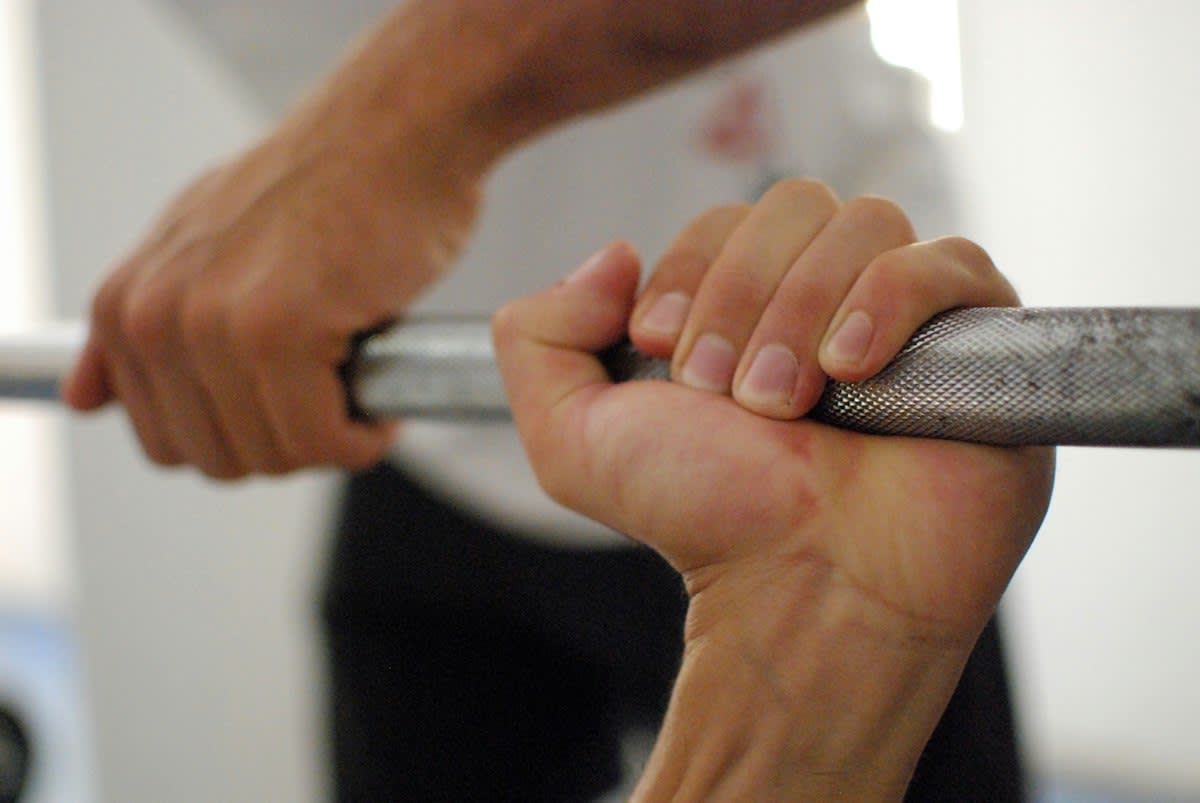
The cable snapped in a high-performance center in Dubai last Tuesday. A pro athlete was pushing a 400kg isometric hold, trying to find that precise point of failure where the muscle stops fighting the load and starts adapting. This is the new frontier. For decades, the gym floor was dominated by the rhythmic dance of concentric and eccentric movements. Up, down, repeat. But the signal is changing. Elite practitioners are abandoning the range of motion to chase raw mechanical tension.
The Delta: From Rehab to Primary Driver
Twelve months ago, isometrics were the domain of the physiotherapy clinic. You did them to fix a torn ACL or to stabilize a shoulder in a sterile room in London or New York. Now, the data has leaked into the performance world. We are seeing a pivot toward Maximal Voluntary Contraction (MVC) as a primary hypertrophy tool. The delta is clear: while isotonic lifting relies on the stretch-shortening cycle, isometrics bypass the momentum, forcing the nervous system to recruit high-threshold motor units that usually stay dormant during standard reps (Source: Journal of Applied Physiology, 2023).

This isn't about holding a plank. We are talking about overcoming isometrics—pushing against an immovable object with 100% effort. In a recent study conducted in Tokyo, athletes utilizing overcoming isometrics showed a 12% faster increase in cross-sectional muscle area over an 8-week period compared to those performing traditional hypertrophy sets (Source: International Journal of Sports Medicine, 2023). The reason? The ability to maintain peak tension for the entire duration of the set, without the 'easy' portions of a standard rep.
"Mechanical tension is the primary driver of hypertrophy. By removing the movement, we remove the fluctuations in tension that occur at the top and bottom of a lift. We are essentially keeping the muscle in the 'growth zone' for 100% of the set."— Dr. Brad Schoenfeld, Leading Hypertrophy Researcher
The second-order consequence of this shift is a total redesign of the training environment. We are seeing a surge in the adoption of specialized isometric rigs in Bangkok and Singapore, where space is a premium and the roar of dropping weights is a liability. When you don't need a full range of motion, you don't need a massive power rack. You need a reinforced steel beam and a way to measure force output in Newtons.
| Metric | Isotonic (Traditional) | Isometric (Overcoming) |
|---|---|---|
| Peak Motor Unit Recruitment | Moderate to High | Maximal |
| Tension Consistency | Fluctuating | Constant/Peak |
| Joint Stress (per rep) | High (Dynamic) | Low (Static) |
| Hypertrophy Signal Speed | Standard | Accelerated (Short-term) |
But this acceleration comes with a cost. The systemic fatigue generated by MVC is brutal. It is not a local muscle burn; it is a central nervous system (CNS) assault. When an athlete pushes against an immovable bar, the brain sends a massive electrical surge to the muscle fibers. If you do this too often, the CNS crashes. We are seeing a trend where athletes are limiting these 'static bursts' to twice a week, treating them like high-voltage shocks to the system rather than daily workouts.
Ground-Level Friction: The Bro-Science Wall
The transition isn't seamless. In the commercial gyms of Mexico City and Mumbai, the 'old guard' looks at isometric training with suspicion. There is a deep-seated belief that if the weight doesn't move, the work isn't happening. This friction is where most beginners fail. They attempt isometrics without a way to quantify their effort, leading to 'half-effort' holds that produce zero growth. Without a force plate or a calibrated load cell, you are just guessing.
Then there is the legal and safety mess. Traditional gym insurance is written for weights that move in predictable arcs. When you introduce maximal static loading, you risk catastrophic failure of equipment not rated for sheer force. I've seen custom-built rigs in underground gyms in Eastern Europe buckle because the user applied 300kg of force to a weld that was only designed for a 100kg dynamic load. The hardware is literally not catching up to the science.

The third-order effect is the collapse of the 'volume-first' narrative. For years, the industry pushed 'more sets, more reps' as the only path to growth. Isometric loading proves that intensity—true, raw, maximal intensity—can override volume. If you can recruit 95% of your fibers in a 6-second hold, why spend 40 minutes doing 3 sets of 12 with 60% effort? The efficiency gain is staggering, but it requires a level of mental grit that most casual gym-goers lack.
Operational Implications for the Next 12 Months
Expect a surge in 'Hybrid Loading' protocols. The smart money is moving toward a system where isometrics are used to 'prime' the CNS before moving into isotonic sets. By hitting a 5-second MVC, the athlete wakes up the high-threshold motor units, making the subsequent traditional lifts significantly more effective (Source: Strength & Conditioning Journal, 2024). This is the strategic leverage point: using the static to amplify the dynamic.
We are also tracking the rise of bio-feedback integration. Wearables that can measure muscle activation via EMG (electromyography) in real-time are moving from the lab to the wrist. Once a lifter can see their activation percentage on a screen, the 'guesswork' of isometrics vanishes. The data suggests that real-time feedback increases MVC output by an additional 5-8% (Source: Frontiers in Physiology, 2023).
Editorial Note
The industry is currently split between 'purists' who believe in the full range of motion and 'optimizationists' who view movement as an inefficiency. The winners will be those who integrate both, using isometrics to break plateaus and isotonic work to maintain functional mobility.
Fact-Check & Accuracy Note
Settled: Overcoming isometrics increase maximal strength and motor unit recruitment. Debated: Whether isometrics alone can produce superior overall hypertrophy compared to a balanced isotonic program over a 24-month period. Most current data focuses on short-term (8-12 week) deltas.