
The era of the mindless grind is dying. For decades, the prevailing wisdom in elite athletics was simple: more is better. If an athlete wanted more power, more speed, or more endurance, they simply added more volume. But this month, a systemic shift is accelerating across global sports. Coaches from Major League Baseball to European football are abandoning the raw volume approach in favor of the Acute:Chronic Workload Ratio (ACWR). Why the sudden pivot? Because the industry has realized that absolute load is a vanity metric. What actually matters is the relationship between what an athlete did this week and what they have been doing for the last month.
This isn't just a minor tweak in training logs; it is a fundamental reimagining of athletic preparation. The ACWR model, popularized by Dr. Tim Gabbett's 2016 research in the British Journal of Sports Medicine, posits that injury risk isn't caused by high loads alone, but by rapid spikes in load relative to chronic fitness. When a player jumps from a low-intensity month into a high-intensity week without a bridge, the biological cost is often a soft tissue tear or a stress fracture. We are seeing this play out in real-time on MLB diamonds, where stress fractures are sidelining stars who have pushed too hard, too fast.

The Mathematics of the Sweet Spot
To understand the ACWR revolution, one must understand the ratio. The calculation is straightforward: take the training load of the most recent seven days (the acute load) and divide it by the rolling average of the previous 28 days (the chronic load). This creates a snapshot of current stress versus established capacity. The goal is to land in the evidence-based sweet spot of 0.8 to 1.3. In this zone, the load is high enough to drive physiological adaptation—meaning the athlete actually gets better—but low enough that the body's tissues can repair themselves.
| ACWR Range | Classification | Risk/Outcome |
|---|---|---|
| < 0.8 | Undertraining | Increased injury risk due to low chronic fitness |
| 0.8 - 1.3 | Sweet Spot | Optimal adaptation and minimized injury risk |
| > 1.5 | Danger Zone | 2-4x increase in soft tissue injury risk |
What happens when an athlete drifts outside this window? The consequences are stark. When the ACWR climbs above 1.5, the risk of soft tissue injuries spikes by two to four times. It is a biological breaking point. Conversely, dropping below 0.8 is not a safe harbor. Paradoxically, undertraining increases injury risk because the athlete's chronic fitness drops, leaving them unprepared for the inevitable return to competition. The revolution this month is the move toward precision; it is no longer about training hard, but training within a specific mathematical corridor.
Context Matters
The ACWR isn't a magic number but a descriptive framework. While 0.8-1.3 is the general target, the actual threshold can vary based on the sport, the individual's history, and the specific calculation method used.
This shift is visible in diverse global contexts. In Brazil, researchers analyzing runners in 105-kilometer ultramarathons are looking beyond simple soreness to understand how recovery-adaptation coupling works. Meanwhile, in elite women's football, teams are utilizing interpretable decision support to manage next-morning soreness, integrating acute and chronic load indicators to decide who starts the next match. The goal across all these disciplines is the same: maximize the output while avoiding the cliff.
The Academic Pushback: Is the Ratio Flawed?
No trend exists without friction. As the ACWR model gains dominance, a wave of methodological criticism has emerged. Some researchers argue that the conventional ratio is mathematically coupled—meaning the acute load is also a part of the chronic load. This overlap can create spurious correlations, potentially inflating the perceived relationship between the ratio and injury. Critics suggest that the 0.8-1.3 range, while useful, was derived from specific datasets and should not be blindly applied as a universal law for every athlete in every sport.
"Calculation method, training history and context can materially change the result. ACWR is best treated as one descriptive workload measure rather than a strict cutoff."— Sonar Health Analysis
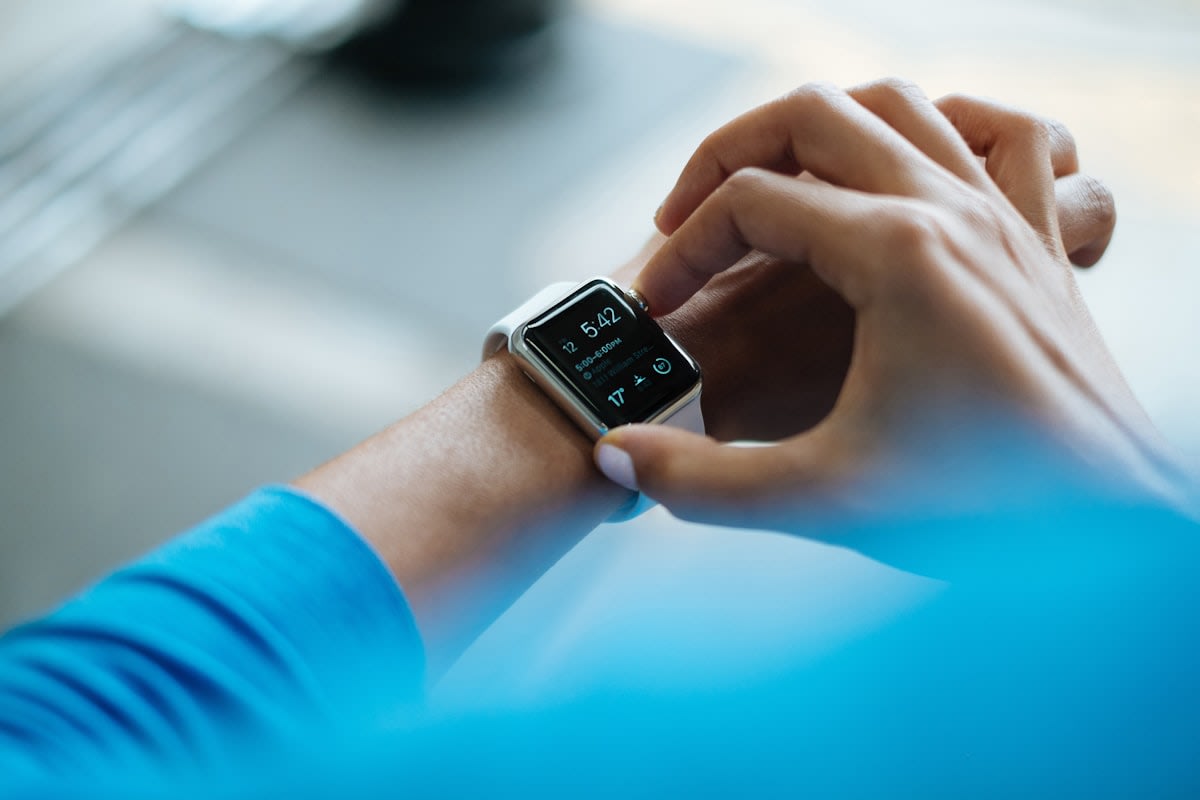
Does this invalidate the model? Hardly. Instead, it is forcing the industry to evolve. The current trend is moving away from relying on a single number and toward a multi-layered monitoring ecosystem. Elite practitioners are now pairing ACWR with Heart Rate Variability (HRV) and wellness questionnaires. By reviewing weekly HRV averages rather than isolated readings, coaches can see if an athlete's autonomic nervous system is actually recovering, regardless of what the workload ratio says.
Beyond the Ratio: The New Readiness Stack
The most sophisticated teams are now implementing what can be called the Readiness Stack. This approach combines the ACWR's historical perspective with real-time functional testing. Instead of asking an athlete if they feel tired—a subjective measure influenced by expectation—teams are using countermovement jumps (CMJ), sprint output, and strength metrics. These functional tests provide an objective look at applied readiness, showing whether the muscles are actually capable of producing power or if they are still in a state of repair.
- Acute:Chronic Workload Ratio (ACWR) for historical load trends.
- Heart Rate Variability (HRV) for cardiac autonomic activity and systemic stress.
- Functional Tests (CMJ, Sprint Output) for immediate neuromuscular readiness.
- Wellness Questionnaires for subjective mood, sleep, and appetite tracking.
This integrated approach solves the problem of the mathematical coupling critique. If the ACWR suggests an athlete is in the sweet spot, but their CMJ output has dropped by 10% and their HRV is trending downward, the coach knows the ratio is lying. The athlete is overreached. This synthesis of data allows for a level of precision that was unthinkable twelve months ago, when many teams were still simply tracking total kilometers run or total tons lifted.
We are witnessing the professionalization of recovery. Recovery is no longer the absence of training; it is an active, measured component of the training cycle. By treating the 0.8-1.3 ACWR range as a guide rather than a rule, and layering it with biological and functional data, elite sports are finally solving the puzzle of how to push humans to their absolute limit without breaking them.