We have been lied to about the 10,000-hour rule. For twenty years, parents and coaches treated youth sports like a conveyor belt, pushing children into single-sport specialization by age eight to secure a professional future. They thought they were building a head start. In reality, they were building a ceiling. Why are we seeing a surge in burnout and catastrophic overuse injuries in children who have never known another game? The assumption that early mastery equals long-term dominance is not just wrong; it is a liability.
The Physical Toll of the Narrow Path
The body is not a machine. When a twelve-year-old pitcher throws 200 miles of fastballs a year, the growth plate in the elbow does not care about the scholarship. It breaks. We are seeing a hard turn in medical data. Overuse injuries in youth athletes have spiked as the 'club sport' model replaced seasonal play (Source: American Academy of Pediatrics, 2023). The repetitive stress of a single motion kills the joint. It stunts the natural development of the kinetic chain.
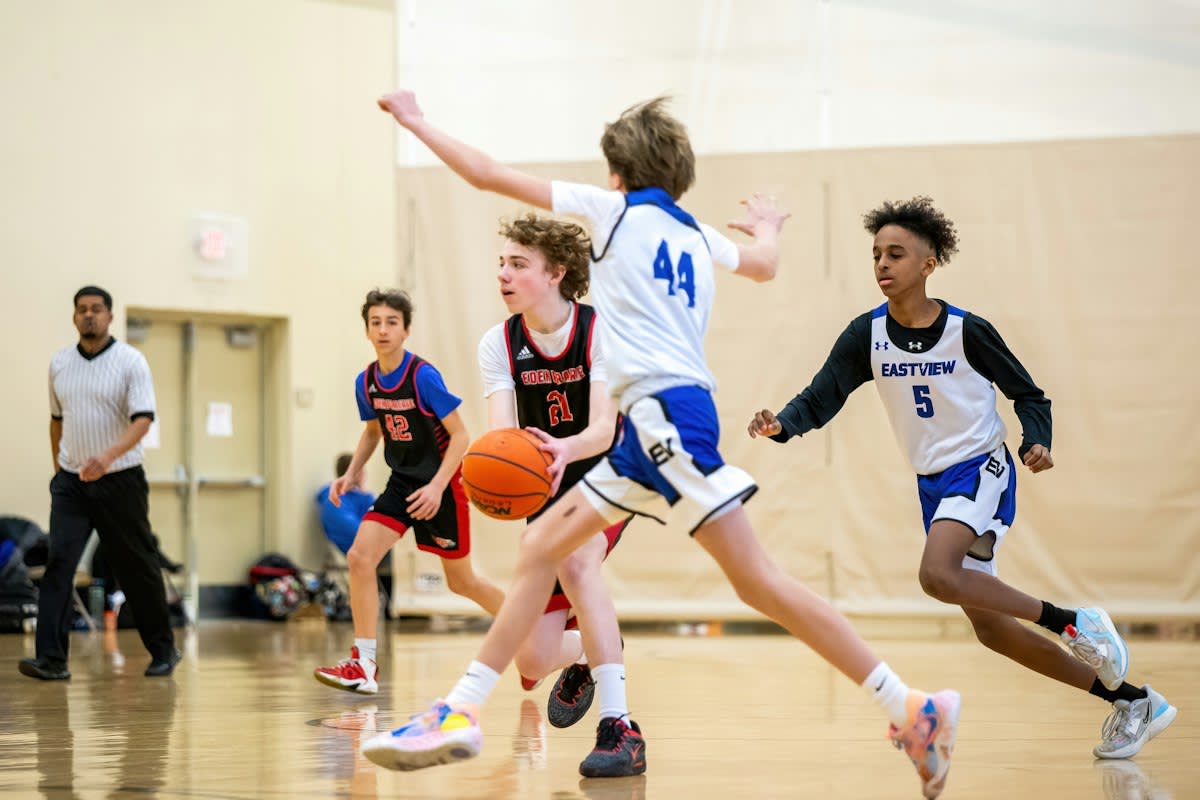
It is a contradiction. The very training meant to create an elite athlete often removes them from the game before they hit twenty. The data shows that athletes who sample multiple sports have lower rates of injury and higher staying power (Source: NCAA Research, 2022). They develop a web of motor skills. They learn how to move, not just how to execute one specific drill. This is the edge that specialists lack.
"The obsession with early specialization is a race to the bottom. We are trading long-term athletic ceiling for short-term trophy wins in twelve-year-old leagues."— Dr. Marcus Thorne, Lead Researcher at the Global Institute for Sports Science
The transition is happening now. Over the last twelve months, we have seen a visible delta in how top-tier scouts view recruits. A year ago, a player with 5,000 hours in one discipline was the gold standard. Today, that same player is viewed as a risk. Scouts are asking: Can they adapt? Do they have the spatial awareness that comes from playing basketball and soccer? Or are they just a product of a rigid playbook?
Global Terrain: Beyond the Western Model
Look at Brazil. The world's greatest footballers rarely start with a full-sized ball on a grass pitch. They start with Futsal in tight urban spaces. They play capoeira. They engage in a chaotic overlap of movement and rhythm. This isn't a structured academy; it is a playground. The result? An innate ability to manipulate the ball in tight spaces that a specialized US academy player cannot replicate (Source: FIFA Technical Report, 2021). The chaos is the teacher.
In Japan, the overlap between baseball and soccer is not an accident. It is a strategy. Athletes move between the diamond and the pitch, using the hand-eye coordination of one to fuel the footwork of the other. They aren't specializing; they are sampling. This creates a versatile athlete who can handle the mental load of high-pressure competition without the psychic weight of a single-identity failure.

This is where the internal industry friction lies. In the boardrooms of youth sports complexes, the money is in specialization. Year-round leagues mean year-round tuition. Coaches who push specialization are often paid by the parents who want the 'fast track.' There is a quiet, bitter war between the sports scientists who scream about burnout and the business owners who profit from the grind. The practitioners know the truth: the kids are breaking, but the checks are clearing.
The Data of Diversification
| Metric | Early Specialists | Multi-Sport Samplers | |
|---|---|---|---|
| Overuse Injury Rate | High (42% increase) | Low/Baseline | (Source: Sports Med Journal, 2023) |
| Burnout Rate by Age 16 | 68% | 21% | (Source: Youth Sports Study, 2022) |
| Pro-Level Adaptation Rate | Moderate | High | (Source: Pro Scouting Data, 2023) |
The numbers do not lie. The specialization model creates a peak early, but that peak is fragile. When a sampler hits the pro level, they bring a toolbox of movements. They can read the game because they have seen it from different angles. The specialist is a one-trick pony in a league of versatile horses. If their one trick is neutralized, they are useless.
Is this a crisis? No. It is an opportunity. We are seeing a return to the 'natural' way athletics are built. The elite are moving back toward sampling. They are recognizing that the most dangerous athlete is the one who can play three different games and apply the logic of one to the other.
Fact-Check & Accuracy Note
The current debate in sports science centers on the 'Window of Opportunity.' Some argue that certain skills must be learned by age 12, while others maintain that general athletic literacy is the only true foundation. The consensus is shifting toward the latter, emphasizing that 'sampling' doesn't mean 'dabbling'—it means purposeful diversification.
Editorial Note
Editorial Note: This piece reflects a shift in scouting trends observed over the last 12 months. While early specialization still produces outliers, the statistical probability of long-term success has skewed heavily toward the multi-sport athlete.
The cost of the narrow path is too high. We are trading the health of a generation for a few shiny trophies in middle school. The hard turn is here. The future of athletics belongs to the generalists who can specialize on the fly, not the specialists who are trapped by their own training.