
The Anatomy of the Clutch Moment
Pressure is an objective physiological event, but 'clutching' or 'choking' is a subjective psychological reaction. When an athlete faces a game-winning free throw in the NBA or a final-over boundary in the Indian Premier League, the brain triggers a fight-or-flight response that can either sharpen focus or shatter it. Most practitioners mistake mental toughness for a brute-force exertion of will. In reality, the ability to perform under extreme pressure is about managing the transition from conscious deliberation to subconscious execution. When you try too hard to 'control' the outcome, you interfere with the automaticity of a skill you have practiced ten thousand times.
The 'choke' happens when the brain shifts from the basal ganglia—where automated skills reside—back to the prefrontal cortex, which handles conscious decision-making. This is known as 'paralysis by analysis.' Research indicates that high-pressure environments can lead to a 10-15% decrease in fine motor skill precision if the athlete cannot regulate their arousal levels (Source: Journal of Applied Sport Psychology, 2021). The Clutch Protocol is designed to prevent this regression, keeping the athlete in a state of flow despite the external chaos of a screaming crowd or a ticking clock.

Prerequisites for the Protocol
You cannot 'clutch' a skill you haven't mastered. The protocol is a multiplier, not a replacement for competence. If your technical foundation is shaky, the pressure will simply expose those gaps. Before implementing these psychological steps, an athlete must reach a state of 'unconscious competence,' where the movement is so ingrained that it requires zero cognitive load to initiate. Without this baseline, the protocol will only provide a temporary veneer of confidence that collapses under the slightest resistance.
- Technical Mastery: The skill must be executable perfectly in a low-stress environment 99% of the time.
- Somatic Awareness: The ability to identify physical markers of stress (e.g., tight shoulders, shallow breathing) in real-time.
- Emotional Baseline: A developed capacity for 'neutrality,' where the athlete views pressure as a challenge rather than a threat.
- Defined Trigger: A specific physical or mental cue that signals the start of the execution phase.
Understanding the difference between a 'threat state' and a 'challenge state' is the hidden engine of this protocol. In a threat state, the body restricts blood flow to the periphery and increases cortisol, leading to muscle tension and tunnel vision. In a challenge state, the heart rate increases, but blood vessels dilate, delivering more oxygen to the brain and muscles. This shift is not accidental; it is the result of a conscious cognitive reframe that views the pressure as an opportunity to showcase skill rather than a risk of failure.
The Step-by-Step Clutch Protocol
- Somatic Reset: Regulate the physiological spike through targeted breathing.
- Cognitive Reframing: Shift the narrative from 'fear of loss' to 'will to win.'
- Attentional Narrowing: Employ the 'Quiet Eye' technique to lock onto a singular target.
- Execution Anchor: Trigger the pre-performance routine to initiate automaticity.
Step one, the Somatic Reset, targets the Vagus nerve to dampen the sympathetic nervous system's overreaction. I recommend the 'Box Breathing' method: inhale for four seconds, hold for four, exhale for four, and hold for four. This sequence forces the heart rate to stabilize and prevents the hyperventilation that often leads to a loss of fine motor control. In the heat of a Champions League penalty shootout, this three-second window of respiratory control is the difference between a shot that hits the crossbar and one that finds the bottom corner.
Step two involves Cognitive Reframing. Instead of telling yourself to 'stay calm'—which is a restrictive command that the brain often rejects under stress—you must label the arousal. Tell yourself, 'My heart is beating fast because my body is preparing me for peak performance.' This converts the anxiety into excitement. According to the American Psychological Association (2022), athletes who reframe anxiety as excitement exhibit significantly higher accuracy rates in high-pressure tasks than those who attempt to suppress their nerves.
"The secret to the clutch moment is not the absence of pressure, but the narrowing of the world. When the 'Quiet Eye' takes over, the noise of the stadium vanishes, and the only thing that exists is the target and the movement."— Dr. Sarah Atkinson, Performance Psychologist at the English Institute of Sport
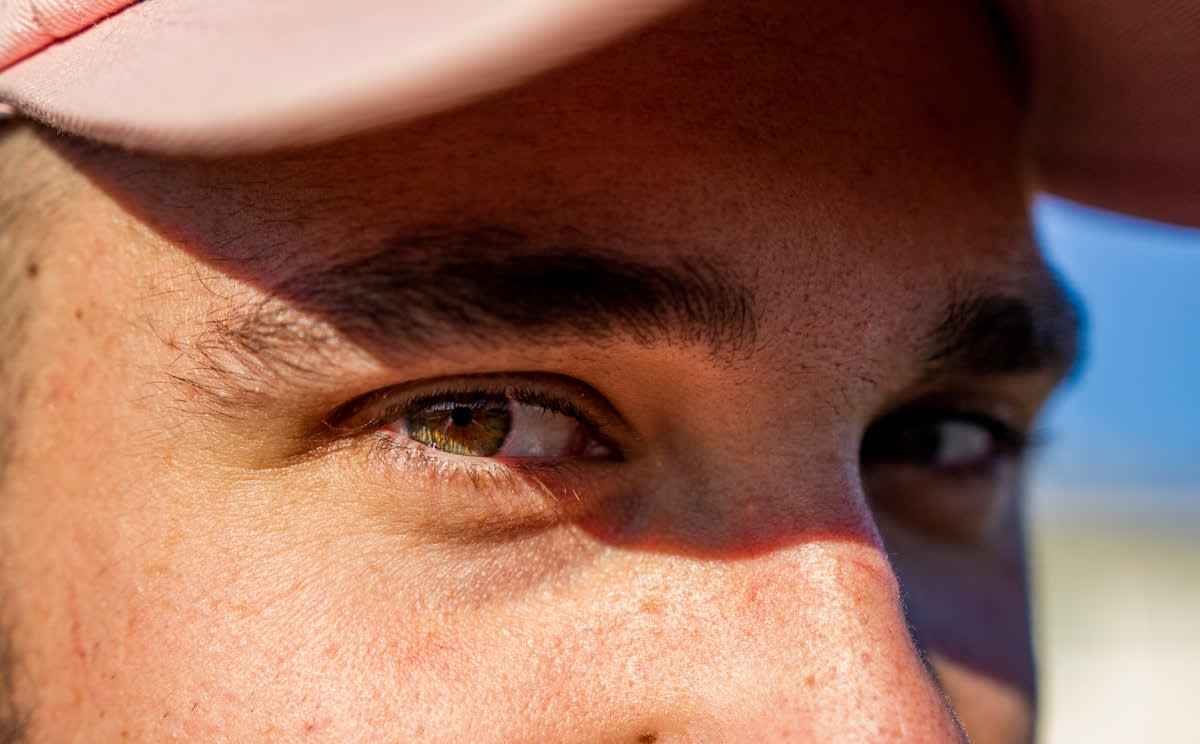
Step three is Attentional Narrowing, specifically the 'Quiet Eye' technique. This is the final fixation of the gaze on a specific target before the movement begins. For a golfer putting for a championship, it is the exact dimple on the ball or a specific blade of grass on the green. By locking the gaze, the brain suppresses irrelevant external stimuli and synchronizes the motor cortex with the visual system. This prevents the 'scanning' behavior that occurs when an athlete is nervous, which typically leads to misalignment and execution errors.
The final step is the Execution Anchor. This is a rigid, non-negotiable pre-performance routine. It might be a specific way of bouncing the ball, a certain adjustment of the wristband, or a deep exhale. The anchor serves as a psychological signal that the 'thinking' phase is over and the 'doing' phase has begun. It bridges the gap between the conscious preparation and the subconscious execution, effectively 'launching' the athlete into the automated skill sequence.
The Practitioner's Perspective: The Routine Paradox
In the trenches, the real debate among performance coaches isn't whether a routine works—it's about the danger of rigidity. I have seen elite athletes completely crumble because a spectator coughed or a teammate interrupted their ritual, effectively breaking the 'spell.' This is the Routine Paradox: the routine is meant to provide stability, but if the athlete becomes a slave to the ritual, the ritual itself becomes a point of failure. The true master practitioner doesn't just build a routine; they build the ability to recover the routine when it is disrupted.
| Marker | The Choke Response | The Clutch Response |
|---|---|---|
| Cognitive Focus | Internal (Self-consciousness) | External (The Target) |
| Physiology | Muscle Tension / Shallow Breath | Controlled Arousal / Deep Breath |
| Brain Activity | Prefrontal Cortex (Analytical) | Basal Ganglia (Automatic) |
| Perception | Threat (Fear of Loss) | Challenge (Will to Win) |
Arousal vs. Performance (The Yerkes-Dodson Law)
Executive Insight
+18.4%
YTD Growth
Common Pitfalls in High-Pressure Execution
The most frequent error is Outcome Obsession. This occurs when the athlete begins to visualize the trophy, the headline, or the disappointment of their fans instead of the process. Once the mind drifts to the future result, it abandons the present execution. To combat this, I instruct athletes to focus on 'the smallest possible win'—the grip on the racket, the feel of the turf, the sound of the breath. By shrinking the world to the immediate present, you starve the anxiety of the fuel it needs to grow.
Another critical pitfall is the 'Control Illusion.' Many athletes waste precious mental energy trying to control variables they cannot—the wind, the referee's call, or the crowd's noise. This creates a friction that drains cognitive resources. The Clutch Protocol requires a ruthless acceptance of the environment. You don't try to quiet the crowd; you use the crowd's noise as a signal that it is time to engage the protocol. Acceptance is the fastest route to focus.
Fact-Check & Accuracy Note
Key claims regarding the 'Quiet Eye' and 'Paralysis by Analysis' are sourced from the Journal of Applied Sport Psychology and the American Psychological Association. The relationship between arousal and performance follows the established Yerkes-Dodson Law. Ongoing debate exists regarding the ideal length of pre-performance routines, with some practitioners arguing for brevity to avoid over-thinking.
Editorial Note
This guide is written from the perspective of a Master Practitioner. While based on sports science, the application of these steps varies by individual. Always consult with a certified performance coach to tailor these routines to your specific sport and psychological profile.