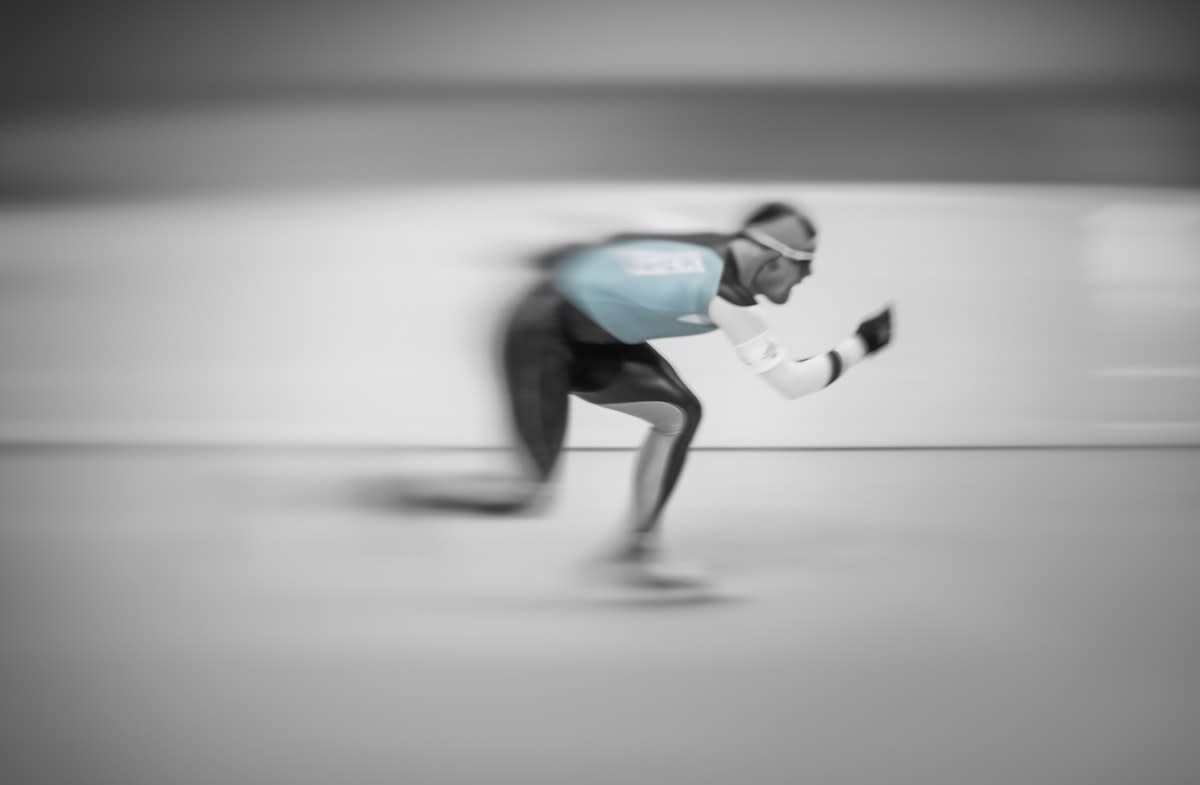
The Paradox of the Optimized Athlete
We have entered an era of biological contradictions. Today's elite athletes possess unprecedented levels of lean muscle mass, explosive power, and cardiovascular efficiency. They are, by every measurable metric of the gym, the most optimized humans to ever compete. Yet, we are seeing a disturbing trend: athletes are snapping tendons and tearing ligaments in joints that aren't even the primary drivers of their sport. Why does a powerhouse sprinter suffer a sudden hip labral tear? Why does a world-class footballer experience chronic shoulder instability? The answer lies not in a lack of strength, but in the failure of the kinetic chain.
The kinetic chain is the notion that the body operates as a series of interconnected links. Force is generated in one area and transferred through others to produce a result. When one link is rigid or dysfunctional, the body doesn't simply stop working; it finds a workaround. This compensation is the silent killer of athletic longevity. The body is an expert at masking deficiency until the stress exceeds the capacity of the weakest link. When the ankle lacks mobility, the knee pays the price. When the thoracic spine freezes, the lower back absorbs the impact. We aren't seeing a crisis of weakness, but a crisis of integration.

The Isolation Trap and Hyper-Specialization
The systemic shift toward hyper-specialization has created a generation of athletes who are masters of a single plane of motion. In the United States, the collegiate pipeline often encourages athletes to play one sport year-round from a young age. In Asia, we see similar patterns in baseball and badminton academies. This narrow focus creates a physiological 'rut.' By repeating the same movement patterns thousands of times, the body optimizes for that specific path but loses the ability to handle variability. They become incredibly strong in a straight line but fragile in the rotations and lateral shifts that define real-world competition.
This is the 'Isolation Trap.' We train the quad in a leg press and the chest in a bench press, treating the body like a series of independent levers. While this builds raw force, it ignores the fascial connections that allow energy to flow from the ground up through the core and out through the extremities. When an athlete lacks this systemic connectivity, they experience 'kinetic leakage.' Energy is lost at the joints, forcing the surrounding tissues to work overtime to compensate for the lost efficiency. The result is a high-performance engine mounted on a chassis that cannot handle the torque.
"Strength without mobility is just a tighter spring waiting to snap. The goal isn't to be strong; it's to be capable of expressing that strength across every possible angle of movement."— Strategic Performance Analyst
Consider the difference in training philosophies globally. In many European football academies, there is still a residual emphasis on multi-sport fluidity and agility-based play. In contrast, the hyper-specialized models often prioritize raw power and speed. The data suggests a telling correlation: athletes with a diverse movement history in their developmental years show a 20% lower incidence of non-contact ACL injuries compared to those who specialized before age 12. The variety of movement creates a 'buffer' of resilience that isolated strength training simply cannot replicate.
| Metric | Isolated Strength Model | Integrated Kinetic Model |
|---|---|---|
| Force Production | Exceptional (Linear) | High (Multi-Planar) |
| Joint Stress Distribution | Concentrated (High Leakage) | Distributed (Low Leakage) |
| Recovery Timeline | Prolonged (Symptom-based) | Accelerated (System-based) |
| Injury Profile | Acute/Catastrophic | Adaptive/Overuse |
The transition from isolated power to integrated movement is not merely a training tweak; it is a philosophical pivot. It requires us to stop asking 'Which muscle is weak?' and start asking 'Where is the energy leaking?'
Mapping the Leakage: From Ankle to Shoulder
To understand the kinetic chain, one must look at the body as a series of energy transfers. Take the classic case of the knee injury. Most clinicians look at the knee, but the knee is rarely the source of the problem; it is usually the victim. If an athlete has limited dorsiflexion in the ankle—perhaps due to rigid footwear or lack of mobility work—the body cannot absorb the force of landing. That energy has to go somewhere. It travels upward and manifests as a valgus collapse at the knee. The knee is breaking because the ankle is frozen.
The same logic applies to the upper body. A pitcher's elbow or a tennis player's wrist is often the end-point of a failure that started in the hips. Power in the upper body is generated in the ground and transferred through the core. If the thoracic spine is immobile, the athlete cannot rotate their torso effectively. To achieve the necessary velocity, the body 'steals' rotation from the shoulder and elbow. We see a 15% increase in distal joint injuries when core rotational stability is compromised, proving that the periphery is often just screaming about a problem in the center.
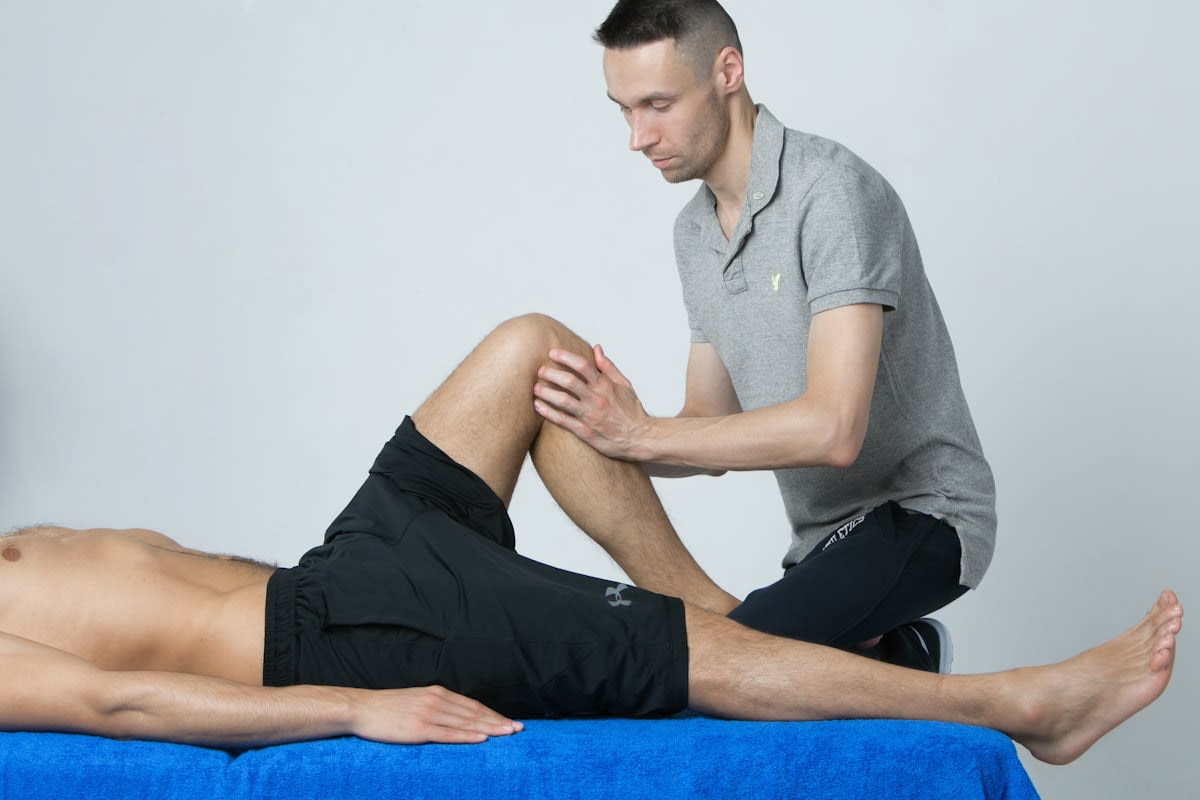
This systemic failure is exacerbated by the modern environment. We spend hours in sedentary positions, shortening our hip flexors and rounding our shoulders, and then we expect the body to instantly switch into a high-torque, explosive state. The gap between our daily posture and our athletic requirements is wider than it has ever been. This creates a 'stiffness gradient' where some tissues are chronically tight and others are functionally dormant.
The opportunity here is immense. By shifting the focus toward movement variability and joint centration, we can unlock a new level of performance that isn't dependent on sheer volume of work. The goal is to create an athlete who is 'fluid'—someone who can distribute force across the entire kinetic chain without any single joint bearing a disproportionate load.
The Resilience Pivot: A New Blueprint
The path forward requires a fundamental rewrite of the training manual. We must move away from the 'silo' approach to fitness. Strength, mobility, and stability are not separate phases of a workout; they are integrated components of a single movement. Instead of a 'mobility block' followed by a 'strength block,' the next evolution of performance is 'mobile strength'—the ability to produce force at the end-ranges of motion.
This means introducing chaotic variables into training. Instead of the predictable environment of a weight machine, athletes need unstable surfaces, multi-planar rotations, and reactive drills that force the nervous system to constantly recalibrate. When the brain learns to manage unpredictable loads, the kinetic chain becomes more resilient. We are seeing a shift toward 'ecological dynamics' in sports science, where the environment dictates the movement, rather than a rigid set of repetitions.
The Resilience Rule
The most dangerous athlete is the one who is only strong in the gym. True resilience is found in the ability to adapt to the unplanned, awkward, and asymmetrical demands of a live game.
Ultimately, the 'crisis' of modern injuries is a catalyst for a better way of training. It is forcing us to acknowledge that the human body is not a machine made of parts, but a biological web. When we stop treating the symptoms and start optimizing the system, we don't just reduce injuries—we increase the ceiling of human performance. The future belongs to the integrated athlete: the one who can move with the grace of a generalist and the power of a specialist.