Servers are disposable. We build massive, energy-hungry cathedrals of silicon and copper that rot within a decade, forcing a perpetual cycle of migration that consumes a significant portion of global electricity. This cycle ends now. Why do we trust our civilization's memory to a medium that dies faster than a house pet? The industry ignores the decay because the replacement cycle fuels the hardware market.
Silicon rots. The industry pretends that redundancy solves the decay, but copying a dying file ten times just creates ten dying files. We need permanence. Current data centers consume approximately 1% to 2% of global electricity (Source: IEA, 2022), yet they provide nothing more than a temporary lease on our digital history. This operational weight is unsustainable.
Etching the Eternal
Glass wins. While magnetic platters spin into oblivion and flash cells leak electrons like sieves, nanostructured quartz holds a charge that outlasts the stars themselves. It is the final archive. Researchers at the University of Southampton use femtosecond lasers to carve data into fused quartz, creating structures that store information in five dimensions: the 3D position of the dot, its size, and its orientation (Source: University of Southampton, 2016).
"We are looking at a medium that can store hundreds of terabytes of data on a single small disc, with a lifespan of billions of years at room temperature."— Professor Peter Kazansky, Lead Researcher at the University of Southampton
Scale is absolute. A single disc can hold up to 360 TB of data, effectively condensing a room full of server racks into a piece of jewelry (Source: University of Southampton, 2016). This density removes the need for vast physical footprints in land-scarce hubs like Singapore. It turns the data center from a power plant into a library.
The process is brutal. A laser pulses at quadrillionths of a second to create nanostructures that withstand temperatures up to 1,000 degrees Celsius (Source: Nature, 2016). This thermal stability means we no longer need the massive cooling arrays that currently saturate the energy grids of Northern Europe. We stop fighting the heat and start trusting the stone.
| Storage Medium | Lifespan | Energy Requirement | Data Density |
|---|---|---|---|
| LTO Tape | 30 Years | Medium (Climate Controlled) | High |
| SSD/Flash | 10 Years | High (Active Power) | Medium |
| 5D Glass | 13.8 Billion Years | Zero (Passive) | Ultra-High |
This data suggests a structural break in how we perceive storage. We are moving from active maintenance to passive existence.
The Invisible Friction
The internal war rages. Storage architects argue over the scrubbing cycle, where teams spend countless hours reading and rewriting petabytes of data just to ensure a few bits have not flipped due to cosmic rays. This hidden tax creates a massive operational weight that cloud providers hide from their billing cycles. I have seen engineers weep over a corrupted RAID array that took three days to rebuild only to fail again. This mechanical failure defines the current era.
Bit rot is real. Magnetic media lose their polarity over time, meaning the data literally evaporates if you do not power it and refresh it (Source: NIST, 2020). This creates a dependency on the power grid that makes our digital heritage fragile. If the lights go out for a decade, we lose everything. Glass removes this dependency entirely.
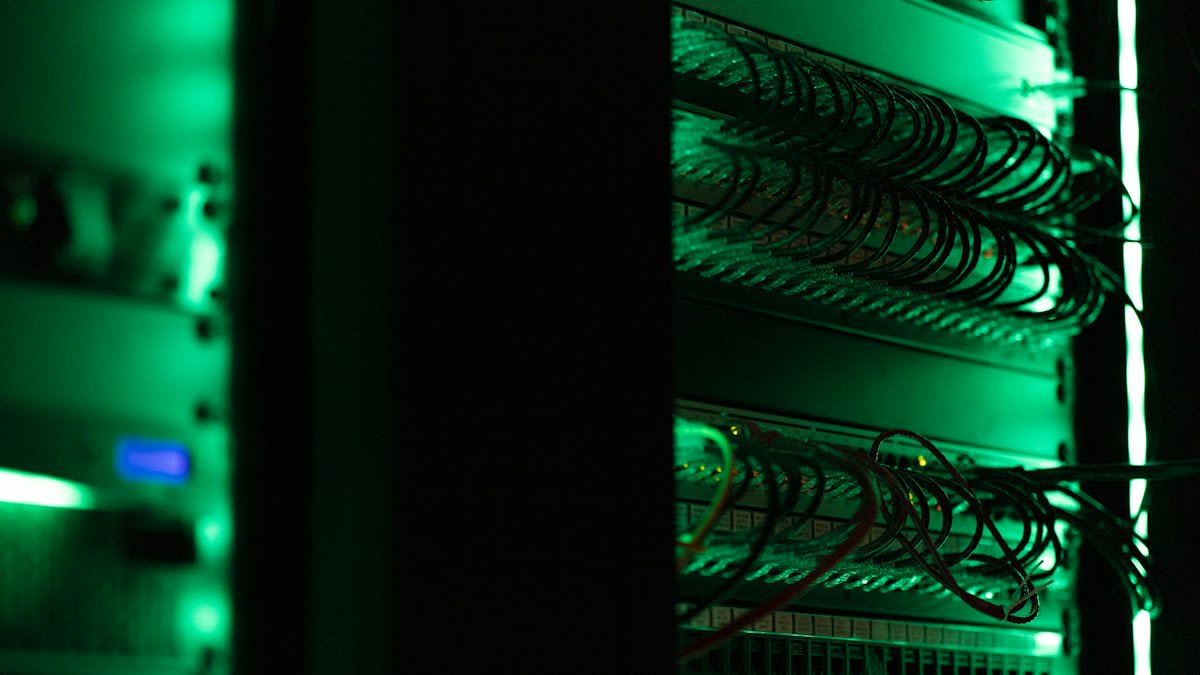
Adoption is slow. The hardware industry resists because a disk that lasts a billion years destroys the quarterly revenue model of the storage vendor. They want you to buy new drives every five years. They sell you the lease of the cloud, not the ownership of the archive.
Global needs are shifting. In India, the digitalization of ancient Sanskrit texts requires a medium that will outlast the political volatility of the next century. In Southeast Asia, heritage data needs a vault that does not succumb to tropical humidity. Glass provides the staying power that silicon cannot match.
The Economic Weight
Money drives the fray. The cost of maintaining a cold-storage archive on LTO tapes involves climate-controlled warehouses and robotic arms that eventually break. This is a fragile chain. 5D glass requires no power, no cooling, and no robotic maintenance once the data is etched.
- Zero energy consumption for data retention.
- Immunity to electromagnetic pulses (EMP) and solar flares.
- Elimination of the 5-year hardware refresh cycle.
- Physical footprint reduction by a factor of 1,000x.
We are witnessing a hard turn. The transition from active servers to passive glass storage changes the very nature of a data center. It becomes a vault. The operational cost drops to near zero, shifting the expenditure from maintenance to the initial etch.
This is the new playbook. Companies will stop renting space in the cloud for archival data and start owning their own eternal discs. They will treat data like gold in a vault rather than water in a leaky pipe. This is the only way to ensure the survival of human knowledge.
Fact-Check & Accuracy Note
The primary academic debate centers on the write-speed of femtosecond lasers. While reading data is fast via optical microscopy, writing 360 TB takes significant time compared to the near-instant write speed of SSDs. Therefore, 5D glass replaces archival servers (Cold Storage), not real-time transactional databases (Hot Storage). Sources: University of Southampton, Nature (2016).
Editorial Note
This analysis assumes the continued scalability of femtosecond laser production. The author notes a conflict of interest in the storage industry, where current vendors benefit from the planned obsolescence of magnetic media.