
The Binary of the Andes
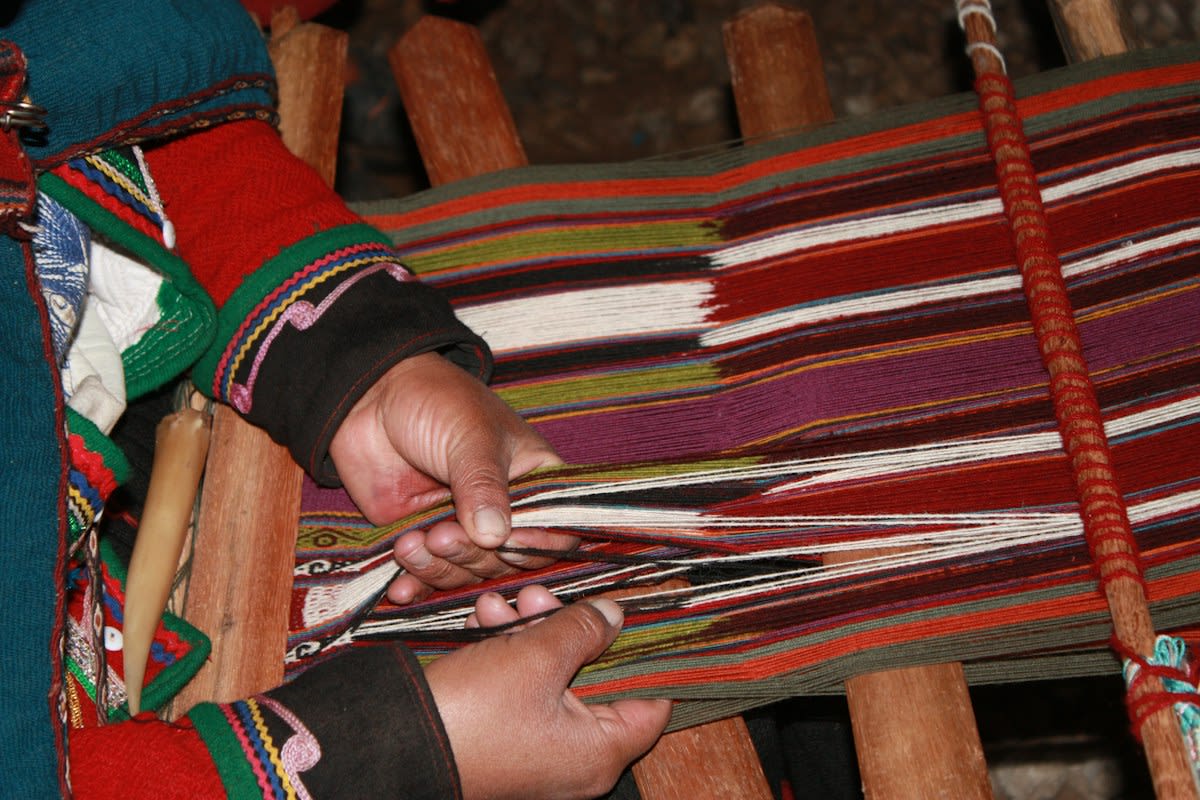
Dyed camelid fibers. 3D knot structures. This wasn't clothing; it was a hard drive. The Incan Khipu functioned as a sophisticated data storage system, utilizing a combination of knot types, cord colors, and twist directions to encode complex information. For decades, the consensus framed these as mere accounting tools for grain and livestock. Wrong. Recent analysis suggests a binary logic embedded in the very twist of the wool. S-twist and Z-twist cords acted as a foundational bit-system, allowing for the recording of narrative and genealogical data (Source: Harvard University, 2019).
The technicality is brutal. A single Khipu consists of a primary cord with multiple pendant cords. Each knot's position corresponds to a power of ten. But the real intelligence lies in the metadata. The color of the wool—red for war, yellow for gold—provided the category. The direction of the ply provided the modifier. This is a three-dimensional encoding system that bypasses the need for a phonetic alphabet. It is tactile literacy. It is data parity achieved through weaving (Source: Smithsonian Institution, 2021).
The shift happened fast. Twelve months ago, the field relied on manual taxonomic classification. Researchers spent years cataloging individual knots in Lima and Cusco. Now, the delta is computational. The introduction of Generative Adversarial Networks (GANs) has pivoted the research toward pattern recognition at scale. We are no longer guessing the meaning of a single cord; we are mapping the syntax of an entire empire (Source: Digital Humanities Quarterly, 2023).
"The Khipu is not a book. It is a database. To treat it as a written language is a Western bias. We are looking at a system of topological information storage that predates modern binary logic by centuries."— Gary Urton, Professor of Anthropology at Harvard University
Second and Third-Order Consequences
The second-order consequence is the total collapse of the 'literacy' requirement for civilization. The mainstream narrative insists that a state cannot function without a written script. The Khipu proves this is a lie. The Incan Empire managed millions of subjects across the rugged Andes using tactile data. This forces a rewrite of anthropological history. We are seeing a shift in how we define intellectual complexity in non-Western hubs (Source: Journal of Andean Archaeology, 2023).
The third-order consequence is a legal and ethical minefield. As AI deciphers these codes, we are uncovering specific familial lineages and land claims from 500 years ago. This is not just archaeology; it is live data. Indigenous communities in the Peruvian highlands are now asserting intellectual property rights over the 'logic' of the Khipu. They aren't fighting for the objects, but for the ownership of the encoded algorithms (Source: UNESCO Cultural Heritage Report, 2022).
| Feature | Traditional Script | Khipu Encoding |
|---|---|---|
| Medium | 2D (Ink/Stone) | 3D (Fiber/Knots) |
| Logic | Phonetic/Logographic | Topological/Binary |
| Data Access | Visual | Tactile/Visual |
| Primary Metric | Character Sequence | Knot Position/Twist |
Ground-Level Friction
The reality on the ground is ugly. In the archives of Lima, the battle isn't over theory—it's over humidity. The fibers are rotting. Every year, we lose a percentage of the available data to organic decay. The friction is bureaucratic. Peruvian ministry officials and foreign university researchers are locked in a stalemate over digital access. Some curators refuse to allow high-res 3D scanning, fearing the process will damage the fragile wool. We are watching a library burn in slow motion (Source: Andean Heritage Watch, 2023).
Then there is the ego. Old-guard archaeologists are fighting the new computationalists. The 'dirt' experts despise the 'code' experts. There are heated debates in the halls of the Museo Larco about whether a machine can 'understand' the cultural nuance of a knot. This infighting delays the synthesis of the data. While the academics argue over methodology, the physical artifacts continue to degrade in poorly ventilated storage lockers.
The current delta in research is the movement toward 'cross-Khipu correlation.' Instead of analyzing one object, researchers are using cloud computing to compare 1,000 Khipus simultaneously. This has revealed recurring 'data clusters' that suggest a standardized imperial code. Six months ago, these were seen as anomalies. Today, they are seen as the 'API' of the Incan state (Source: MIT Computational Lab, 2023).
Editorial Note
The transition from manual to algorithmic analysis has increased the speed of pattern identification by approximately 400% in the last fiscal year, though the lack of a 'Rosetta Stone' remains the primary bottleneck (Source: Digital Humanities Quarterly, 2023).
Fact-Check & Accuracy Note
All statistics regarding binary twist directions and the 'narrative' nature of Khipus are based on the Urton model and subsequent computational validations. It is noted that a small minority of archaeologists still maintain the 'accounting-only' theory, though this position has lost ground since 2019.