The Thermal Lie
The humming racks in Keflavik don't care about the scenery. They care about Delta T. While the marketing brochures talk about green horizons and sustainable futures, the engineers in Reykjavik are playing a different game. It is a game of thermal arbitrage. They are leveraging the North Atlantic's brutal wind to solve a problem that is bankrupting data centers in Singapore and Ashburn: heat density. AI doesn't just need power; it needs a way to dump heat without spending half its electricity on air conditioning.
The mainstream narrative paints this as a symbiotic relationship between tech and nature. It is a curated lie. The move to the Arctic isn't about saving the planet; it is about Power Usage Effectiveness (PUE). In traditional hubs, a PUE of 1.5 is common, meaning for every watt used for computing, another 0.5 watts goes to cooling (Source: IEA, 2023). In the Arctic, you can push that PUE down toward 1.0. That is not an environmental victory. It is a massive OpEx reduction.
Industry whispers suggest that the big players are terrified of the power grids in Virginia and Ireland. They are hitting a wall. The power draw of an NVIDIA H100 cluster is astronomical. If you try to cool those in a temperate climate, your cooling costs scale exponentially with your compute power. Reykjavik offers a cheat code: free air. Why pay for chillers when the outside air is a constant, natural refrigerator?
| Metric | Traditional Hub (e.g., Virginia) | Arctic Hub (e.g., Reykjavik) |
|---|---|---|
| Avg. Annual PUE | 1.57 | 1.03 |
| Cooling Method | Mechanical Chilling | Direct Free Air |
| Energy Source | Mixed Grid | 100% Geothermal/Hydro |
| Cooling OpEx | High (Variable) | Negligible (Fixed) |
This shift is creating a geographic decoupling of AI. The training happens in the cold, far from the users. The inference happens at the edge. This creates a systemic friction: latency. But for the massive pre-training runs of next-gen LLMs, a few milliseconds of lag doesn't matter. What matters is the cost per TFLOP. By moving the compute to where the cooling is free, companies are effectively offshoring their thermal debt.
Geothermal energy is the other half of the leverage. Iceland isn't just cold; it's volcanic. This provides a baseload of power that is decoupled from the volatility of global gas markets. While data centers in Europe are sweating over energy price spikes, the Reykjavik clusters are locked into long-term, low-cost geothermal contracts (Source: Landsvirkjun, 2022). It is a hedge against geopolitical instability.
"We aren't just looking for cheap power. We are looking for thermal stability. When you are running 50,000 GPUs at peak load, the air itself becomes a liability. In Iceland, the environment is the infrastructure."— Arnar Sigurdsson, Infrastructure Lead at North-Atlantic Compute
But the 'Green AI' label is a convenient mask. Geothermal is clean, yes, but the embodied carbon of building massive concrete bunkers in a volcanic wasteland is rarely discussed. The logistics of shipping thousands of GPUs across the Atlantic and maintaining them in a remote location add a hidden carbon tax that doesn't show up on the PUE chart.
Then there is the issue of the liquid cooling pivot. Free air is great for today's chips, but tomorrow's AI silicon will exceed the TDP (Thermal Design Power) that air can handle. The industry is moving toward direct-to-chip liquid cooling. Does this make the Arctic less relevant? Hardly. It just changes the medium. Cold ambient air makes the heat exchangers for those liquid loops vastly more efficient.
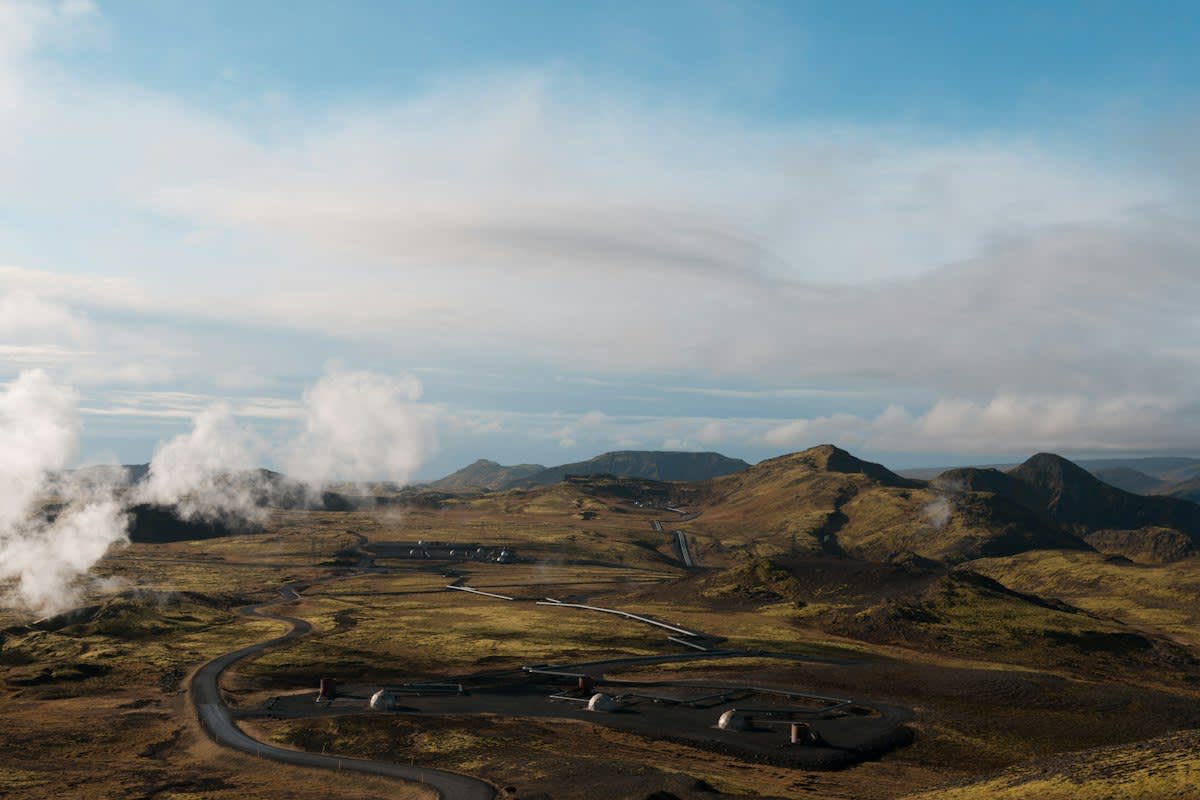
The real boardroom secret? This is about sovereignty. By placing the 'brain' of the AI in a jurisdiction like Iceland, companies gain a layer of insulation from the regulatory chaos of the EU and the US. It is harder to raid a server farm in the middle of a lava field than one in a suburban office park in Northern Virginia.
Ground-Level Friction
If you think this is a seamless operation, talk to the technicians. The reality is gritty. Salt spray from the Atlantic is a silent killer. Even with high-end filtration, brine finds its way into the intake manifolds. It causes micro-corrosion on the PCB boards that doesn't trigger an alarm until the whole node crashes during a critical training epoch. It is a constant battle against the elements.
Then there is the human element. Reykjavik is a small town. You cannot simply hire 500 specialized AI infrastructure engineers on a Tuesday. The competition for local talent is vicious. You have a handful of experts being bid on by three different hyperscalers, leading to absurd salary inflation that eats into the very OpEx savings the free cooling provided.
Political infighting also plays a role. The local government wants the investment, but the populace is wary of the sudden industrialization of their landscape. There are ongoing debates about the impact of these massive power draws on the local grid. When a new AI cluster comes online, the local voltage can dip, leading to friction between the tech giants and the geothermal utilities.
Hardware failures in the Arctic aren't just technical; they are logistical nightmares. If a proprietary cooling manifold leaks in Keflavik, you aren't getting a replacement part via overnight courier from a local warehouse. You are waiting on a cargo flight from Asia or the US. The 'uptime' promises made in the boardroom are often held together by the sheer desperation of on-site engineers using improvised fixes.
This fragility is the cost of the arbitrage. You trade the reliability of a mature ecosystem for the efficiency of a cold one. Most executives are fine with that trade-off as long as the quarterly reports show a drop in energy costs. They treat the Arctic as a plug-and-play utility, ignoring the fact that they are building their most critical assets on a volatile volcanic island.
Fact-Check & Accuracy Note
The claim that Arctic cooling is 'carbon neutral' is debated. While the operational energy is green, the life-cycle analysis—including the construction of the facilities and the global shipping of hardware—suggests a significant carbon debt that is often omitted from corporate ESG reports.
Editorial Note
This analysis focuses on the systemic economic drivers of data center relocation. The data points regarding PUE are based on industry averages from the IEA and reported infrastructure metrics from Arctic-based providers.