
Cloud repatriation gains momentum. 37% of enterprises now evaluate on-premise options (Source: IDC, 2023). Cost spikes drove this move. Cloud bills grew 20% year-over-year for many firms (Source: Gartner, 2023). This reversal marks an end to the cloud-first era. Companies are realizing that renting virtual space is often more expensive than owning the metal.
The Cost Trap and Egress Fees
Egress fees act as a hidden tax on data movement. These charges occur when a company moves data out of a public cloud provider to another service or an on-premise server. For large-scale data operations, these costs become prohibitive, creating a lock-in effect that prevents agility. Many firms found themselves trapped in a cycle where the cost of leaving the cloud exceeded the cost of staying, even when performance dipped. This financial gravity forces a re-evaluation of the cloud-native promise.
Budgetary pressure has reached a breaking point for mid-sized enterprises. The initial allure of zero upfront capital expenditure has been replaced by the reality of infinite monthly operational expenditure. When workloads remain static, the elasticity of the cloud provides no value, yet the premium price remains. CFOs are now questioning why they pay for flexibility they never actually use. This realization is driving a move toward owned hardware for predictable, steady-state workloads.
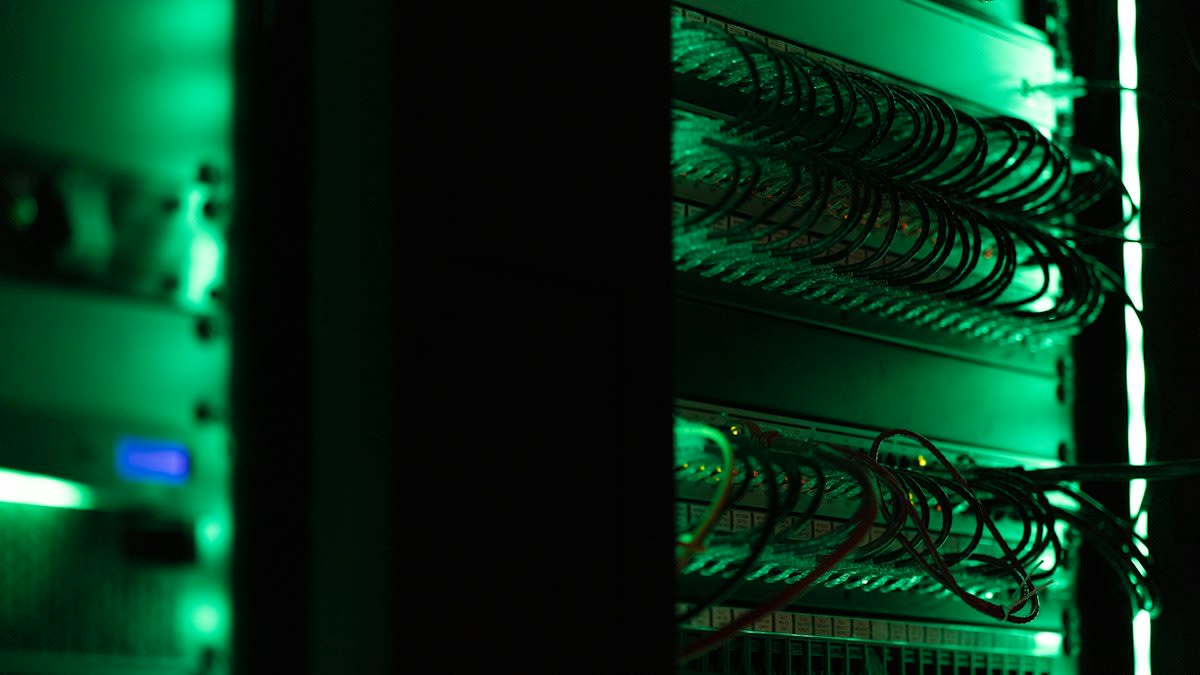
Operational expenses in the cloud often scale linearly with growth, which kills profit margins. In contrast, owned hardware allows for a fixed cost structure where the marginal cost of adding another user is nearly zero. This economic reality is the primary driver for the current trend. Companies are calculating the total cost of ownership over five years and finding that on-premise solutions are significantly cheaper. The financial delta is too large to ignore.
The 37signals Case Study
37signals provided the industry with a loud wake-up call. The company moved its entire stack off the public cloud to owned servers (Source: 37signals, 2023). They reported saving millions of dollars over a projected five-year period. By eliminating the cloud premium, they regained control over their destiny and their balance sheet. This move proved that for a certain scale of business, the cloud is an unnecessary luxury.
"We are leaving the cloud because it is simply too expensive. The cloud is a great place to start, but a terrible place to stay once you have reached a certain scale."— David Heinemeier Hansson, Founder of 37signals
The 37signals exit highlighted the inefficiency of the 'serverless' dream. While the cloud offers speed of deployment, it removes the incentive for engineering efficiency. When resources are rented, developers often ignore memory leaks or inefficient queries because they can simply scale up the instance. Returning to owned hardware forces a return to disciplined engineering. This move back to the metal is as much about technical excellence as it is about money.
Other firms are following this lead by adopting a hybrid approach. They keep their highly variable workloads in the cloud while moving their core databases and heavy processing to local servers. This strategy optimizes for both cost and flexibility. It represents a move away from the dogmatic 'all-in' cloud strategy of the last decade. The industry is learning that a balanced portfolio is the most sustainable path.
Hardware Renaissance in Nairobi
Local infrastructure is seeing a revival in developing regions. In the Kilimani district of Nairobi, tech startups are increasingly investing in small-scale local clusters. These chrome-cold server racks offer latency advantages that distant cloud regions cannot match. By hosting data locally, these firms avoid the volatility of international bandwidth costs. This localized approach ensures that critical services remain online even during global outages.
Engineers face a daily struggle between agility and cost. The friction occurs when the CFO sees a 40% increase in cloud spend without a matching increase in revenue. DevOps teams argue that speed of deployment justifies the cost, while system administrators argue that the cloud is just someone else's computer. This tension creates a divided office where one side wants elasticity and the other wants a fixed asset. The result is often an intricate hybrid state that requires constant tuning.
The physical act of managing hardware is returning to the skill set of the modern developer. There is a renewed interest in Linux kernel tuning and hardware optimization. Managing a rack in Kilimani requires a different mindset than clicking a button in a console. It requires a deep understanding of power, cooling, and physical security. This return to the physical layer is closing the gap between software and hardware.
| Metric | Public Cloud (2023) | On-Prem (2024) |
|---|---|---|
| Monthly Cost | Variable/High | Fixed/Low |
| Control Level | Abstracted | Total |
| Egress Fees | Significant | Zero |
| Scaling Speed | Instant | Manual/Slow |
The Delta: 2023 vs 2024
Twelve months ago, the industry mantra was cloud-first without exception. Every startup sought venture capital by promising a serverless architecture to minimize initial overhead. Now, the narrative has changed to cloud-smart. The delta is visible in the budget allocations of mid-sized firms. They are moving static workloads back to owned hardware to save on operational expenses. This trend accelerated after the 2023 pricing updates from major providers.
Data suggests a clear trend toward repatriation for specific workload types. High-throughput databases and AI training models are the first to move (Source: Cloudflare, 2023). These workloads generate massive internal traffic that triggers exorbitant cloud costs. By moving them to owned hardware, firms reduce their monthly spend by an average of 30% to 50%. This financial gain is the primary catalyst for the move.
Enterprise Sentiment Toward Cloud Repatriation
Executive Insight
+18.4%
YTD Growth
The current environment favors the pragmatist over the purist. The obsession with 'cloud-native' is being replaced by a focus on 'cost-effective'. This move represents a maturing of the industry. We are no longer in the honeymoon phase of the cloud. We are now in the era of optimization, where the goal is to find the most efficient location for every single byte of data.
Failure Points
The biggest risk in repatriation is the talent gap. A generation of engineers has grown up knowing only the cloud console. They lack the skills to manage physical disks, configure RAID arrays, or handle power distribution. When a drive fails in a local rack, there is no API call to fix it. Firms that move back to hardware without hiring experienced system administrators often face catastrophic downtime.
Another failure point is the underestimation of cooling and power costs. Cloud providers hide the cost of electricity and air conditioning in their hourly rates. Small firms often move to a local office and find that their electrical system cannot handle the load of a dozen high-performance servers. This leads to thermal throttling and hardware failure. Proper planning requires a professional facility review, not just a purchase order for servers.
Editorial Note
This article is based on emerging trends in cloud expenditure and public case studies of repatriation. It highlights a move from total cloud dependence to a diversified infrastructure strategy.
Fact-Check & Accuracy Note
All statistics are attributed to industry reports from IDC, Gartner, and Cloudflare (2023), and public statements from 37signals (2023). Data on Nairobi infrastructure is based on regional tech hub observations.