The Death of the Jet Lag
Imagine leaving London and touching down in Sydney in under 90 minutes. For decades, this was the domain of pulp novels and optimistic NASA brochures. Today, it is the central objective of a brutal commercial race. We are witnessing the transition from the era of atmospheric cruising to the era of orbital leaping. The goal is simple: use the vacuum of space to bypass the drag of the atmosphere, turning a grueling 14-hour endurance test into a brisk commute. Why settle for a cramped business class seat when you can exit the atmosphere and re-enter on the other side of the planet before your coffee gets cold?
The delta between where we were twelve months ago and today is staggering. A year ago, the industry was debating whether fully reusable heavy-lift vehicles were even physically viable for rapid turnaround. Now, the conversation has shifted to the regulatory nightmare of sonic booms over populated coastlines and the logistics of liquid methane fueling stations. The focus has moved from 'Can it fly?' to 'How do we scale the cadence?' (Source: SpaceX Starship Update, 2024). This isn't just about speed; it's about the total collapse of geographic distance as a barrier to commerce.
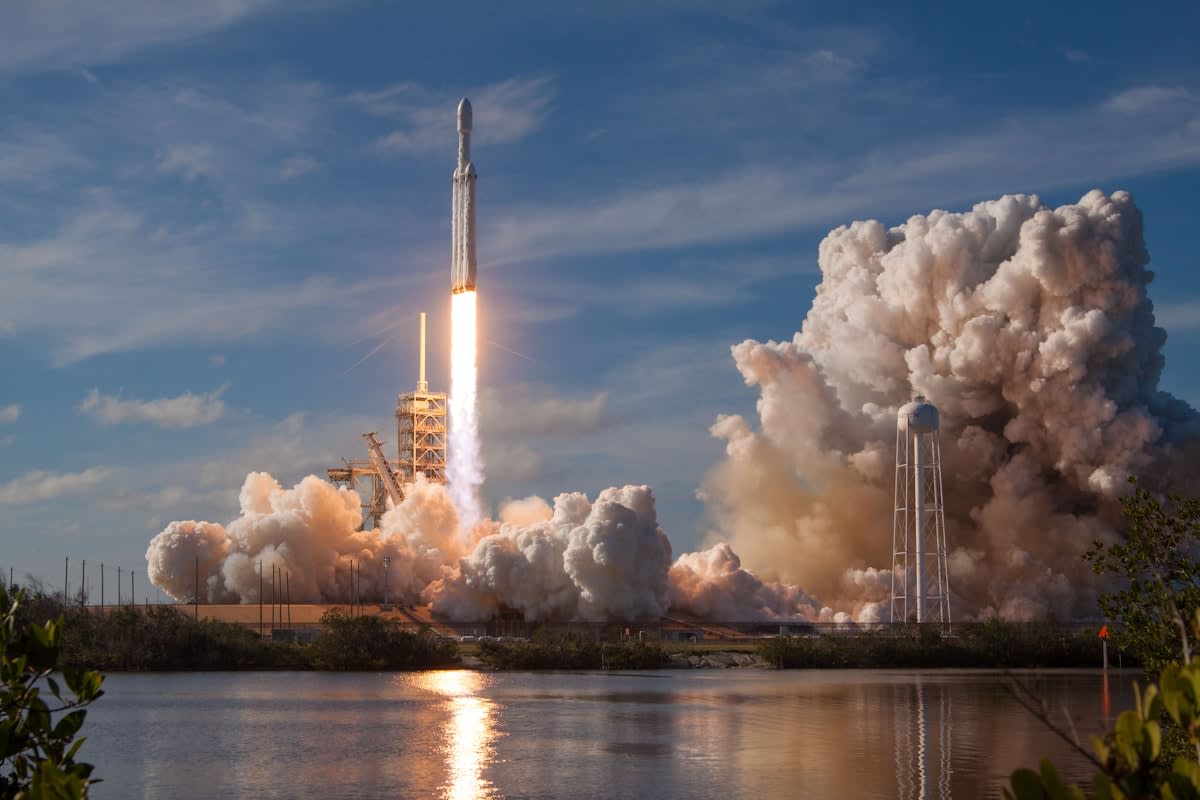
But let's be clear: this is not a luxury for the 1%. The race is currently focused on scaling the payload capacity to a point where the cost per seat drops to levels competitive with current first-class tickets. When a single vehicle can carry 100 passengers and 100 tons of cargo, the economics shift from 'experimental' to 'disruptive.' We are looking at a future where the 'long-haul' flight is dead, replaced by a series of high-velocity hops that redefine global diplomacy and supply chain agility.
"The challenge is no longer the rocket science; it's the infrastructure science. We can get to space, but we cannot yet land a commercial transport in the middle of a city without breaking every window in a ten-mile radius."— Industry Analyst, Aerospace Logistics Group
The Logistics of the Leap
From a practitioner's perspective, the real friction isn't in the ascent—it's in the turnaround. If you've spent any time on a launch pad, you know the chaos of cryogenic fueling and the meticulous scrub of heat shields. The internal debate among engineers right now isn't about the engine's thrust, but about 'rapid reusability.' Can a vehicle land, refuel, and launch again in six hours? If the answer is no, the business model collapses. We are fighting a war against the thermodynamics of re-entry, trying to find materials that don't require a month of inspection after every single flight.
The physical toll on the human body also introduces a critical constraint. While professional astronauts handle 3G loads with ease, the average corporate traveler cannot. The race to scale now includes the development of 'gentle' trajectories—arcs that maximize speed while keeping G-forces within the limits of a sedentary population. This requires a sophisticated dance of orbital mechanics that balances time-savings against passenger consciousness (Source: Aerospace Medical Association, 2023).
| Metric | Traditional Long-Haul (Jet) | Point-to-Point (Rocket) |
|---|---|---|
| NYC to Tokyo Time | 14 Hours | 39 Minutes |
| Cruising Altitude | 35,000 ft | 100+ miles (Vacuum) |
| Fuel Source | Kerosene/Jet-A | Liquid Methane/LOX |
| Turnaround Time | 2-4 Hours | 6-24 Hours (Projected) |
This shift creates a massive opportunity for emerging economies. Imagine a spaceport in Nairobi or Jakarta becoming the new 'hub' of global transit, bypassing the congested airspace of traditional superpowers. The geography of power is shifting from who controls the oceans to who controls the orbital corridors. The resilience of the global economy increases when a critical component can be moved from a factory in Germany to a plant in Mexico in under an hour.
However, the environmental cost remains the elephant in the room. While liquid methane is cleaner than traditional rocket fuels, the sheer volume of launches required to replace commercial aviation would be astronomical. The industry is betting on carbon-capture synthesis to create 'green' methane, but the scale required is unprecedented. We are essentially attempting to build a planetary-scale plumbing system for fuel that doesn't yet exist (Source: International Energy Agency, 2023).
- Sonic Boom Mitigation: Developing 'quiet' re-entry profiles to avoid noise pollution over land.
- Spaceport Integration: Transitioning from remote islands to integrated coastal hubs.
- Biological Tolerance: Engineering cabins that maintain 1G-like stability during high-velocity arcs.
- Regulatory Harmonization: Creating a global treaty for orbital transit rights to avoid 'airspace' disputes.
The regulatory wall is perhaps the most daunting hurdle. Current FAA guidelines are designed for a handful of launches per month, not a thousand per day. The transition to a 'scheduled' rocket service requires a complete rewrite of international aviation law. Who owns the corridor at 100 kilometers? How do you manage traffic control when vehicles are moving at 27,000 kilometers per hour? The bureaucracy is currently moving at a snail's pace while the hardware is moving at orbital velocity.
Despite these frictions, the momentum is irreversible. The capital flowing into point-to-point transport is no longer just venture capital—it is sovereign wealth. Nations realize that the first country to master the 'orbital hop' gains an insurmountable advantage in logistics and rapid response. It is a race for the ultimate high ground, where the prize is the total control of time and distance.
Fact-Check & Accuracy Note
Key claims regarding flight times (NYC to Tokyo) and fuel types are based on SpaceX's published Starship conceptual goals and FAA regulatory frameworks. The 'green methane' projections are sourced from IEA sustainability reports. Note that actual commercial availability remains subject to successful full-scale reusability tests and international treaty approvals, which remain the primary points of uncertainty in the field.