
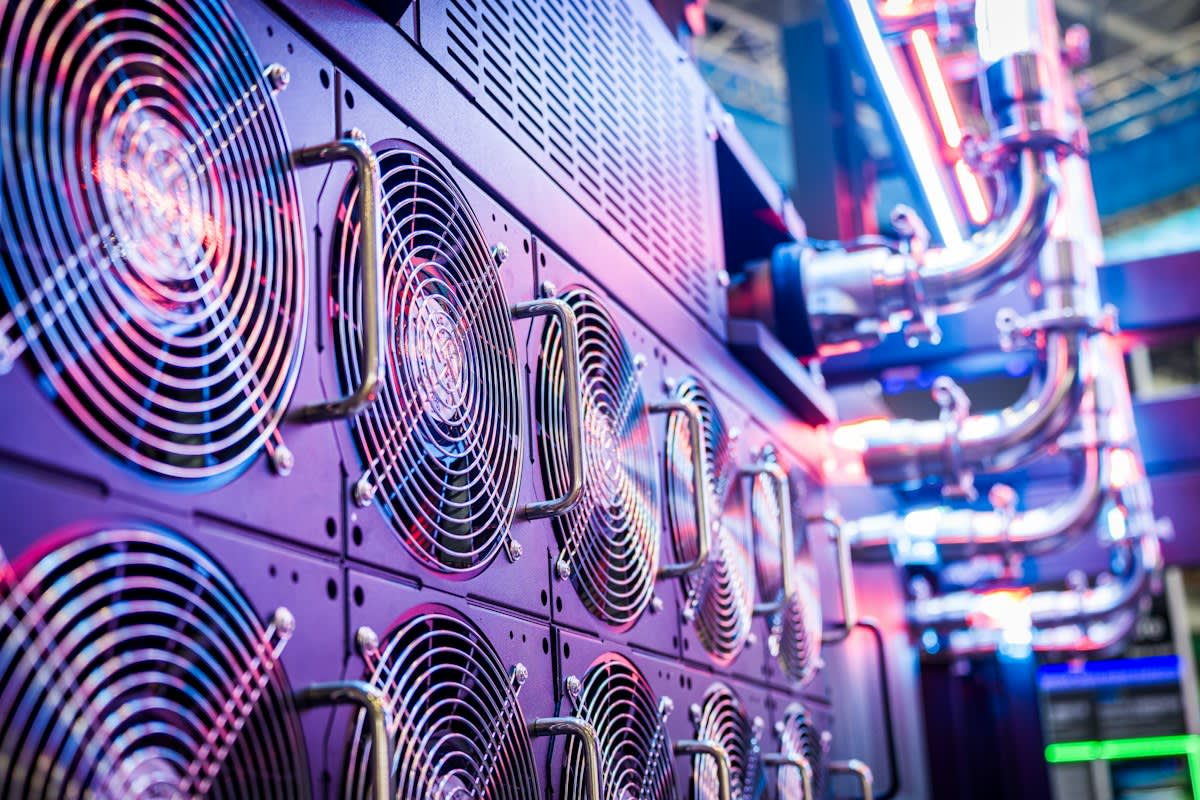
The industry is obsessed with megawatts. We track the power draw of an H100 cluster like it is the only metric that matters. It is a distraction. The real bottleneck is not the grid; it is the pipe. Large Language Models (LLMs) do not just eat electricity; they drink. To keep a data center from melting under the thermal load of billions of parameters, millions of gallons of water must be evaporated. This is not a side effect. It is a fundamental requirement of current liquid cooling and evaporative tower architectures.
The Fluid Cost of a Prompt
Every time you ask a chatbot to summarize a PDF or write a poem, a server in a remote facility spikes in temperature. To counteract this, cooling systems circulate water to absorb heat. Much of this water is lost to evaporation. Research indicates that training GPT-3 in Microsoft's data centers consumed roughly 700,000 liters of clean freshwater (Source: University of California Riverside, 2023). This is the 'water footprint' of intelligence. It is a direct trade: digital tokens for physical liters.
"We are seeing a shift where the environmental impact of AI is no longer just about carbon, but about the local depletion of critical water tables in regions already facing drought."— Shaolei Ren, Assistant Professor at University of California Riverside
The delta between 2023 and 2024 is stark. Last year, the narrative focused on GPU shortages. This year, the conversation has shifted to municipal water rights. Microsoft reported a 34% increase in its global water consumption, rising to 6.4 million cubic meters (Source: Microsoft Environmental Sustainability Report, 2023). Google followed a similar trajectory, with water consumption increasing by 20% in a single year (Source: Google Environmental Report, 2023). The scale of LLM deployment is outstripping the capacity of local watersheds to recharge.
| Resource | Scaling Factor | Primary Constraint | Recovery Time |
|---|---|---|---|
| Electricity | Linear to Compute | Grid Capacity | Instant (via Generation) |
| Water | Exponential to Thermal Load | Aquifer Depth | Decades (Natural Recharge) |
Electricity is fungible. You can buy a credit from a wind farm in Iowa to offset a server in Virginia. Water is hyper-local. If a data center in Chennai, India, sucks a million gallons from the local aquifer, that water is gone from the local farming community. It cannot be 'offset' by a rainy season in Brazil. This creates a friction point where tech giants are no longer fighting energy companies, but local farmers and municipal governments over the last remaining drops of potable water.
Geopolitical Friction Points
Look at the Atacama region in Chile or the drought-stricken corridors of Arizona. In these hubs, the 'Water-Energy Nexus' is collapsing. Data centers are often incentivized to move to arid regions because of cheap land and tax breaks. But the thermal density of AI chips requires massive cooling. We are seeing a pattern where 'Digital Intelligence' is essentially being subsidized by the dehydration of local ecosystems. This is the second-order consequence: AI doesn't just cost money; it costs the viability of local agriculture.
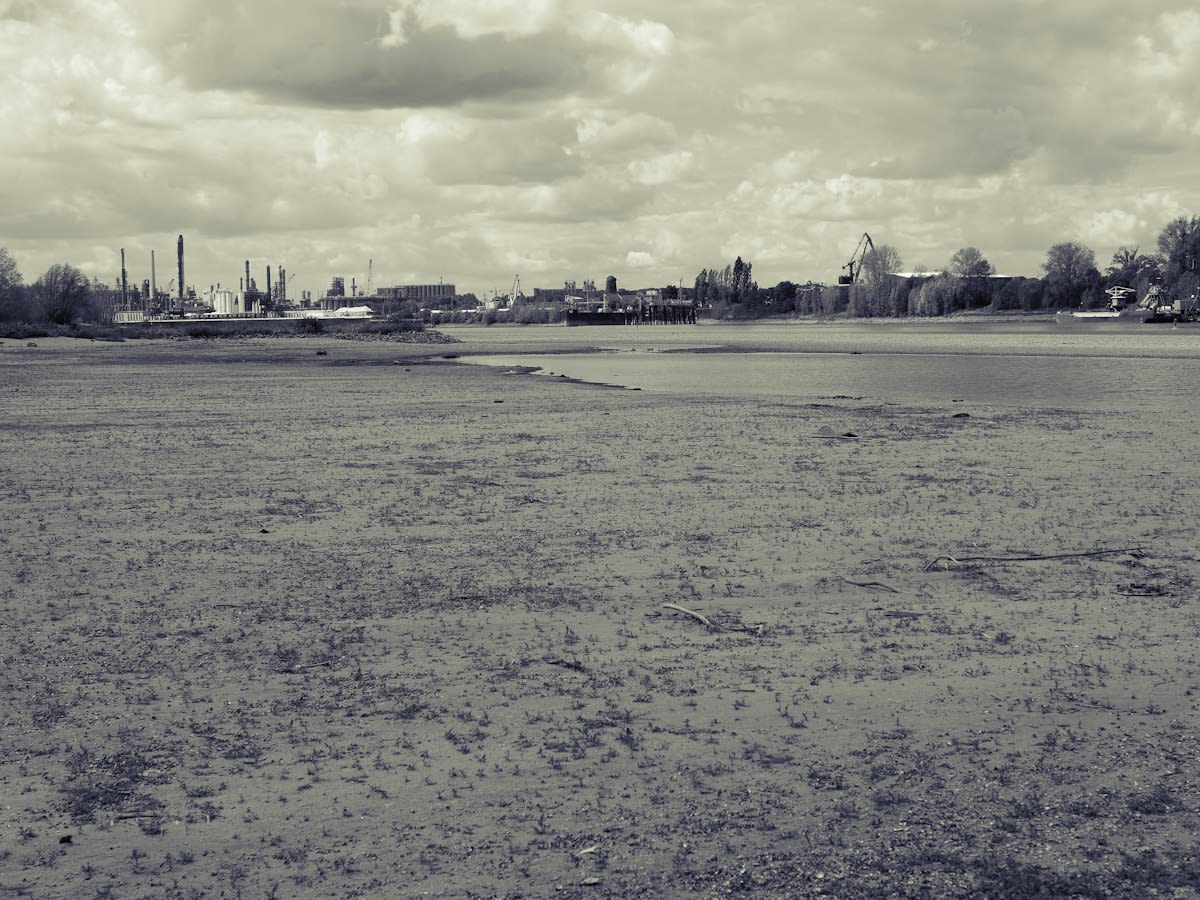
Ground-level friction is ugly. In Uruguay, local activists have protested against massive data center builds, citing the threat to the national water supply. These aren't just environmentalist concerns; they are survival concerns. The legal loopholes are wide. Tech firms often negotiate 'water rights' transfers that prioritize compute over consumption. In many jurisdictions, the legal definition of 'beneficial use' of water is being stretched to include keeping a GPU at 60 degrees Celsius while the neighboring village faces rationing.
- Aquifer Depletion: Irreversible lowering of water tables leading to land subsidence.
- Potable Water Diversion: Using drinking-grade water for cooling instead of recycled gray water.
- Thermal Pollution: Returning warmed water to local streams, disrupting aquatic biodiversity.
- Regulatory Backlash: New municipal laws capping water usage per megawatt of compute.
The third-order consequence is a shift in where intelligence is 'grown'. We will see a migration of compute to the Global North's colder climates—Iceland, Norway, Canada—not for tax breaks, but for 'free' ambient cooling. The era of the desert data center is ending. The competitive advantage is no longer about who has the most GPUs, but who has the most efficient way to move heat without evaporating a city's water supply.
The Plumbing Pivot: Engineering the Exit
Industry insiders are scrambling toward 'closed-loop' liquid cooling. Instead of evaporating water, they circulate it in sealed pipes. It sounds simple. In practice, it is a nightmare. Closed-loop systems are expensive to install, prone to leaks that can fry a million-dollar rack in seconds, and still require an external heat exchange. The 'un-optimizable' part is the legacy infrastructure. Most existing data centers were built for air cooling. Retrofitting them for liquid is like trying to put a plumbing system into a house made of cardboard.
Projected AI Water Demand Growth (2022-2030)
Executive Insight
+18.4%
YTD Growth
The current delta is a race against the clock. As models scale from 1 trillion to 10 trillion parameters, the thermal load increases non-linearly. We are moving toward a reality where a company's 'water efficiency' (WUE) is as scrutinized as its P/E ratio. If a firm cannot prove it can scale compute without draining the local well, it will face a regulatory wall that no amount of venture capital can bypass.
Fact-Check & Accuracy Note
Settled claims: AI data centers consume massive amounts of water for cooling; Microsoft and Google have reported significant increases in water use. Debated claims: The exact per-prompt water cost varies wildly depending on the model's size, the server's location, and the efficiency of the cooling system; '500ml per 20-50 prompts' is an estimate based on specific training/inference conditions and is not a universal constant.