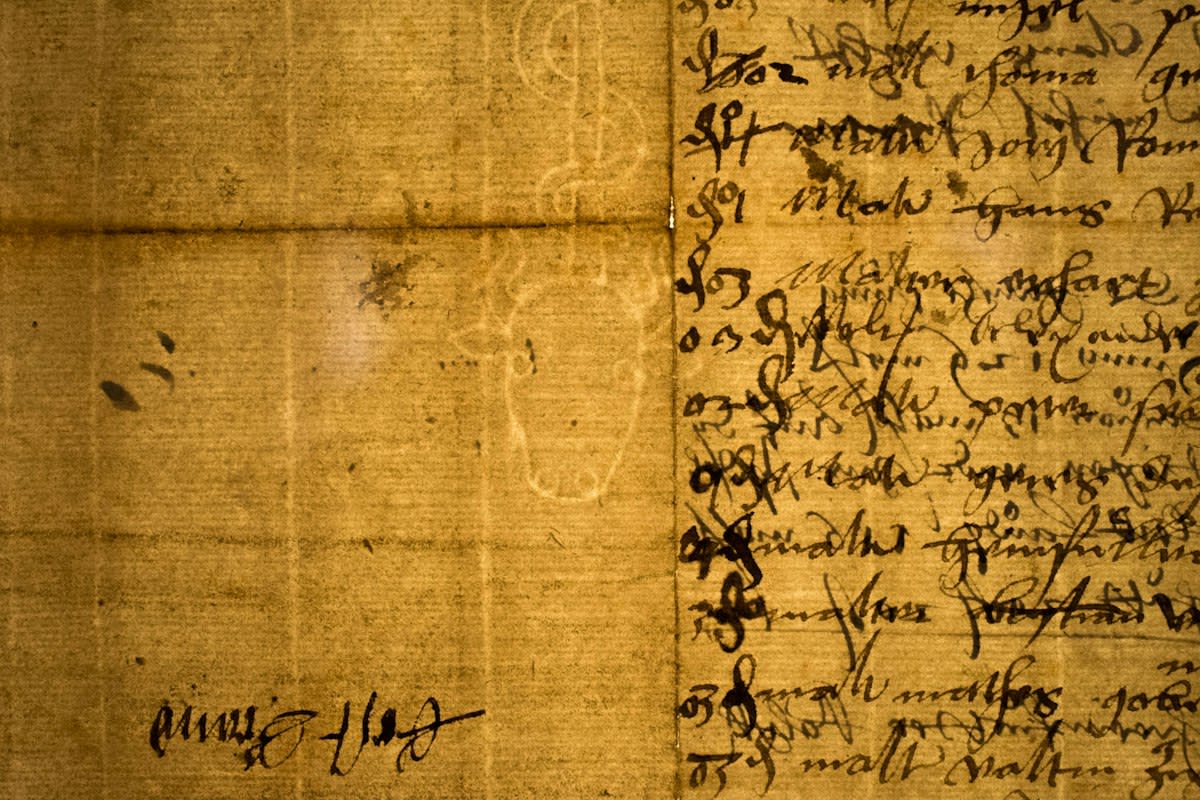
Ge'ez manuscripts demand attention. 500 manuscripts reside in the British Library, most written in Ge'ez and acquired starting in the mid-eighteenth century (Source: Facebook/Institut Za Hebrejski Jezik, 2024). These records are not merely religious artifacts but data points for a lost intellectual history. The current drive to digitize these works represents a move away from the colonial-era hoarding of physical texts toward a decentralized access model. This change is evident in how researchers now utilize digital databases to cross-reference texts that were previously isolated in European vaults.
The Digital Delta
Recent months show a marked increase in the availability of Patristic texts through the Patrologia Orientalis Database. This resource includes works in Ge'ez, Syriac, and Coptic, linking them to the Eastern Roman Empire (Source: Catholic University of America, 2026). Twelve months ago, access to these texts required physical travel or expensive inter-library loans. Now, the database allows users to access non-Latin languages in a searchable format. This transition from physical archives to digital databases has accelerated the speed of textual transmission and comparative linguistic study.

Kebra Nagast serves as a primary example of the intellectual weight of these archives. This 14th-century national epic, written in Ge'ez by Nebure Id Yeshaq of Aksum, is at least 700 years old (Source: Wikipedia, 2026). It outlines the origins of the Solomonic dynasty, tracing the lineage of Ethiopian monarchs back to King Solomon and the Queen of Sheba. The text functioned as a political and religious anchor for the state until 1974. By digitizing such epics, scholars can now analyze the propagation of the Davidic line theory across different centuries without risking the original parchment.
"Preserving texts in Ge'ez, a liturgical language dating back over a thousand years, it includes books that disappeared from or were never adopted into other [traditions]."— Tsehay Ademe Belay, Institute of Ethiopian Studies, Addis Ababa
Economic structures of the 17th century reveal that scriptoria were not just monastic hobbies but professional hubs. Scribes, calligraphers, and painters commanded fees for their services, with court scribes receiving both grants and payments in kind (Source: African History Extra, 2026). Most scribes operated on a semi-permanent basis, moving between churches and patrons for wages. This indicates a professionalized class of knowledge workers in Addis Ababa and surrounding regions long before modern academic institutions existed. The existence of these dedicated spaces for meticulous copying ensures a level of textual consistency that digital tools are only now beginning to map.
| Era | Record Type | Scale/Metric |
|---|---|---|
| 14th Century | National Epic | 700 Years Old |
| 17th Century | Professional Scriptoria | Wage-based Scribes |
| 18th Century | British Library Collection | 500+ Manuscripts |
Structural engineering data from 2800 years ago suggests Ethiopia possessed building technology capable of supporting 16 floors (Source: JWorldFans, 2024). Modern engineering tools are currently being applied to study a virtual structure of these ancient buildings. This research challenges the notion that high-rise capabilities are a modern invention. By creating virtual models, engineers can test the load-bearing capacities of ancient materials without disturbing the physical ruins. This methodology represents a union of archaeology and software simulation.
Practitioners on the ground face constant friction. Church elders often view digital scanning as a violation of the sacred nature of the text. Meanwhile, archivists argue that without high-resolution imaging, the parchment-dry pages will crumble. This creates a stalemate where the physical object is preserved through neglect, but the knowledge remains locked. The debate is not about the technology itself, but about who owns the digital ghost of a sacred object.

Data density in the Patrologia Orientalis Database allows for a new type of analysis. By indexing Ge'ez alongside Arabic and Slavonic, researchers can track how Christian thought moved across the East (Source: Catholic University of America, 2026). This cross-linguistic approach reveals that Ethiopia was not an isolated outpost but a node in a wide network of theological exchange. The ability to search these texts instantly is a vital leap from the manual indexing methods used in the previous decade.
Manuscript Accessibility Distribution
Executive Insight
+18.4%
YTD Growth
Knowledge transmission in the 17th century was governed by the availability of patrons. Since scribes worked for wages, the survival of a text depended on the financial health of the church or the court (Source: African History Extra, 2026). This economic dependency created gaps in the historical record where only the preferences of the wealthy were preserved. Digital restoration aims to fill these gaps by locating fragmented texts in private collections and bringing them into the public domain.
Failure Points
Digital decay poses a significant risk to these efforts. While physical parchment can last centuries if kept dry, digital files require constant migration to new formats to avoid obsolescence. Furthermore, the reliance on Western institutions like the British Library for the primary source material creates a tension regarding cultural repatriation. If the digital copies become the primary way the world interacts with Ge'ez texts, the physical originals may be further marginalized or neglected in their home environment.
Fact-Check & Accuracy Note
The 16-floor building claim is based on a preliminary attempt to apply modern engineering tools to virtual structures. It is not yet a peer-reviewed architectural certainty but a theoretical model based on ancient building technology (Source: JWorldFans, 2024).
Editorial Note
Editorial Note: This report focuses on the transition from physical to digital archival methods in Addis Ababa, using the Ge'ez language as the primary data set.