
Most analysts are still obsessing over parameter counts and token efficiency, treating AI as a purely mathematical challenge. They are wrong. The actual bottleneck isn't the brilliance of the architecture, but the sheer physical fragility of the supply chain that enables it. We have entered an era where the AI power hierarchy is redefined not by who has the best model, but by who can secure the high-bandwidth memory (HBM) and the specialized materials required to build it. When you strip away the hype, AI is an industrial product, and like any industrial product, it is subject to the laws of geology and logistics.
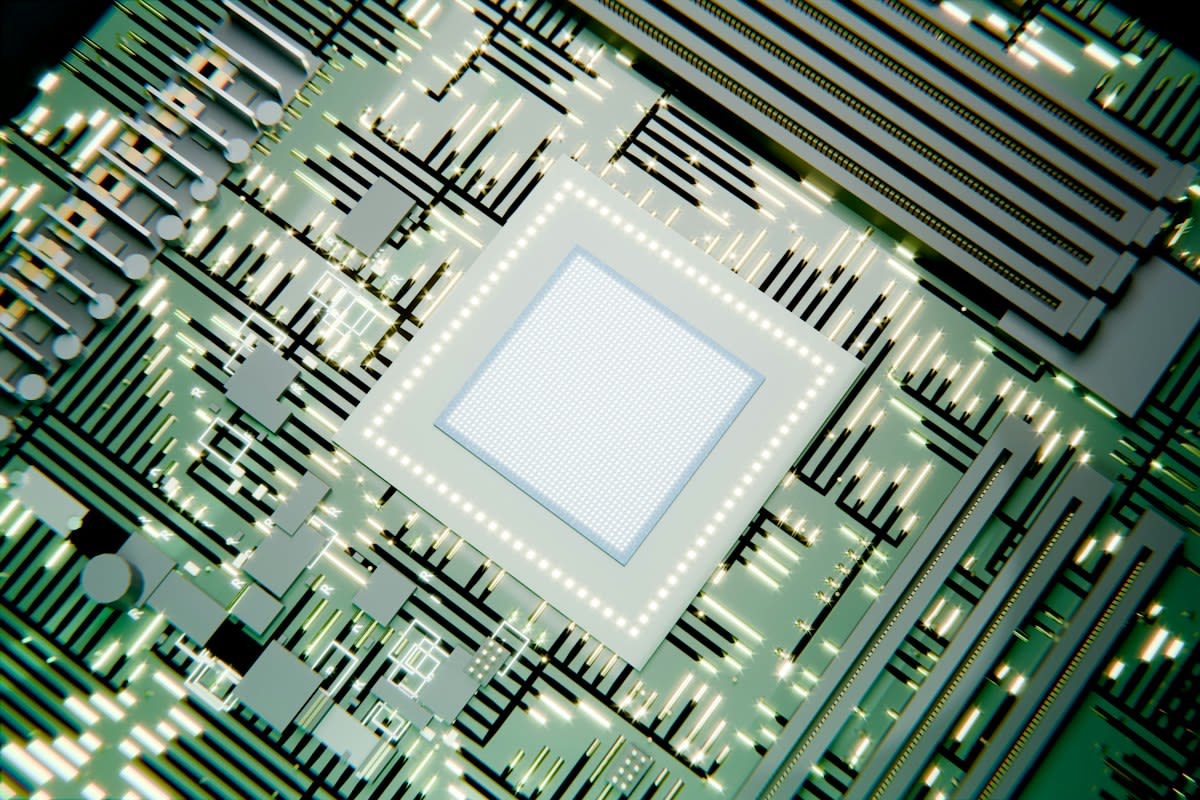
Why does this matter now? Because the industry has hit a wall of physical reality. The transition from general-purpose computing to AI-centric hardware has shifted the leverage from the designers to the fabricators and the raw material suppliers. We are seeing a systemic migration of power toward the Asia-Pacific (APAC) region, which already accounts for approximately 58% of global semiconductor industry revenue (Source: FedEx, 2026). This isn't just a cost-saving measure; it is a strategic consolidation of the means of production.
The APAC Pivot and the Rise of New Hubs
For years, the narrative was that design happened in the West and assembly happened in the East. That dichotomy is dead. Nations like Vietnam are aggressively pursuing a deeper role in the global semiconductor value chain, aiming to participate in every stage from design and fabrication to packaging and testing by 2030, with a long-term vision extending to 2050 (Source: VietnamNet, 2026). This is a calculated move to capture the full value of the AI hardware stack, moving beyond low-margin assembly into the high-margin territory of intellectual property and advanced manufacturing.
"Vietnam is becoming an increasingly important part of APAC’s semiconductor ecosystem, as more semiconductor and high-tech companies expand their presence in the country."— Ee-Hui Tan, Managing Director of FedEx Vietnam and Cambodia
This shift creates a new tension. As the center of gravity for semiconductor revenue remains heavily skewed toward APAC, the ability to scale AI becomes a function of diplomatic agility. If a country cannot secure its place in the packaging and testing phase—where HBM is integrated with GPUs—it doesn't matter how many billions they spend on software. The hierarchy is now built on the ability to move silicon from a fab in Taiwan or Korea through a packaging plant in Vietnam and into a data center in North America or Europe.
| Metric | Current State / Goal | Strategic Significance |
|---|---|---|
| APAC Revenue Share | 58% of global revenue (Source: FedEx, 2026) | Dominance of the global innovation map |
| Vietnam's Objective | Full value chain by 2030/2050 (Source: VietnamNet, 2026) | Shift from assembly to design/fabrication |
| Material Status | Helium as 'Critical Material' (Source: CBS News, 2026) | Supply chain vulnerability for high-tech innovation |
But the bottleneck isn't just about where the chips are made. It's about what goes into them. The industry is discovering that the most sophisticated AI hardware is only as resilient as the most obscure material in its production line.
The Helium Variable: Geology as Destiny
Consider the recent designation of helium as a critical material by the U.S. Energy Department (Source: CBS News, 2026). To the uninitiated, helium is for balloons. To a semiconductor practitioner, it is an essential cooling agent and inert atmosphere gas used in the manufacturing of high-end chips. The supply chain for this gas was recently rocked by Iranian strikes on a Qatari gas facility and the effective closure of the Strait of Hormuz, proving that a localized conflict in the Middle East can directly throttle the production of AI hardware thousands of miles away (Source: CBS News, 2026).
This is the 'invisible' friction that keeps CTOs awake at night. We talk about HBM bottlenecks in terms of yield and capacity, but the internal debate in the boardroom is about raw material security. If you cannot source the helium required for the fabrication process, your capacity expansions are meaningless. The U.S. may be the world's largest producer, but the volatility of global transit points means that national production is not the same as supply chain security (Source: CBS News, 2026).
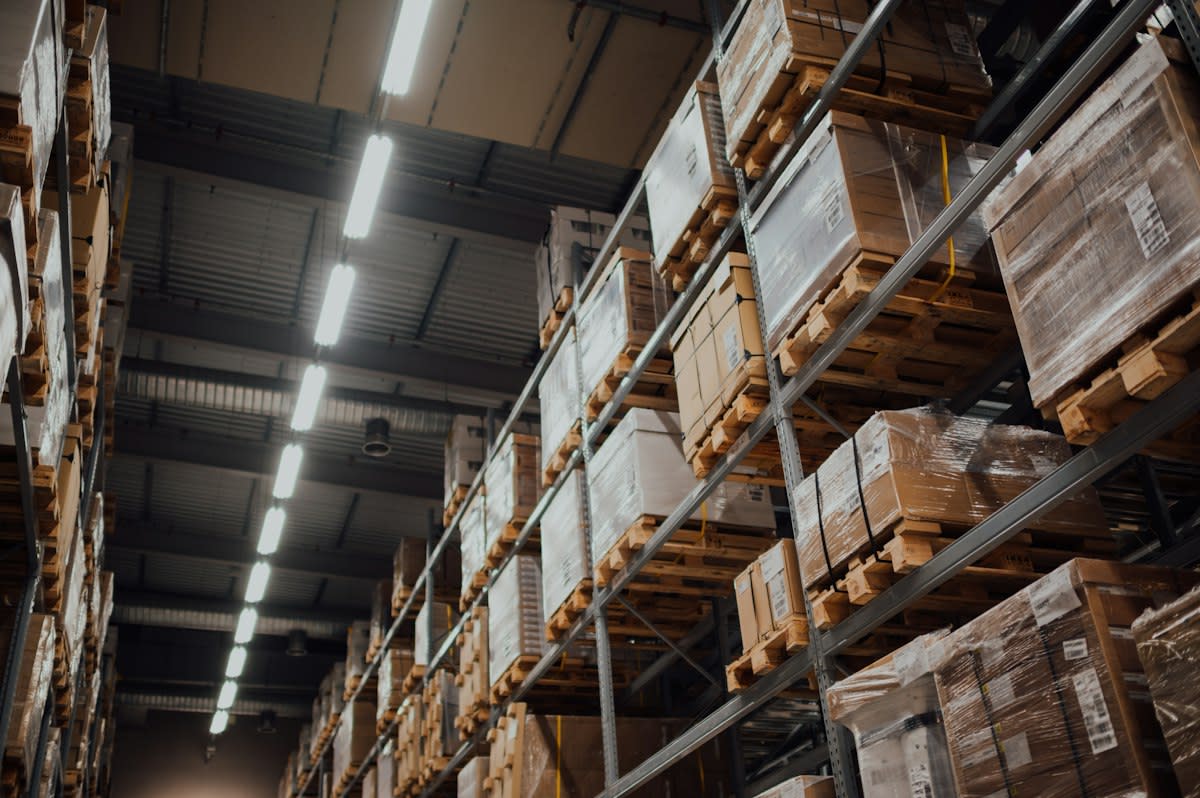
From a practitioner's perspective, this manifests as a shift from 'just-in-time' to 'just-in-case' inventory management. For a decade, the goal was to minimize overhead. Now, the internal debate is centered on how much 'buffer' is enough. We are seeing firms engage in desperate hedging, securing multi-year contracts for gases and rare earths that they previously ignored. The friction isn't in the engineering; it's in the procurement. The real winners aren't the ones with the fastest chips, but the ones with the most redundant supply lines.
Logistics: The Last Mile of AI Power
Even if you solve the material and fabrication problems, you still have to move the hardware. The logistics sector is currently struggling with a volatile cocktail of rising costs and security threats. Fuel prices have jumped to become the number one concern for the trucking industry in 2026 (Source: Logistics Management, 2026). When the cost of moving goods spikes, the overhead of deploying massive AI clusters increases proportionally.
More concerning is the intersection of AI and security. The American Transportation Research Institute (ATRI) has noted that AI has moved up the list of industry concerns, specifically regarding its risks to jobs, security, and cargo theft (Source: Logistics Management, 2026). We are in a paradoxical loop: we are building AI to optimize the supply chain, yet the existence of that AI is creating new security vulnerabilities in the very logistics networks used to ship the hardware.
Can we really call it an AI revolution if the hardware is stuck in a truck that's too expensive to run or a shipment that's vulnerable to AI-driven theft? The power hierarchy is being redefined by those who can synchronize the digital demand with the physical delivery. The gap between 'available on paper' and 'installed in the rack' is where the real competition is won or lost.
Fact-Check & Accuracy Note
Key claims regarding APAC semiconductor revenue (58%) are sourced from the FedEx report 'From AI to EVs'. Data on helium's critical material status and the impact of Iranian strikes are sourced from CBS News (2026). Trucking industry concerns are based on the ATRI annual report via Logistics Management (2026). The specific link between helium and semiconductor fabrication is a known industry standard, though the provided text focuses on its general 'technological innovation' utility.
Adapting to the New Hierarchy
The opportunity here is not in fighting the shift, but in adapting to it. The companies that will dominate the next decade are those that treat their supply chain as a core competency rather than a back-office function. This means investing in regional diversification—much like the strategy Vietnam is employing—and diversifying the sources of critical materials to avoid the 'single-point-of-failure' trap seen with the Strait of Hormuz.
We are moving toward a fragmented, multi-polar AI economy. In this world, the 'power' is distributed among those who control the design, those who control the materials, and those who control the logistics. The software layer is becoming a commodity; the physical layer is the new moat. If you aren't thinking about the geology of your AI, you aren't thinking about your AI at all.