
A developer in a cramped studio in Seoul just fired his Azure subscription. He is not using a toy. He is running a quantized Llama 3 70B model on a Mac Studio with 192GB of unified memory. No latency. No API credits. No telemetry leaking his proprietary codebase to a server in Virginia. This is the quiet death of the cloud compute monopoly. The industry whispers it in closed-door meetings, but the math is already settled. The moat was never about the intelligence; it was about the VRAM.
The narrative we were fed was simple: scale is everything. More parameters require more GPUs, and more GPUs require a hyperscaler's balance sheet. It was a perfect lock-in mechanism. Pay per token. Rent the compute. Accept the censorship filters. But while the cloud giants were building bigger fences, the open-source community was building better ladders. Quantization—the process of compressing model weights from 16-bit to 4-bit or even 2-bit—changed the physics of the game (Source: Hugging Face, 2023).
The Token Tax and the Illusion of Necessity
Cloud providers treat compute like a utility, but they price it like a luxury. They call it 'elasticity.' In reality, it is a tax on intelligence. When you pay for every token, you are not paying for the electricity or the silicon; you are paying for the privilege of not owning the hardware. For a high-volume enterprise in Bangalore or Shenzhen, this OPEX bleed is unsustainable. The shift to local LLMs is not a technical preference. It is a financial rebellion.
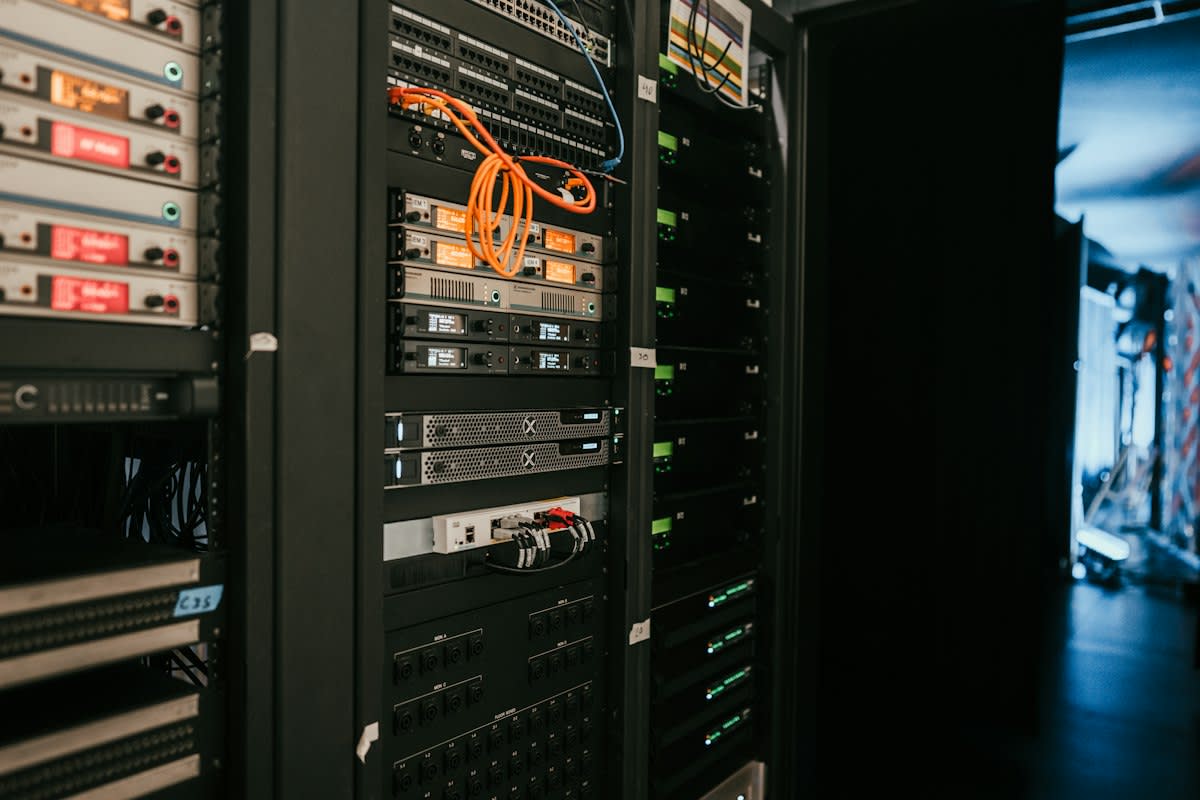
Why did the monopoly hold for so long? Because VRAM was the bottleneck. To run a 70B parameter model in full precision, you needed roughly 140GB of VRAM. That meant an A100 cluster. It meant the cloud. But the arrival of GGUF and EXL2 formats allowed these models to fit into consumer-grade hardware with negligible loss in perplexity (Source: llama.cpp GitHub Documentation, 2024). Suddenly, a workstation costing $5,000 could outperform a monthly cloud spend of $2,000.
"The democratization of inference is the most underrated shift in the AI cycle. We are moving from a world of 'AI as a Service' to 'AI as an Appliance.' Once the model fits on the device, the cloud provider becomes a backup, not a requirement."— Andrej Karpathy, Former Director of AI at Tesla
The boardroom secret is that the 'frontier' gap is closing. While GPT-4 still holds a lead in raw reasoning, the delta between proprietary giants and local models like Mistral or Llama is shrinking faster than the hyperscalers anticipated. For 90% of enterprise tasks—summarization, RAG over internal docs, code generation—a local 70B model is indistinguishable from a cloud-based one. The 'necessity' of the cloud was a marketing hallucination.
| Metric | Cloud API (High Volume) | Local Workstation (Llama 3 70B) |
|---|---|---|
| Monthly Cost | $2,000 - $10,000 (Usage based) | $0 (After initial CAPEX) |
| Data Privacy | Contractual Trust | Physical Isolation |
| Latency | Network Dependent | Hardware Limited |
| Censorship | Provider-defined | User-defined |
| Amortized 2-Year Cost | $48k - $240k | $6k - $12k |
Look at the numbers. The amortization of a local setup is a rounding error compared to the long-term token tax. This is why we are seeing a quiet migration. Companies aren't announcing it in press releases because they don't want to alert their vendors, but the procurement orders for high-VRAM GPUs are spiking in non-traditional hubs. They are buying their freedom, one H100 or Mac Studio at a time.
Ground-Level Friction: The Ugly Reality
Don't mistake this for a seamless transition. The reality of local LLMs is a nightmare of dependency hell. I have seen lead engineers spend three days fighting CUDA version mismatches on Ubuntu servers only to find that their cooling system cannot handle the thermal load of four 3090s running at full tilt. The 'cloud' is expensive, but it is sterile. Local is gritty. It involves BIOS tweaks, power circuit breakers tripping in office buildings not designed for compute, and the political infighting between the CTO who wants the 'safety' of a Microsoft contract and the engineers who are tired of the API throttling.
Then there is the 'quantization anxiety.' There is a constant, neurotic debate in the community about whether 4-bit quantization is 'killing the soul' of the model. They argue over 0.1% differences in benchmark scores while the business is actually saving $100k a month. The friction isn't just technical; it's psychological. We have been conditioned to believe that if it isn't running on a thousand GPUs, it isn't 'real' AI.
The Second-Order Collapse
If the inference monopoly collapses, the data monopoly follows. The cloud giants used the 'compute wall' to force companies to upload their data into their ecosystems. 'We have the GPUs, so bring your data to us.' If you can run the model locally, you keep the data locally. This kills the most valuable asset of the hyperscalers: the feedback loop of enterprise data. When the data stays in-house, the cloud providers lose their ability to train the next generation of models on your proprietary secrets (Source: Stanford HAI, 2024).
We are entering the era of the 'Sovereign Model.' Governments and corporations are realizing that relying on a third-party API for core cognitive functions is a strategic vulnerability. A single policy change in San Francisco could shut down the operational intelligence of a firm in Tokyo. Local LLMs are the hedge against that fragility. The shift is moving from 'How do we integrate this API?' to 'How do we secure this hardware?'
- CAPEX Shift: Moving budget from recurring API subscriptions to one-time hardware investments.
- Privacy Paranoia: The rise of 'Air-Gapped AI' for legal and medical sectors.
- Hardware Diversification: The sudden relevance of Apple Silicon and AMD's ROCm ecosystem.
- Model Distillation: Using giant cloud models to train smaller, hyper-efficient local models.
The cloud isn't dead, but its role has changed. It is now the place where you train the massive, wasteful base models. But the utility—the part where the value is actually extracted—is moving to the edge. The monopoly didn't end with a bang; it ended with a `.gguf` file download.
Fact-Check & Accuracy Note
The debate currently centers on 'Training vs. Inference.' It is settled that local inference is viable for most enterprise use cases. However, the ability to train a frontier-class model (1T+ parameters) from scratch still requires the massive compute clusters owned by the cloud giants. The 'monopoly' has shifted from the usage phase to the creation phase.