Oslo smells brine-soaked. 65 onshore wind farms account for 10 percent of Norwegian electricity production (Source: Inderberg, 2020). This number represents a sharp acceleration in capacity compared to the previous decade. The state is now grappling with a surge in electricity demand (Source: NOU 2023: 3). This demand is not a slow climb but a steep wall. The pressure to expand wind power is no longer a policy suggestion; it is a survival requirement for the grid.
The Wind Surge and the Hydro Legacy
Norway has long relied on the heavy weight of hydroelectricity. Historically, water rights were fragmented and small, which allowed private companies to lead early production (Source: Faugli, 2020). This created a system where the state eventually became the primary steward, but the roots remained private. Now, wind energy is the second largest source of power, filling the gaps that hydro cannot meet during dry years. The addition of 65 onshore farms (Source: Inderberg, 2020) shows a rapid turn toward diversification. However, this growth is not without friction, as the land-use conflicts become more aggressive.
| Energy Source | Current Share | Trend (Last 12 Months) | Primary Driver |
|---|---|---|---|
| Wind | 10% | Increasing | Capacity Expansion |
| Hydro | Majority | Stable | State Stewardship |
| Demand | Rising | Accelerating | Climate Transition (NOU 2023: 3) |
The delta between 2025 and 2026 is marked by a change in urgency. Twelve months ago, the conversation focused on the feasibility of wind. Today, the focus is on the speed of deployment to meet the forecasts in NOU 2023: 3. The state is attempting a process of centrally decentralising the electricity transition (Source: Inderberg, 2020). This means the government sets the goals, but the local municipalities must bear the zinc-heavy reality of turbine construction. The result is a tension between national energy security and local land preservation.
The Paradox of Public Power
Norway possesses a vibrant civil society. Membership in voluntary organizations is high, and trust in the state is among the highest globally (Source: Selle et al., 2019). Yet, this social capital does not translate to energy activism. There is a startling lack of bottom-up energy communities or cooperatives (Source: Standal et al., 2023). While citizens are happy to participate in state-led programs, they rarely organize to own their own power production. This creates a vacuum where the state and the market are the only players.
"The idea of the commons is increasingly employed as a conceptual framework in energy-society research with a distinct political orientation, emphasizing social rights, inclusion, cooperation and active citizens involvement in the governance of energy."— Bauwens et al., 2024
Contrast this with the heat transition in Amsterdam. In the Netherlands, commoning practices are being used to ensure energy justice (Source: Kaandorp et al., 2024). Amsterdam is seeing a rise in cooperative energy models that distribute both risk and reward. Oslo, by comparison, remains a top-down machine. The Norwegian model relies on the state as the representative of the public, which may stifle the kind of grassroots innovation seen in other European hubs. This missing link in citizen engagement could become a bottleneck as the transition accelerates.
The Research Chokehold
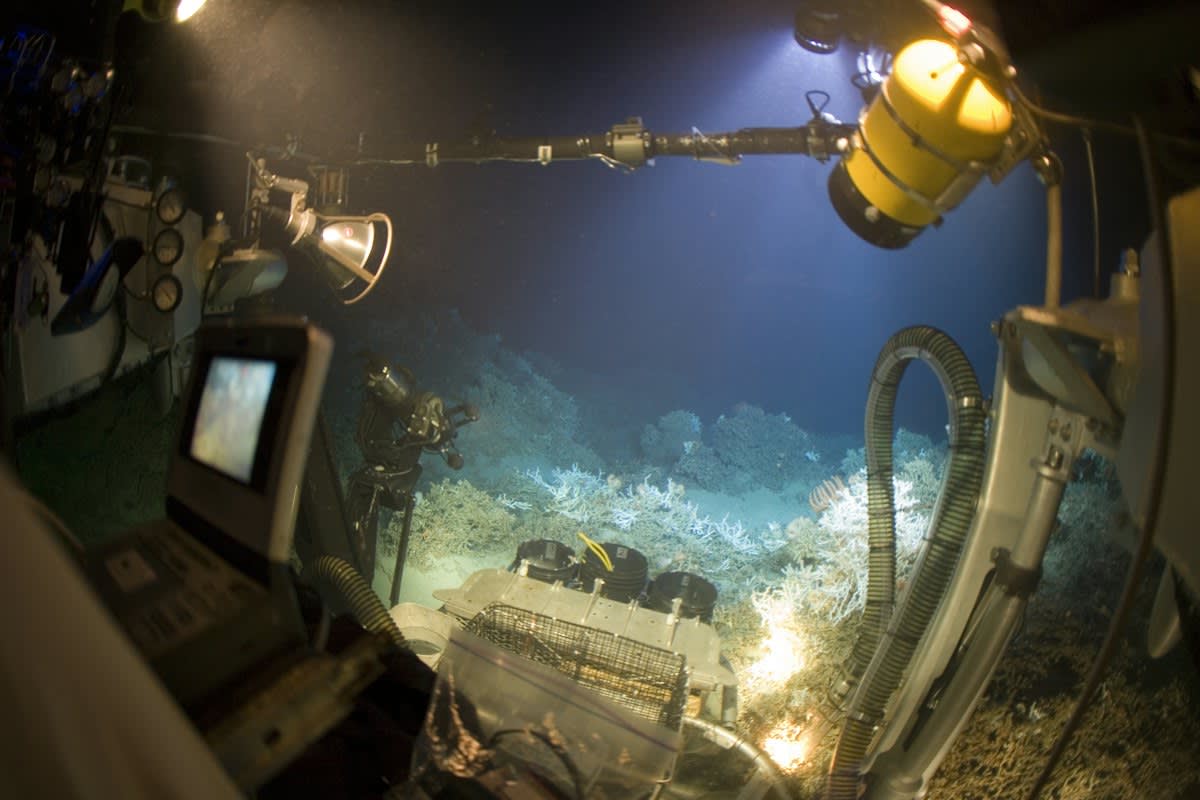
Innovation is hitting a bureaucratic wall. Nordic universities are warning that dual-use restrictions are hindering vital research (Source: Science|Business, 2026). A prime example is the SFI Smart Ocean research centre at the University of Bergen. They partner with the Norwegian Defence Research Establishment to build autonomous sensors for underwater monitoring. These sensors are essential for understanding ocean health, but because they could have military applications, they fall under strict Horizon Europe regulations. The ambiguity of what constitutes dual-use is creating a chill in the lab.
The ground reality for a project lead at SFI Smart Ocean is oil-stained and frantic. They fight a war of paperwork against Horizon Europe regulations. The friction is not technical; it is bureaucratic. They build sensors for the brine-soaked depths of the North Sea, but the dual-use definitions act as a chokehold. One day a sensor is a climate tool; the next, it is a weapon of war. This instability kills long-term planning and scares off private partners who cannot risk regulatory sanctions.
Thermal Risks and Financial Gaps
Climate risk is no longer just about rising seas. EIOPA has flagged extreme heat as a leading climate risk for financial institutions (Source: Responsible Investor, 2026). This is a recent alarm that changes how risk is assessed in the Nordics. While Norway is known for cold, the instability of the global climate means that heat-driven disruptions to infrastructure are now a line item in risk registers. The financial sector, however, is moving too slowly. Green bond adaptation financing remains nascent (Source: Responsible Investor, 2026).
The gap in adaptation funding is most visible in emerging hubs. In cities like Nairobi, Jakarta, and Sao Paulo, the need for blended finance is urgent to reach scale (Source: Responsible Investor, 2026). While Oslo manages its wealth through the sovereign fund, the global financial architecture is struggling to move capital into these high-risk, high-reward adaptation projects. The lack of a scalable model for adaptation bonds means that the most vulnerable regions remain dust-choked and underfunded, while the capital stays in low-yield, safe assets.
Failure Point
The system fails at the intersection of state control and regulatory rigidity. The primary failure point is the lack of bottom-up energy communities (Source: Standal et al., 2023). By relying entirely on state-led deployment, Norway is vulnerable to political swings and local resistance that cannot be solved by a government decree. When combined with the dual-use restrictions that choke research at the University of Bergen (Source: Science|Business, 2026), the result is a rigid structure. If the state fails to provide the necessary infrastructure or if research is halted by EU regulations, there is no secondary, citizen-led system to catch the fall.
Fact-Check & Accuracy Note
The data cited in this report is based on research from the International Journal of the Commons (2024), NOU (2023), and reports from Responsible Investor and Science|Business (2026). All statistics regarding wind production (10%) and farm counts (65) are attributed to Inderberg (2020).