
Sustainment Dominates the Budget
The awarding of a potential 12-year, $10.5 billion contract to Lockheed Martin for the SOF GLSS II marks a fundamental change in the fiscal priorities of the U.S. government. This contract, which covers non-personal services for Special Operations Command, focuses heavily on the unglamorous but essential aspects of space and sub-orbital operations: facility management, supply chain integrity, and IT infrastructure. When contrasted with the previous $8 billion ceiling established in 2017, the increase reveals a growing appetite for long-term sustainment over short-term experimental wins. This is no longer about proving a concept; it is about ensuring that the machinery of special operations remains functional across a decade of deployment.
Lockheed Martin's role now extends deep into the enterprise management functions of SOCOM, handling everything from environmental and safety services to industrial operations. The sheer scale of this recompete—which saw only four bids—suggests that the barrier to entry for high-level orbital logistics is rising. The government is prioritizing proven incumbents who can manage the complexity of global logistics support services without the risk of catastrophic failure. This shift indicates that the sub-orbital sector is maturing from a series of daring leaps into a standardized utility.

Why the sudden surge in sustainment spending this month? The answer lies in the realization that getting to orbit is the easy part; staying there is where the cost explodes. SOCOM's reliance on Lockheed for facility and supply chain management proves that the military is preparing for a permanent, rather than transient, presence in sub-orbital corridors. The $2.5 billion increase over the 2017 contract ceiling is a direct reflection of the increased complexity of maintaining assets in a contested and hostile environment.
While the military focuses on the physical supply chain, NASA is aggressively rewriting the rules of how we communicate across the void.
Starlink Powers Artemis III
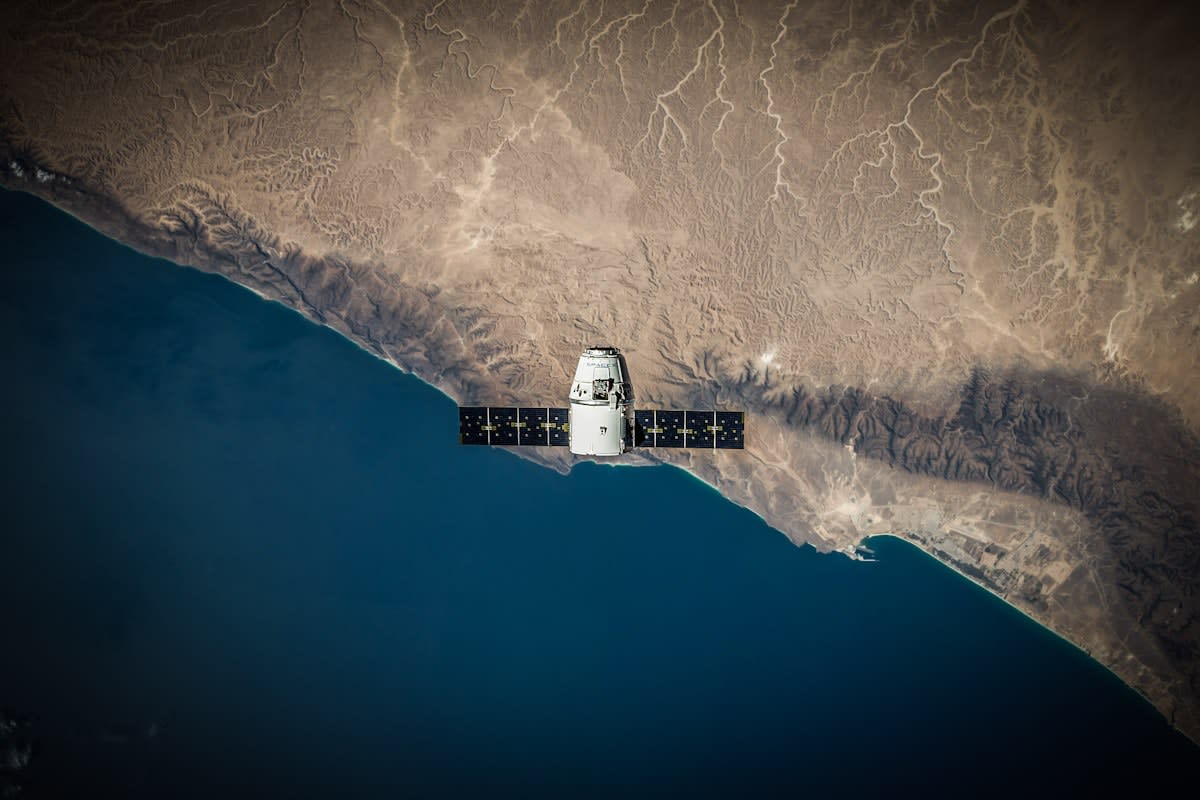
NASA's decision to integrate Starlink for the Artemis III mission marks a departure from the legacy Tracking and Data Relay Satellite (TDRS) system. By utilizing laser communications, NASA is betting on the ability to stream 4K imagery and video of ship-to-ship transfers in Low Earth Orbit (LEO) slated for 2027. This shift transforms the mission from a scientific endeavor into a high-definition global event, allowing Mission Control in Houston to monitor rendezvous and docking operations with unprecedented clarity. The use of laser crosslink technology allows for data speeds that were previously unthinkable for crewed lunar missions.
Historically, crewed missions relied on the TDRS system, which often created bottlenecks in data transmission and limited the quality of visual feedback. The new Starlink-based terminals bypass these limitations by transmitting HD videos and photos directly from the Orion spacecraft to Earth whenever a line of sight exists. This is not merely a technical upgrade; it is a strategic move to ensure that the docking operations between Orion and the landers—including SpaceX's Starship HLS and Blue Origin's Blue Moon—are documented with clinical precision.
The Bandwidth Jump
Laser communication terminals utilize light instead of radio waves, allowing for significantly higher bandwidth. This enables the transmission of 4K video from LEO, which is essential for the complex docking maneuvers required for the Artemis III mission.
"The terminals, which use the same crosslink technology as the Starlink constellation, will deliver 4K imagery and video to NASA’s Mission Control Center in Houston, TX."— NASA Mission Briefing
However, this trend toward operational stability is being threatened by a growing pattern of technical inertia among smaller contractors.
Design Inertia Costs Millions
The termination of the Draper lunar lander mission serves as a warning to the Commercial Lunar Payload Services (CLPS) ecosystem. NASA's decision to end the CP-12 task order stems from a cascade of redesign delays involving ispace-U.S. The timeline slipped from 2026 to 2027 after engine changes in May 2025. In a high-stakes race, a one-year slide is an eternity, proving that technical agility is now a prerequisite for contract survival. NASA is no longer willing to subsidize the learning curves of subcontractors who cannot meet their milestones.
This termination highlights a widening gap between the 'visionary' phase of lunar exploration and the 'execution' phase. While the CLPS program was designed to foster competition, the reality is that only those who can iterate rapidly without slipping their launch windows will survive. The mutual agreement to terminate the Draper order is a clinical admission that the redesigns necessary to accommodate NASA payloads became a liability rather than an asset.
| Contract/Entity | Financial Value | Status | Primary Driver |
|---|---|---|---|
| Lockheed SOF GLSS II | $10.5 Billion | Awarded | Long-term Sustainment |
| Starlink / NASA | Undisclosed | Active | Laser Comms Infrastructure |
| Draper / ispace-U.S. | Terminated | Canceled | Redesign Delays |
The instability found in small-scale lander contracts is mirrored by the extreme volatility currently hitting the market leaders.
Starship Valuation Gaps Widen
Despite securing the Starlink contract for Artemis III, SpaceX is facing a brutal market correction. The company's stock has dipped below its $135 IPO price following a fifth consecutive session of declines. The catalyst was an engine ignition failure that forced an automatic abort of a Starship test flight. This volatility highlights a dangerous gap between the company's ability to secure infrastructure contracts and its current struggle to stabilize its heaviest launch vehicle.
Short sellers are piling on, betting that the Starship setbacks will outweigh the Starlink successes. The market is reacting not to the failure of a single test, but to the pattern of instability. When an engine failure causes an automatic abort seconds before liftoff, it signals to investors that the technical risks are still higher than the operational rewards. The contrast is stark: while Lockheed Martin is winning billions for maintaining the status quo, SpaceX is losing value while trying to break it.
SpaceX Stock Performance Relative to IPO
Executive Insight
+18.4%
YTD Growth
The surge in sub-orbital cargo and logistics contracts this month is a symptom of a broader industry maturation. We are seeing a flight to quality. The government is rewarding the 'boring' work—logistics, sustainment, and communication arrays—while punishing the 'exciting' work that fails to meet its timeline. The $10.5 billion awarded to Lockheed and the shift to Starlink laser comms are the real stories; the Starship aborts and Draper terminations are the costs of that transition. The era of the experimental prototype is being replaced by the era of the orbital utility.