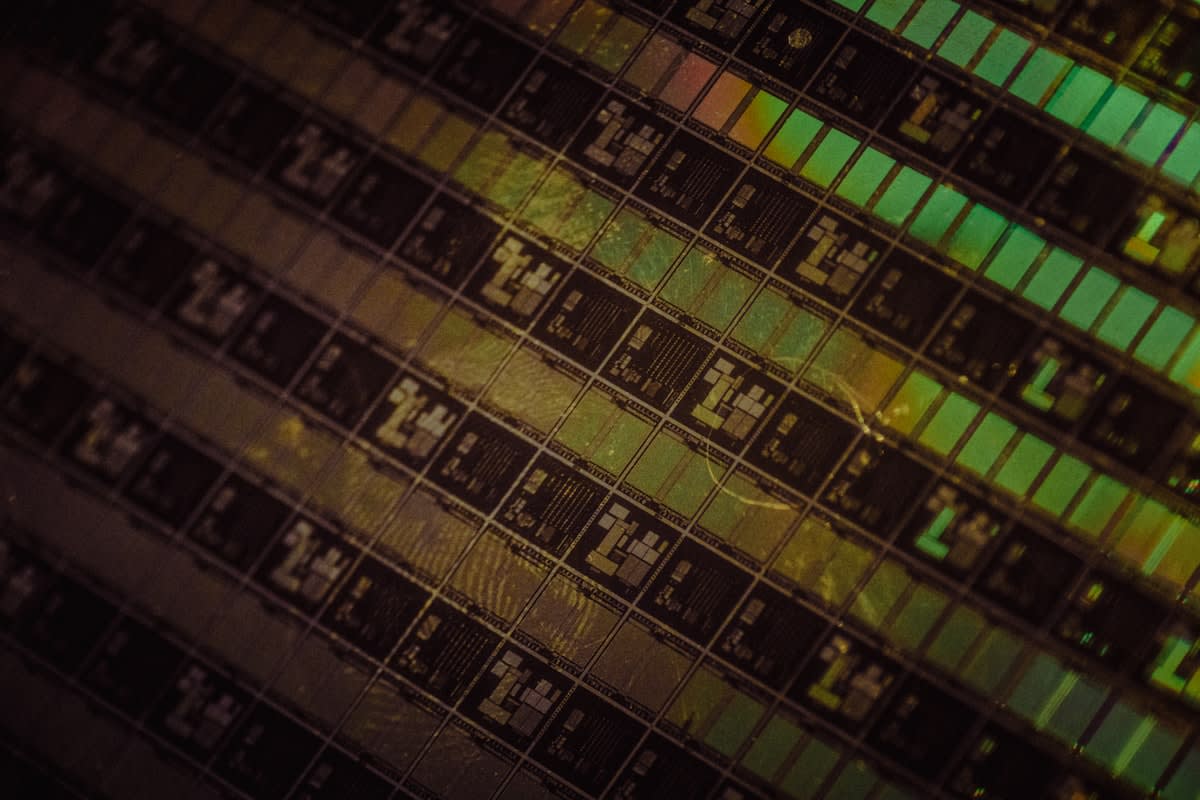
For the last three years, the world viewed artificial intelligence through the lens of the cloud. We accepted a deal: we traded our data and a monthly subscription fee for the processing power of distant, humming server farms. But by August 2026, that deal has expired. A quieter, more consequential fight is now reshaping how AI reaches the end user. The focus has shifted from flagship chatbots with infinite context windows to small language models (SLMs) designed to live entirely on a phone, a laptop, or an embedded industrial chip, devoid of cloud calls and per-token billing (Source: Tech Insider, 2026).
Why this pivot now? The industry hit a wall of diminishing returns. While the giants chased benchmark scores, practitioners on the ground faced the brutal reality of cloud latency and staggering inference costs. We are seeing a transition where intelligence is no longer a destination you visit via an API, but a local utility integrated into the hardware. This isn't just a technical optimization; it is a fundamental rewrite of the unit economics of AI.
The Rise of the Efficient Core: SLMs Take Center Stage
The current battleground is defined by three primary contenders: Google DeepMind's Gemma 4, Microsoft's Phi-4 Mini, and Alibaba's Qwen3.5. Unlike their predecessors, these models aren't trying to be everything to everyone. Instead, they are betting on 'small' as a feature. Microsoft's strategy with the Phi lineage is particularly telling. They have focused on holding parameter counts constant while aggressively mining data quality to drive performance gains (Source: Tech Insider, 2026).
| Model | Parameter Count | MMLU Score (Approx) | Strategy |
|---|---|---|---|
| Phi-3 Mini (2024) | 3.8B | 64% | Baseline SLM |
| Phi-4 Mini (2026) | 3.8B | 67.3% - 73% | Data Mining/Optimization |
The jump in the Phi-4 Mini's performance—reaching up to 73% in some evaluations without adding a single extra parameter—proves that the era of 'bigger is better' is over. When you can squeeze more intelligence into the same 3.8B parameter footprint, the incentive to move that model to the edge becomes irresistible. It eliminates the 'token tax' and ensures that the AI remains functional even when the user is offline in a remote region or a shielded industrial facility.
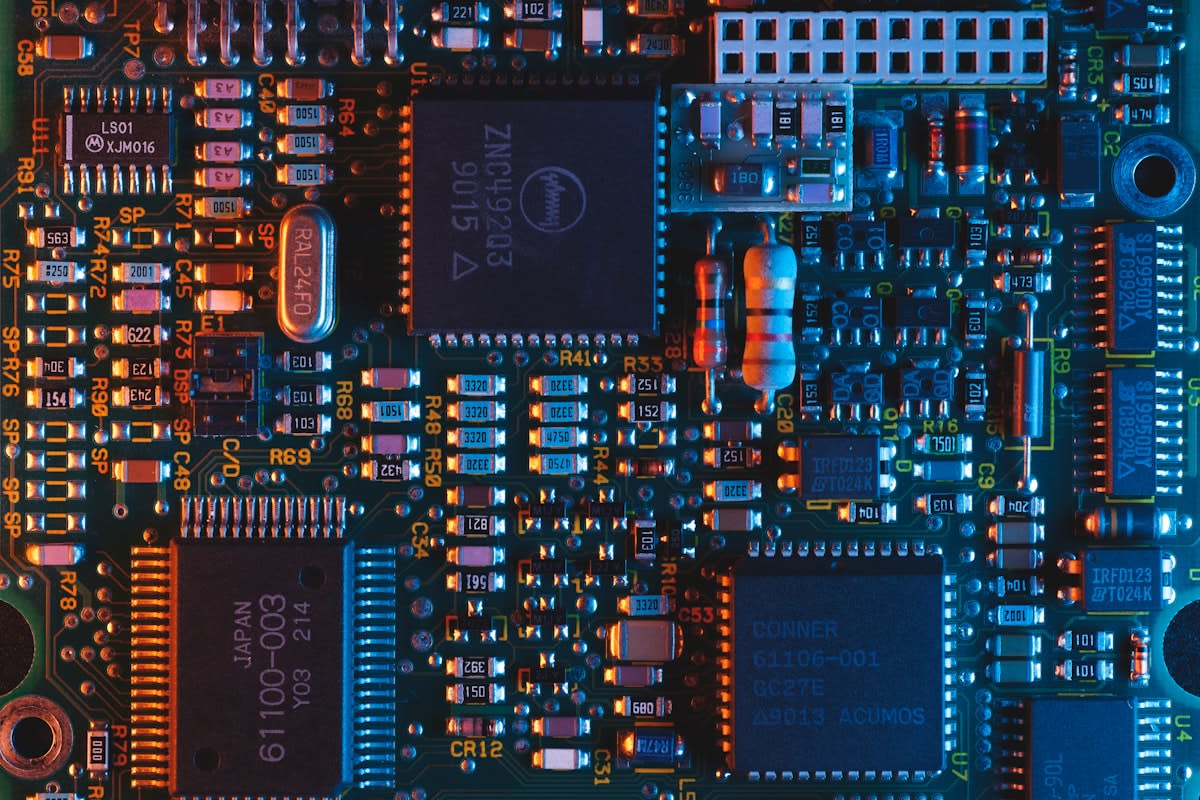
This shift is not limited to consumer gadgets. In the industrial sector, the 'cloud-first' roadmap has collapsed under its own weight. For years, factories routed every vibration sensor and optical camera feed into remote data lakes. The result? Massive bandwidth bills and dangerous latency. Now, enterprise leaders are moving to the edge to transform their cost structures from recurring operational expenditure (OpEx) to one-time capital expenditure (CapEx) (Source: BIS Infotech, 2026).
The financial incentive is staggering. By implementing on-device data analytics, filtration, and aggregation, enterprises are reporting savings of up to 90% in cloud ingestion and transmission costs (Source: BIS Infotech, 2026). When a factory can process telemetry locally and only upload the 'exceptions' or critical alerts, the economic argument for the cloud vanishes.
Privacy as a Hardware Requirement
Beyond the balance sheet, there is a visceral demand for privacy. The industry remembers the backlash to Microsoft's Recall in 2024, where the concept of uploading screen recordings to the cloud triggered a massive privacy outcry. This failure created a market vacuum that startups like China's Violoop are now filling. Violoop is betting on 'personal agents' that reside on dedicated hardware terminals, ensuring that all observation and memory capabilities stay entirely local (Source: BigGo Finance, 2026).
"Most hardware companies define products by hardware, but we define hardware by software."— He Jialin, Co-founder at Violoop
Violoop's approach highlights a critical pivot: the hardware is no longer the product, but the 'carrier' for the agent. By utilizing recursive self-improvement (RSI) and keeping data on a piece of hardware that stays with the user, they solve the three-headed monster of privacy, speed, and global coverage (Source: BigGo Finance, 2026). If the AI never leaves the device, the security risk drops exponentially.
This philosophy extends to specialized sensing. In India and other industrial hubs, high-resolution direct time-of-flight (ToF) LiDAR is bringing spatial intelligence to the edge. These systems perform analytics locally using microcontrollers, delivering structured information rather than raw data streams (Source: Express Computer, 2026). Because ToF systems measure geometry rather than capturing visual images, they provide a built-in privacy layer for occupancy monitoring and posture analysis without identifying individuals (Source: Express Computer, 2026).
The Silicon Foundation: A Structural Transformation
You cannot move the brain if you don't have the skull. The move to the edge is being underpinned by a surge in AI semiconductor patent filings. According to the 2026 Semiconductor Industry Patent Report by Anaqua, the market is undergoing a structural transformation driven by the specific demands of on-device AI (Source: Anaqua, 2026). We are seeing a move away from general-purpose GPUs toward specialized silicon that can handle SLM inference with minimal power draw.
For AI startups, this shift is a matter of survival. Many early-stage companies relied heavily on proprietary cloud services to accelerate development. However, as they scale, the 'cloud bill' becomes a primary driver of unit economics, especially for inference-heavy applications (Source: SiliconANGLE, 2026). The startups that will survive are those building on common architectural foundations that allow them to shift workloads seamlessly between hyperscale cloud instances and embedded edge devices.
From a practitioner's perspective, this transition is fraught with friction. On the ground, the debate isn't about whether the edge is better, but how to manage the fragmentation. Engineers are currently wrestling with the nightmare of deploying models across a heterogeneous landscape of ARM chips, RISC-V processors, and proprietary NPUs. The real struggle is creating a unified runtime that doesn't sacrifice the very performance gains that made the edge attractive in the first place. We are moving from a world of 'one giant API' to 'ten thousand tiny optimizations'.
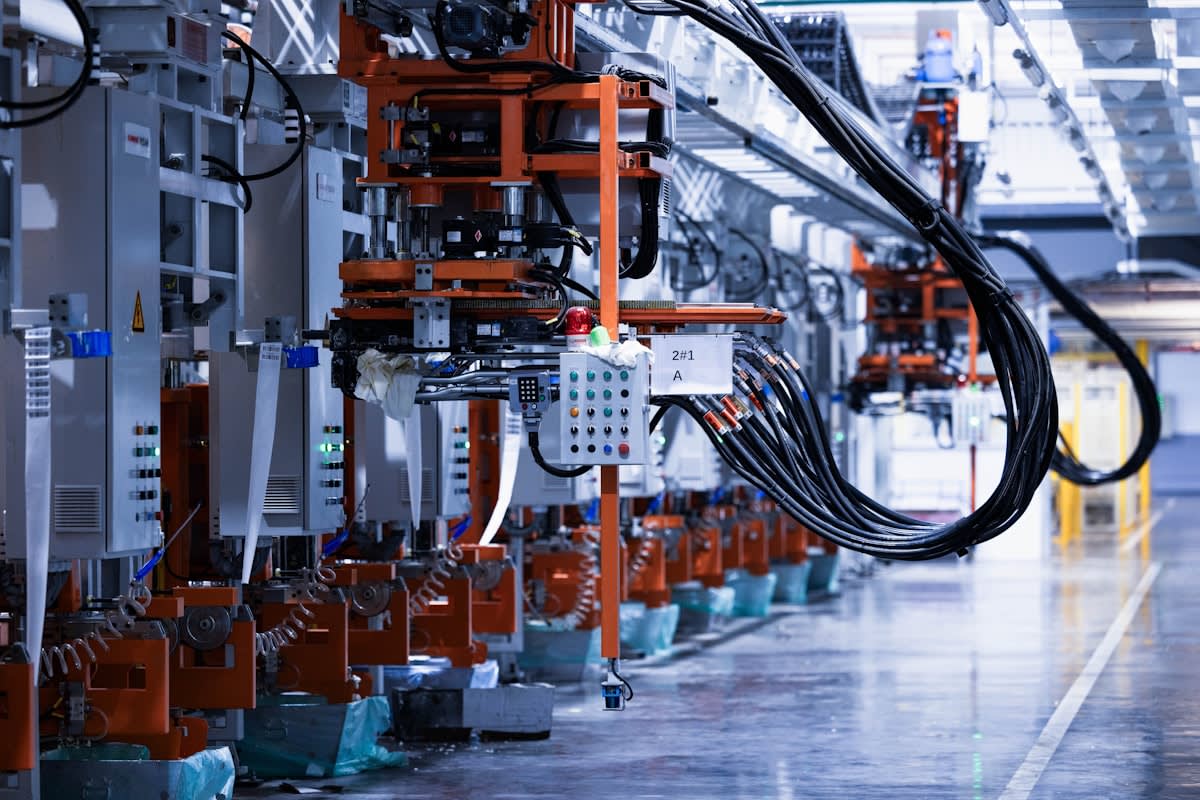
As we move toward the end of 2026, the trajectory is clear. The cloud will remain the place where models are trained—the great library of knowledge—but the edge is where that knowledge will be applied. Whether it is a personal agent in a pocket terminal or a LiDAR sensor in a warehouse, the intelligence is moving closer to the action. The great decoupling has begun.
Fact-Check & Accuracy Note
Key claims regarding SLM performance (Phi-4 Mini) are sourced from Tech Insider (2026). Enterprise cost savings of 90% are attributed to BIS Infotech (2026). Semiconductor trends are based on the Anaqua 2026 report. There remains an ongoing industry debate regarding the optimal balance between local hardware constraints and model capability.
Editorial Note
This report analyzes the shift from OpEx-heavy cloud models to CapEx-driven edge hardware, highlighting a global trend across China, India, and Western markets.