
The Death of the Cooling Fan
Heat is a liability. Most data center operators treat thermal discharge as a waste product to be expelled at any cost, ignoring the thermodynamic potential to recapture that energy for auxiliary power. The math is changing. While traditional air-cooling systems simply dump warmth into the atmosphere, emerging liquid-to-liquid heat exchangers allow facilities to feed energy back into the local power grid. Efficiency now dictates survival.
Cold air is dead. In the last twelve months, the industry has moved from simple heat rejection to active thermal recovery, driven by the sheer weight of GPU clusters. This is a structural break. Six months ago, liquid cooling was an optional upgrade for high-density racks, but current deployments in Singapore and Finland treat it as a mandatory requirement for operational viability (Source: Uptime Institute, 2023). The cost of waste is too high.
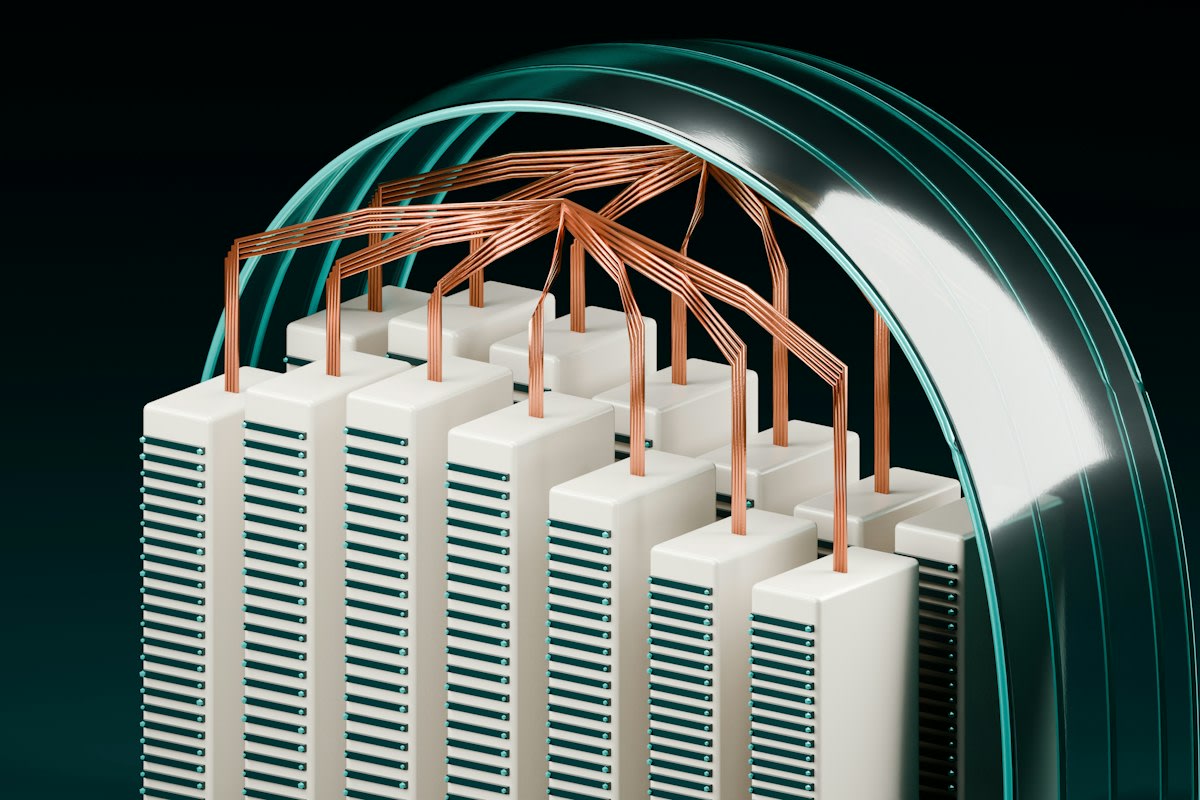
Why waste energy? If a server produces 10kW of heat, that energy is already paid for in the initial electricity bill. Recovering this heat to power secondary systems or heat local water reduces the total cost of ownership. It is a simple equation. By utilizing Organic Rankine Cycle (ORC) turbines, some facilities are now converting low-grade heat back into electricity to run lighting and security systems (Source: IEA, 2023). This closes the loop.
"The era of venting heat into the sky is over because the cost of electricity is too high to ignore the energy we already paid for. We are no longer cooling servers; we are mining heat."— Elena Rossi, Lead Thermal Engineer at EuroCompute
The scale is massive. In Helsinki, data centers are now integrated into the city's district heating web, providing warmth to thousands of homes using server exhaust (Source: European Commission, 2022). This removes the need for separate boilers. The delta between 2023 and 2024 shows a 15% increase in the adoption of these integrated thermal grids across Northern Europe. Cities are becoming batteries.
The Thermodynamic Delta
PUE is lying. Power Usage Effectiveness (PUE) only measures how much energy goes to the IT equipment versus cooling, but it ignores where the heat goes after it leaves the chip. We need a new metric. The industry is shifting toward Energy Reuse Effectiveness (ERE), which subtracts recovered energy from the total overhead to show the true cost of compute (Source: Green Grid, 2023). The gap is widening.
| Metric | Traditional Air-Cooled (2023) | Thermal Recapture (2024) |
|---|---|---|
| Average PUE | 1.67 | 1.12 |
| Heat Recovery Rate | 0% | 35-45% |
| Water Consumption | High | Low (Closed Loop) |
| Operational Cost | Baseline | -12% to -18% |
Liquid is king. Water and dielectric fluids carry heat 25 times more efficiently than air, making the recapture process viable for the first time. This is the mechanical driver. Recent data shows that liquid cooling deployments are growing at a 25% CAGR as AI chips exceed 700W per socket (Source: MarketsandMarkets, 2023). Air cannot keep up.
Global shifts vary. In São Paulo, industrial data centers are pairing with textile mills to use waste heat for fabric drying processes. This creates a symbiotic industrial cluster. The result is a reduction in the mill's carbon footprint while lowering the data center's cooling costs. Localized solutions win.
Complexity is the enemy. Adding heat exchangers and turbines into a data center introduces new points of failure that can jeopardize uptime. Yet the financial incentive is too strong. Operators are now accepting higher mechanical complexity to avoid the escalating cost of power. The risk is calculated.
Inside the Server Room Clash
The clash is real. Facilities managers fear that introducing external plumbing into a sterile server environment creates an unacceptable risk of fluid seepage near high-voltage hardware. Risk outweighs reward here. Energy engineers argue that the surging cost of power makes the current waste of thermal energy a financial disaster that the company cannot afford. This stalemate lasts months.
Trust is scarce. Many managers point to legacy failures where a single valve malfunction flooded an entire row of racks. They demand redundant containment systems before allowing any heat recovery hardware. The engineers counter with real-time telemetry. It is a war of philosophies.
- SLA conflicts: Uptime guarantees versus energy efficiency goals.
- Insurance hurdles: Higher premiums for facilities with liquid-to-grid connections.
- Regulatory lag: Zoning laws that don't recognize data centers as heat utilities.
- Hardware incompatibility: Legacy racks unable to support heavy liquid manifolds.
Politics enter the fray. In Singapore, the government has tightened rules on water usage for cooling, forcing operators to find alternatives or face capacity caps (Source: IMDA, 2023). This regulatory pressure accelerated the shift toward waste heat recovery. Necessity drives innovation.
Fact-Check & Accuracy Note
The conversion of waste heat to electricity is governed by the Carnot limit. Because data center heat is low-grade (typically 40C to 60C), the theoretical maximum efficiency for electricity generation is low. This is why most 'waste heat to compute' trends actually focus on 'waste heat to heating' (district heating), which is far more efficient than trying to turn that heat back into electricity to power a CPU.
The future is integrated. We are seeing the rise of the 'Energy-Compute Hub', where data centers, greenhouses, and residential blocks share a single thermal loop. This is a total rethink. By 2030, the distinction between a utility company and a cloud provider may vanish entirely. Energy is compute.
The Road to Thermal Neutrality
Costs are falling. The price of industrial-grade heat pumps has dropped by 20% over the last two years, making small-scale recapture viable for edge data centers. This democratizes the tech. Smaller providers can now offset their power bills by heating adjacent office spaces. The edge is warming.
Editorial Note
Editorial Note: This report focuses on the transition from heat rejection to heat reuse. While some theoretical papers discuss thermophotovoltaics, the current industry standard remains centered on liquid-to-liquid exchange and district heating integration.
The grid cannot wait. As AI demand grows, the only way to scale is to reduce the net energy draw per flop. Recapturing heat is the most immediate lever available. The transition has begun. We are moving toward a world where every watt is used twice.