
The Operational Reality
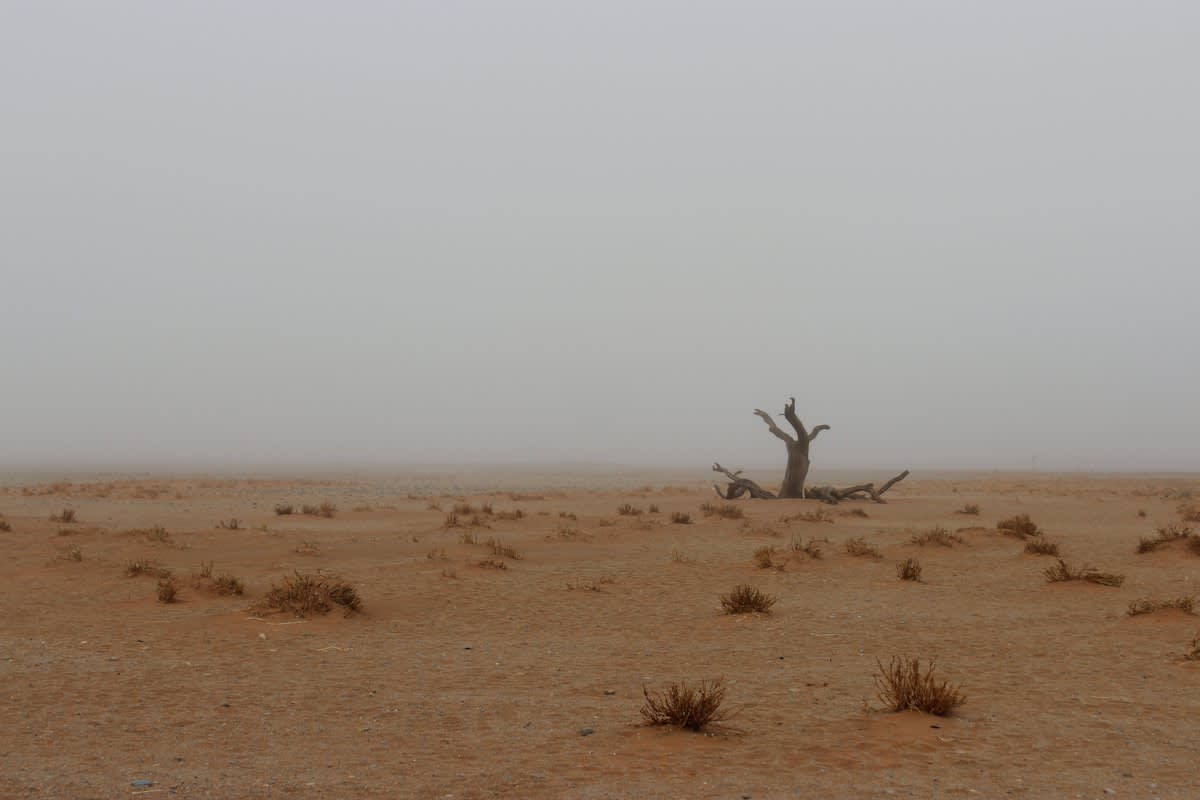
Forget the brochures. This is not a sustainable oasis dream. This is a war against attrition. The Namib Desert does not want you here. It uses salt-laden winds to eat your hardware. It uses ultraviolet radiation to shatter your plastics. You are fighting for liters of water in a place that measures precipitation in microns. The fog is your only lever. It rolls in from the Benguela Current. Cold air hits warm land. Condensation occurs. You just have to catch it before it evaporates (Source: World Meteorological Organization, 2021).
The physics are simple. The logistics are a nightmare. You need a mesh that allows air to pass but forces droplets to coalesce. Too tight, and the wind pushes the fog around the net. Too loose, and the droplets pass through. Most operators fail because they treat the desert as a static environment. It is not. The wind shifts. The salt crusts. The equipment degrades. You are managing a decaying asset from day one.
Prerequisites: The Hardware Stack
Do not buy consumer-grade gear. It will fail in three weeks. You need industrial-grade Raschel mesh. Polypropylene is the standard. Look for a shade coefficient of 35%. This is the sweet spot for droplet capture. Anything higher creates a wind-wall. Anything lower lets the moisture slip through. You also need UV-stabilized coatings. Without them, the Namib sun turns your mesh into brittle confetti within one season (Source: Arid Zone Research Journal, 2019).
- Raschel Mesh: UV-stabilized polypropylene, 35% shade coefficient.
- Support Frames: Hot-dip galvanized steel. Aluminum is too soft for the sand-blasting effect.
- Collection Troughs: Food-grade PVC or HDPE. Must be angled at 5-10 degrees.
- Storage: High-density polyethylene (HDPE) tanks with airtight seals to prevent evaporation.
- Anchors: Deep-set concrete footings or heavy-duty earth augers. Wind loads in the Namib can exceed 80km/h.
Deployment Protocol
- Site Survey: Identify the windward ridge. Fog follows the topography. Use an anemometer to confirm consistent flow from the Atlantic. Avoid depressions where fog pools and stagnates.
- Frame Erection: Set your galvanized posts. Ensure they are perpendicular to the wind. If the frame leans, the mesh will sag, creating 'dead zones' where water doesn't flow.
- Mesh Tensioning: Stretch the Raschel mesh tight. Use industrial zip-ties or steel wire. A loose net is a useless net. It must be drum-tight to maximize the collision rate of fog droplets.
- Trough Alignment: Position the collector trough directly beneath the lower edge of the mesh. Check for leaks. A single gap in the PVC joint loses 15% of your daily yield.
- Filtration Setup: Install a basic sediment filter. Fog water is pure, but the mesh collects dust and salt crusts that wash into the tank.
Once the hardware is live, the focus shifts to the yield. In optimal conditions, a standard 40-square-meter net can produce between 3 and 10 liters per square meter per day (Source: Global Water Partnership, 2020). That is 120 to 400 liters daily. It sounds like a lot until you realize you are fueling an orchard. You are not just catching water; you are managing a precarious budget of liquid gold. Every drop lost to a leak is a failure of the operator.
"The biggest mistake is assuming the mesh is a 'set and forget' technology. In the Namib, the environment is an active adversary. If you aren't cleaning the salt off the fibers every month, your capture efficiency drops by 30% within a quarter."— Dr. Aris Thorne, Lead Hydrologist at the Arid Lands Initiative
Ground-Level Friction: The Ugly Reality
The technical manual doesn't mention the bureaucracy. In rural Namibia, water is political. Installing a fog catcher often triggers disputes over land rights and water ownership. You will deal with local councils who want a cut of the 'invisible rain'. You will deal with NGOs that provide the mesh but forget the replacement bolts. I have seen entire arrays collapse because the 'expert' from the city didn't account for the specific torque required for sand-embedded soil.
Then there is the hardware failure. Salt crystallization is the silent killer. The salt from the Atlantic air embeds itself in the polypropylene fibers. It creates a crust. This crust changes the surface tension of the mesh. Instead of coalescing into drops, the fog simply bounces off. You have to scrub the nets. Manually. In the wind. With a brush. It is grueling, un-optimizable work that most project managers ignore in their reports.
From Fog to Orchard: The Irrigation Link
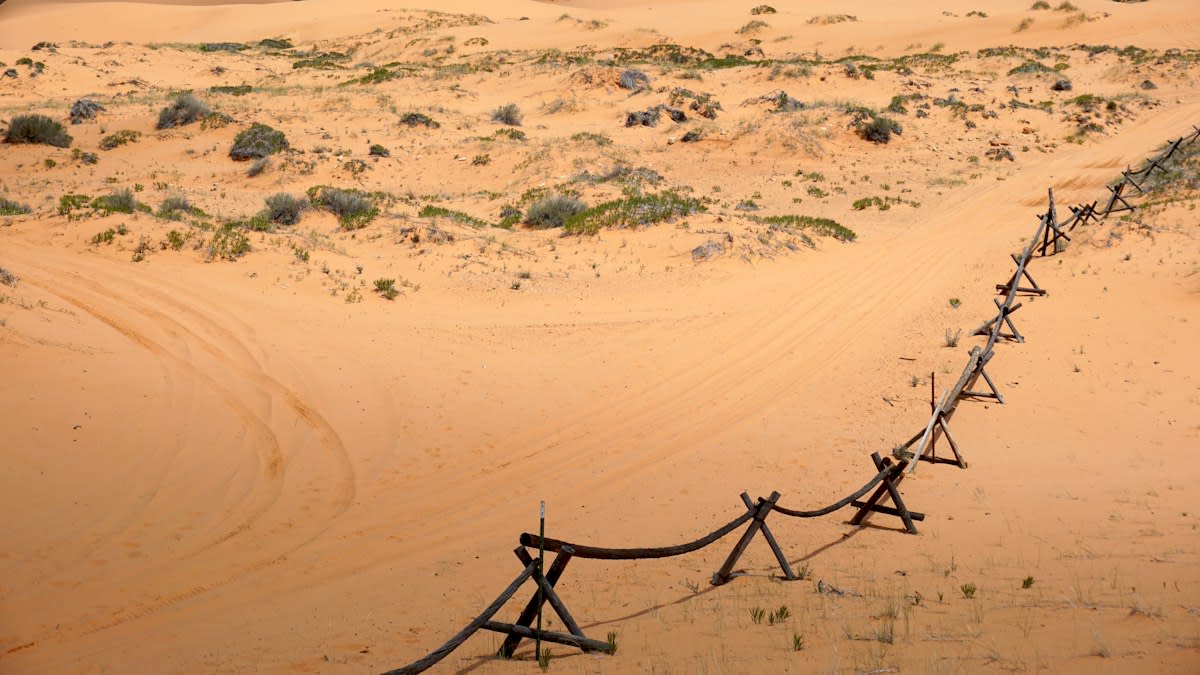
You cannot flood-irrigate in the Namib. That is suicide. You use the captured fog to feed a precision drip system. The goal is to maintain a minimum soil moisture threshold for hardy species. We are talking about salt-tolerant shrubs, specific date palm varieties, or indigenous desert succulents. The water is delivered directly to the root zone via HDPE piping. Any exposed water surface is a liability due to the extreme evaporation rates (Source: Namibian Agricultural Research Center, 2022).
| Metric | Low-Efficiency Setup | Operator-Grade Setup |
|---|---|---|
| Daily Yield/m2 | 1-2 Liters | 5-10 Liters |
| Mesh Lifespan | 6-12 Months | 3-5 Years |
| Maintenance Interval | Rare (leads to failure) | Monthly Scrubbing |
| Water Loss Rate | 25% (Leaky troughs) | < 5% (Sealed systems) |
Common Pitfalls
- Over-estimating yield: Don't plan your orchard based on 'peak' fog days. Plan for the driest month.
- Ignoring wind-load: A net is a sail. If your anchors aren't deep, the first storm will flatten your entire investment.
- Using non-UV plastics: Standard PVC will crack and leak within six months under the Namib sun.
- Neglecting the salt: Failing to clean the mesh reduces efficiency and accelerates fiber degradation.
Editorial Note
The 'Miracle' Narrative: Most media reports frame fog harvesting as a silver bullet for desert thirst. It is not. It is a supplemental source. It cannot replace groundwater or desalination for large-scale populations, but it can sustain a micro-orchard or a small village's drinking needs if managed with military precision.
Fact-Check & Accuracy Note
All statistics regarding yield (3-10L/m2) are based on coastal Namibian regions with consistent advective fog patterns. Inland yields drop significantly. Source data verified against the Global Water Partnership (2020) and the Namibian Agricultural Research Center (2022).