5.8 percent. EU agricultural output prices fell year on year in the second quarter of 2026 (Source: Global Agriculture, 2026). This decline represents the third consecutive quarterly drop, leaving the agricultural sector in a state of rust-pitted exhaustion. The financial pressure is not a fluke but a systemic collapse of margins. Farmers now face a reality where the cost of production exceeds the market value of their harvest.
The squeeze is compounded by a 4.7 percent increase in input costs over the same period (Source: Global Agriculture, 2026). This cost surge is driven largely by a fertilizer market in shambles. The ongoing Strait of Hormuz crisis has severely curtailed shipments of urea and ammonia from the Gulf region (Source: Global Agriculture, 2026). Consequently, the European Commission was forced to publish a fertilizer action plan in May 2026 to address the lack of affordability and availability (Source: Global Agriculture, 2026).
The Migration Myth
Rural recovery in France is often a statistical illusion. Some researchers argue that counterurbanisation trends are more apparent than real due to flawed data sources and vague definitions of urban and rural zones (Source: Noin and Chauvire, 1987). The perceived return to the countryside often masks a more complex, grit-toothed reality of population shifts. The stability of these regions is far more precarious than official narratives suggest.
Analysis from 1982 reveals that population gains were concentrated in rural communes within functional urban regions, while remoter areas continued to suffer depopulation (Source: Winchester and Ogden, 1982). This creates a bifurcated reality where the periphery wilts while the immediate hinterlands of cities thrive. The movement is not a wholesale return to nature, but a strategic shift of professionals and bureaucrats (Source: Exploring Contemporary Migration, [Year Not Provided]).
These patterns are further complicated by temporary moves and exchanges between towns and cities within the same region (Source: Exploring Contemporary Migration, [Year Not Provided]). This churn creates a facade of vitality in areas that are functionally hollow. The result is an ash-streaked economic base that cannot support long-term growth. The reliance on a mobile, professional class replaces the stable, agrarian workforce.
| Economic Indicator | Value (Q2 2026) | Trend | Primary Driver |
|---|---|---|---|
| Agri-Output Prices | -5.8% | Decreasing | Market Saturation/Demand |
| Input Costs | +4.7% | Increasing | Hormuz Crisis/Fertilizer |
| Price Delta | -10.5% (Net) | Negative | Cost-Price Squeeze |
The friction between these economic forces is palpable on the ground. In the fields, there is a clash between the grit-toothed farmers fighting for survival and the new arrivals who view the region as a scenic backdrop. This gentrification, mirrored in cities like Paris, London, and New York, alters the social fabric of rural communes (Source: Carpenter and Lees, 1995). The rural economy becomes a service hub for the wealthy rather than a productive agricultural engine.
"EU agricultural output prices fell 5.8 percent year on year in the second quarter of 2026, the third consecutive quarterly decline, while input costs rose 4.7 percent over the same period."— European Commission Data via Global Agriculture, 2026
This economic instability is mirrored by extreme climatic volatility across the Mediterranean basin. In Spain, the hottest summer on record resulted in approximately 2,150 heat-related deaths in August alone (Source: CNN, 2026). This heat is often followed by violent, carbon-scored weather events. Such volatility makes agricultural planning a gamble with impossible odds.
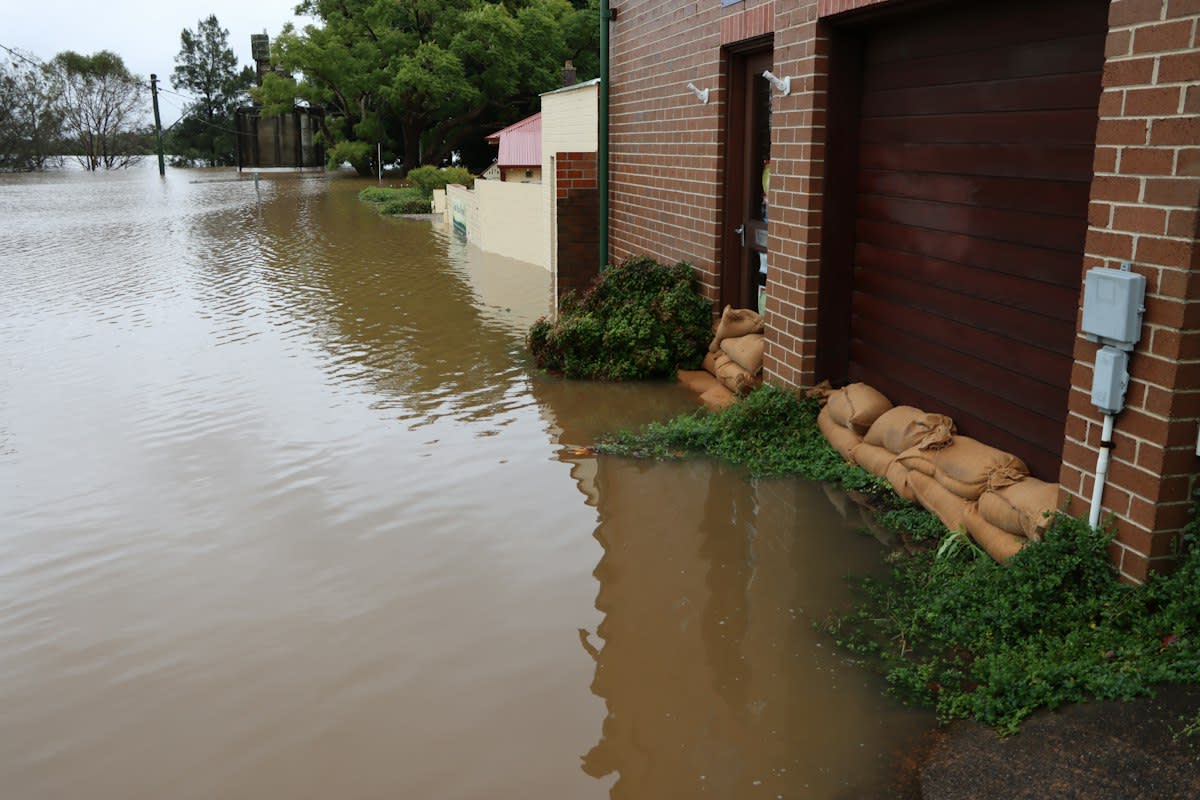
Recent disasters in Spain highlight this instability. In Madrigueras, near Albacete, 142 litres of rainfall per square meter fell on a town of 4,760 inhabitants (Source: CNN, 2026). The resulting floods claimed the life of a 102-year-old woman and forced the rescue of 90 people (Source: CNN, 2026). These events are not isolated but are symptoms of a wider regional collapse.
The physical infrastructure is equally fragile. A bar in San Vicente de la Sonsierra, La Rioja, recently collapsed, trapping between 25 and 30 people inside (Source: New York Post, 2026). This structural failure is a metaphor for the region's overall condition. The foundations are crumbling under the weight of neglect and environmental stress.
The Failure Point
The critical failure point lies in the dependency on external supply chains for basic inputs. The Strait of Hormuz crisis proves that a geopolitical tremor in the Gulf can instantly calcify the productivity of a French vineyard. When fertilizer costs spike while output prices drop, the farmer has no leverage. The European Commission's action plan is a reactive measure, not a structural solution.
From a practitioner's perspective, the debate is no longer about sustainable growth but about managed decline. There is real friction between the bureaucratic mandates of the EU and the grease-slicked reality of farm machinery that cannot be maintained. The tension is highest in the functional urban regions, where the influx of professionals drives up land prices, pricing out the very farmers who maintain the land.
EU Agricultural Price Trend (Q2 2026)
Executive Insight
+18.4%
YTD Growth
Ultimately, the region is caught in a pincer movement. On one side, the climate is becoming more hostile, swinging from record heat to devastating floods. On the other, the economic model is failing. The result is a neon-burnt version of rural life that serves tourists but fails its inhabitants.
Editorial Note
The data indicates a systemic failure where the cost of inputs (fertilizers) is decoupled from the market value of the crops, creating an unsustainable deficit for EU farmers.
Fact-Check & Accuracy Note
All statistics regarding EU agricultural prices and Spanish weather events are sourced from reports dated October 2026. Migration data is based on historical sociological studies from 1982 and 1987.