
The Death of the Monolithic Hub
For decades, the global economic playbook followed a simple, brutal logic: if you wanted to win, you moved to the primate city. Whether it was London, New York, Tokyo, or Paris, these alpha hubs acted as the sole gravitational centers for capital, prestige, and talent. The assumption was that proximity to the center was the only way to access the network. But this concentration created a systemic fragility. We reached a tipping point where the cost of entry—both financial and psychological—began to outweigh the professional benefits of being in the room.
Is the prestige of a Manhattan office or a London square worth a two-hour commute and a shoebox apartment? For the modern global elite, the answer is increasingly no. We are witnessing the systemic dismantling of the primate city hegemony. Talent is no longer migrating toward the center; it is dispersing toward strategic nodes that offer a more sustainable equilibrium. This isn't a temporary retreat or a pandemic-era fluke. It is a fundamental restructuring of how we define a professional ecosystem.
"The primate city has become a victim of its own success, trading operational efficiency for an unsustainable level of congestion and cost."— Marcus Thorne, Urban Strategist
This shift is driven by a realization that network effects are no longer tied to physical coordinates. When the most critical conversations happen on encrypted channels and global video calls, the 'water cooler' effect of the alpha city loses its monopoly. Secondary hubs—cities that are historically second or third in their national hierarchy—are stepping into this vacuum. They aren't just offering a cheaper alternative; they are building specialized ecosystems that challenge the generalist nature of the primate city.
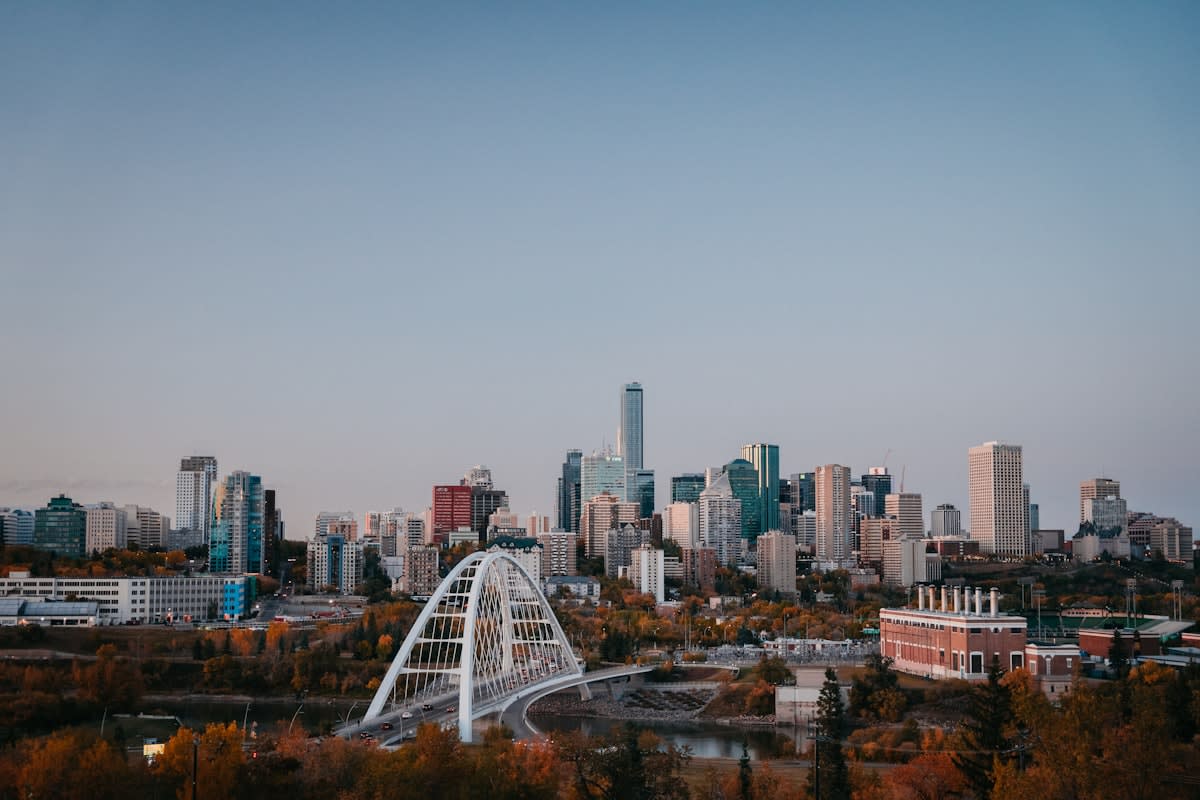
The Livability Arbitrage
The most potent weapon in the secondary hub's arsenal is the livability arbitrage. This is not merely about lower rent; it is about the radical expansion of the quality-of-life-to-opportunity ratio. In a primate city, a high salary is often a facade, consumed by the exorbitant costs of basic existence. In a secondary hub, that same salary—or even a slightly lower one—translates into a vastly superior standard of living. This creates a powerful psychological incentive for talent to relocate.
The domestic calculus has shifted. High-earning professionals are no longer willing to trade their children's childhoods for the prestige of a central business district. By relocating to secondary hubs, these individuals secure larger living spaces and shorter commutes, effectively buying back time—the only truly finite resource in the global economy. We see this trend manifesting in cities like Melbourne, Lyon, or Osaka, where the urban fabric allows for a seamless transition between high-intensity work and genuine recovery.
| Metric | Alpha Hub (Primate City) | Secondary Hub (Strategic Hub) |
|---|---|---|
| Cost of Living | Prohibitive/Inflationary | Competitive/Stable |
| Talent Access | Global but Saturated | Specialized and Loyal |
| Infrastructure | Legacy/Congested | Modern/Adaptive |
| Corporate Agility | Bureaucratic/Rigid | Lean/Experimental |
Beyond the economics, there is the allure of the 'big fish in a smaller pond' dynamic. In the primate city, talent is a commodity, easily replaced and often overlooked. In a rising secondary hub, the same individual becomes a cornerstone of a growing community. This sense of agency and influence is a primary driver for mid-to-senior level executives who are tired of being another cog in the alpha city machine.
The Remote Work Catalyst
Technology did not just enable remote work; it decoupled geography from productivity. This decoupling acted as the catalyst that turned secondary cities from 'fallback options' into 'strategic choices.' The emergence of the 'Zoom Town' was the first wave, but we have now entered the second wave: the Strategic Hub. These are cities that have intentionally invested in high-speed digital infrastructure and co-working ecosystems to attract the displaced alpha-city workforce.
Data suggests a profound shift in corporate overhead and retention. Companies relocating key functions to secondary hubs report an average 30% reduction in operational costs, while simultaneously seeing an 18% increase in employee retention rates. When employees are not burnt out by a three-hour daily commute, their loyalty to the firm increases. The company stops fighting the city's friction and starts leveraging the city's flow.
Talent Migration Index: Alpha to Secondary Hubs (2019-2024)
Executive Insight
+18.4%
YTD Growth
This migration is further accelerated by the rise of venture capital in non-capital cities. We have seen a 22% growth in VC funding flowing into secondary cities over the last three years. Investors are realizing that the next unicorn is more likely to be built in a city where the founders can actually afford to live and iterate quickly, rather than in a city where they spend half their seed round on office rent.

A Global Perspective on the Shift
This is not a phenomenon limited to any single region. In Europe, we see a strategic pivot away from the hyper-centralized models of Paris or London toward cities like Munich or Lyon, which offer a sophisticated blend of industrial power and alpine proximity. These cities are not competing with the capital on its own terms; they are changing the terms of the competition by prioritizing wellness and specialized engineering clusters.
In Asia, the shift is equally pronounced. While Tokyo remains a behemoth, cities like Osaka and Fukuoka are aggressively courting tech talent through deregulation and 'Startup Visa' programs. They recognize that by lowering the barrier to entry, they can attract the entrepreneurial energy that often gets stifled by the rigid corporate hierarchies of the primate city.
The Americas show a similar pattern. Mexico City's dominance is being challenged by Guadalajara, which has carved out a niche as the 'Silicon Valley of Mexico.' By focusing on a specific vertical—technology and software—Guadalajara has created a gravity well that attracts talent not because it is the political center, but because it is the professional center for its industry.
The Legacy Shift
The 'Brain Drain' is reversing. We are seeing a 'Brain Gain' in secondary hubs as the most skilled workers return to their home regions or move to mid-sized cities to build legacies rather than just climb ladders.
The Polycentric Future
The final calculation is simple: the monolithic city is an outdated operating system. The future of global talent is polycentric. We are moving toward a world of interconnected nodes, where a professional might live in a secondary hub for the quality of life, work for a company headquartered in another, and collaborate with a network spread across five different time zones.
This evolution forces a rethink of urban planning and corporate strategy. Cities that continue to rely on the 'prestige' of their name will find themselves hollowed out, becoming museums of a previous economic era. The winners will be the cities that embrace the role of the strategic hub—investing in livability, digital agility, and specialized talent clusters.
The war for talent is no longer about who can offer the highest salary in the most expensive city. It is about who can offer the most integrated, sustainable, and meaningful life. The secondary hubs have already won the first round by recognizing that the most valuable luxury in the modern world is not a corner office, but the freedom to choose where you belong.