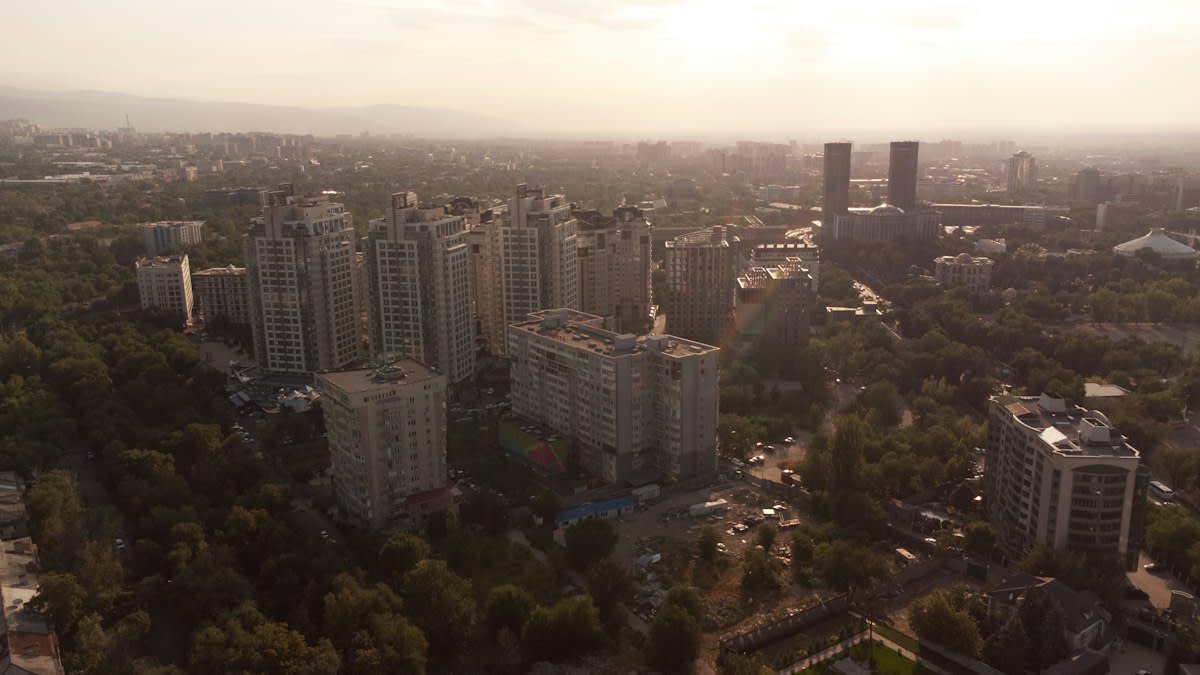
For decades, the global economic narrative insisted that concentration was the only path to power. We were told that the larger the city, the more resilient its economy, creating a gravitational pull that sucked talent and capital into a handful of overstretched megacities. But that logic is failing. The very density that once signaled strength has become a liability, manifesting as extreme rent pressures and infrastructure fragility. We are witnessing a systemic pivot where secondary strategic hubs—smaller, more agile urban and rural centers—are not just surviving, but outperforming the giants in true resilience metrics.
The cracks in the megacity model are most visible in housing stability. In the United States, the number of cost-burdened households has surged to over 22.5 million, the highest point in the 2011–2024 series (Source: Enterprise Community Partners, 2025). While homelessness saw a slight dip in 2025, it remains significantly higher than any year between 2011 and 2023, following a violent spike in 2023 and 2024 (Source: Enterprise Community Partners, 2025). When the baseline for living becomes a precarious gamble, the 'innovation' of the big city is neutralized by the sheer cost of existing within it.
The Human Capital Migration: From Brain Drain to Brain Gain
What replaces the megacity? The rise of return-home entrepreneurship. We are seeing a reversal of the historic 'brain drain,' where highly skilled individuals are returning to county-level cities and rural districts to build scalable businesses. This isn't a retreat; it is a strategic relocation. Research indicates that rural economic resilience is now heavily dependent on this return of human capital, moving beyond simple external support to leverage local agency (Source: Frontiers in Sustainable Food Systems, 2026).
| Resilience Factor | Impact Coefficient (Contribution to Resilience) |
|---|---|
| Medical and Public-Health Services | +0.149 |
| Agricultural Productivity | +0.106 |
| Agricultural Mechanization | +0.064 |
| Local Stock of Human Capital | +0.056 |
The data suggests a nuanced hierarchy of stability. While human capital is a critical driver (+0.056), the most significant boost to rural resilience actually comes from medical and public-health capacity (+0.149) and agricultural productivity (+0.106) (Source: Frontiers in Sustainable Food Systems, 2026). This reveals a fundamental truth: resilience isn't about having the flashiest tech campus; it's about the capacity to maintain basic life-support systems and food security during periods of volatility. Secondary hubs are prioritizing these foundational metrics while megacities struggle with basic affordability.

The Blueprint of Self-Reliance
Self-reliance is becoming the new gold standard for urban planning. Take the case of Cheney, where the goal is to maintain a community that provides essential health, retail, and service needs within its own boundaries (Source: City of Cheney, 2024). The strategy is simple: incentivize walkable neighborhoods where housing is close to jobs and shops, ensuring that residents spend their money locally. This creates a closed-loop economic resilience that is far less susceptible to the systemic shocks that paralyze global megacities.
Housing strategy in these hubs is also evolving. In Cheney, 74% of all new housing units between 2005 and 2025 have been large multi-family developments, reflecting a regional trend toward more affordable options in the Spokane/West Plains area (Source: City of Cheney, 2024). By aggressively addressing the housing deficit through diversified developments, these hubs avoid the 'rent trap' that has crippled the larger urban centers mentioned earlier.
From a practitioner's perspective, this shift creates a fascinating internal debate between old-school zoning traditionalists and new-age resilience planners. The 'invisible' friction occurs when trying to implement 'park once' walkable designs in areas historically dominated by car-centric infrastructure. Planners are currently fighting a war of attrition against legacy land-use policies, arguing that the under-utilization of land—such as that along SR 904 in Cheney—is a strategic failure that must be corrected to foster local business growth (Source: City of Cheney, 2024).
Digital Infrastructure: The Great Equalizer
If the physical layout provides the skeleton of resilience, digital infrastructure is the nervous system. The advantage of the secondary hub is no longer negated by its distance from a global center. The emergence of the 'Mid-Market AI Blueprint' allows mid-sized organizations to bypass the expensive, disconnected pilots common in megacity corporate culture. Instead, they are scoring AI opportunities based on ROI and data readiness to create prioritized roadmaps with near-term wins (Source: Hammer.net, 2026).
"The goal isn’t another disconnected pilot. It’s a clear view of where AI can deliver value, what needs to be fixed first, and where your next investment should go."— Strategy Lead, Hammer.net Mid-Market AI Blueprint
This pragmatic approach to technology is mirrored in how these hubs handle data migration. Rather than the monolithic, high-risk shifts seen in legacy global firms, modern practitioners are adopting a 'wave' approach. While adding waves increases the cost of parallel infrastructure, it allows for recorded baselines and lessons to be fed into the next wave, reducing the risk of total system failure (Source: Keyhole Software, 2026). It is an exercise in risk mitigation over raw speed.

Fact-Check & Accuracy Note
The claims regarding rural resilience coefficients are sourced from the 2026 study in Frontiers in Sustainable Food Systems. The housing and rent data are attributed to the 2025 Enterprise Community Partners report and the 2024 City of Cheney housing documents. There is ongoing debate among urban planners regarding whether multi-family housing alone can solve the affordability crisis without broader regulatory reform.
Does this mean the megacity is dead? No. But its role has changed. The megacity is now the place for high-intensity, short-term interaction, while the secondary strategic hub is where sustainable, long-term resilience is actually built. The delta between 2024 and 2026 shows a clear trend: we are moving away from a world of a few 'too-big-to-fail' centers and toward a network of 'too-distributed-to-fail' hubs. The opportunity for investment and migration is no longer in the center, but in the strategic periphery.