
For a century, the economic playbook was simple: move to the biggest city to find the biggest opportunities. This 'Agglomeration Effect' suggested that packing talent, capital, and infrastructure into a single monolithic core created a productivity multiplier that smaller towns could never replicate. We built our global economy around these primate cities—the Londons, New Yorks, and Tokyos of the world. But the gravity is shifting. The very density that once fueled growth has become a systemic liability, turning the world's economic centers into bottlenecks of unaffordable housing, crumbling infrastructure, and cognitive burnout.
Is the city dead? Hardly. But the 'Monolith' is. We are witnessing a transition from centralized urbanism to a polycentric model. This isn't just about remote work or 'digital nomads' fleeing to the beach; it is a structural reorganization of how value is created. Economic activity is fracturing into hyper-local clusters—specialized hubs that combine the professional intensity of a city with the operational efficiency and livability of a smaller locale. This shift is quiet, incremental, and fundamentally irreversible.
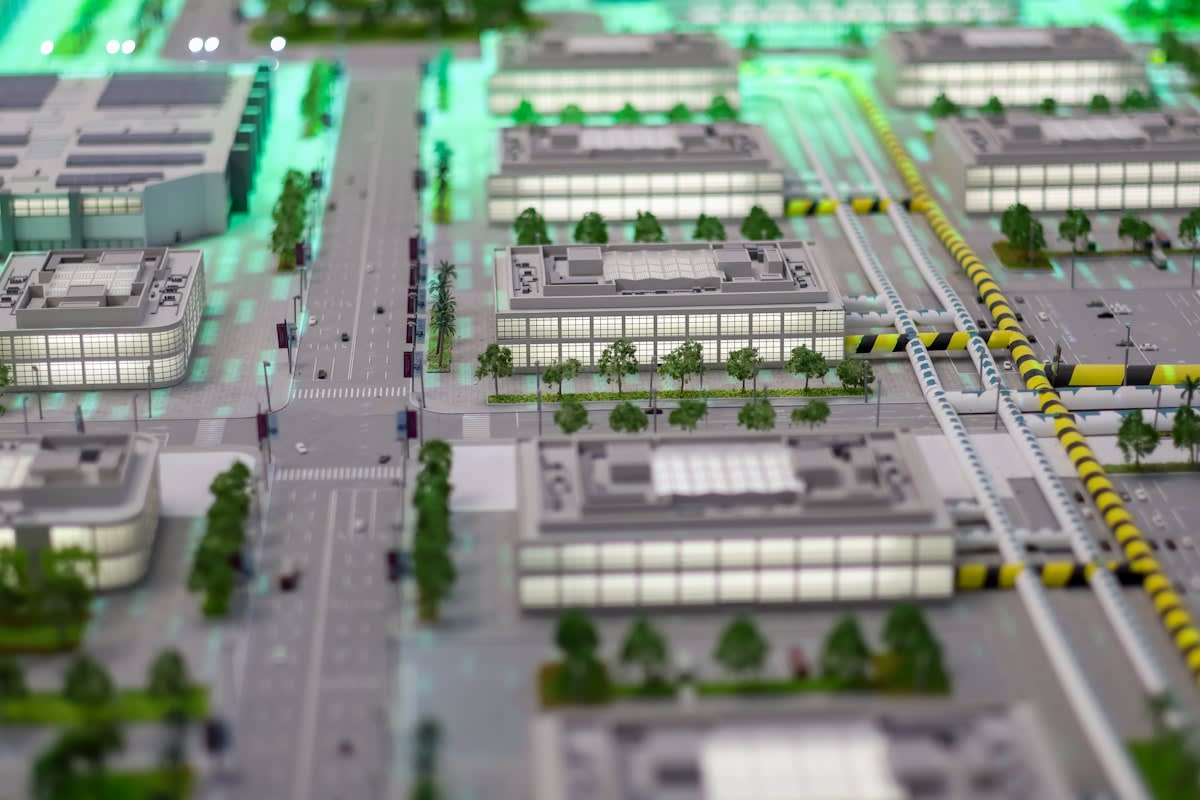
The Friction of Density: When Scale Becomes a Tax
In the old model, the 'cost of entry' for a global career was a high rent and a grueling commute. For decades, the trade-off was acceptable because the proximity to power was absolute. However, we have reached a tipping point where the 'Density Tax'—the combined cost of living, time lost to congestion, and mental degradation—now exceeds the productivity gains of being in the room. When a mid-level analyst spends four hours a day in traffic or 60% of their take-home pay on a studio apartment, the economic logic of the primate city collapses.
This collapse is visible in the data. According to reports from the OECD (Source: OECD Regional Outlook, 2023), there is a growing divergence between urban productivity and urban livability. In many global hubs, the cost of living has decoupled from local wage growth, forcing a migration of the 'creative class' toward secondary cities. These individuals aren't looking for a quiet retirement; they are looking for a place where their capital goes further, allowing them to invest more in their own ventures and less in a landlord's mortgage.
"The traditional city was a machine for centralization. The new economic geography is a network of nodes. We are moving from a world of 'hubs and spokes' to a 'mesh network' of talent."— Paraphrased from UN-Habitat Urban Trends Analysis, 2024
The result is a strategic decoupling. Talent is no longer tethered to the zip code of the corporate headquarters. Instead, we see the emergence of 'specialized clusters.' Imagine a town that isn't just a suburb, but a global center for a specific niche—say, sustainable aquaculture or decentralized finance—where the local ecosystem is designed specifically for that industry. This is the essence of the hyper-local cluster: it provides the networking benefits of a city without the systemic waste of a metropolis.
This shift is not limited to the West. In Southeast Asia and India, we see a similar trend. The overwhelming pressure on cities like Jakarta or Mumbai is driving investment into 'Tier 2' and 'Tier 3' cities. These regions are skipping the monolithic phase entirely, leaping straight into digital-first, distributed economic models that leverage local strengths rather than trying to mimic the sprawl of a mega-city.
The Practitioner's Perspective: The Radius of Relevance
On the ground, this looks like a war over the 'Radius of Relevance.' If you talk to urban planners and commercial real estate strategists today, the debate isn't about whether the office is dead—it is about how to redefine the 'walkable catchment.' We are seeing a fierce internal debate between those clinging to the Central Business District (CBD) model and those advocating for the '15-Minute City.' The friction is palpable; developers are struggling to price assets that were based on a 2019 reality where people were forced to commute into a core.
Practitioners in the field are now focusing on 'micro-infrastructure.' Instead of building one massive transit line into a city center, the focus is shifting toward inter-cluster connectivity. The goal is to make it as easy to move between three specialized small hubs as it was to move from the suburbs to the city. This requires a complete rethink of zoning laws, which in most countries are still designed for a world that separates 'where we work' from 'where we live.'
| Feature | Monolithic Hub (Old Model) | Hyper-Local Cluster (New Model) |
|---|---|---|
| Primary Value Driver | Agglomeration / Proximity | Specialization / Livability |
| Cost Structure | High Overhead (Rent/Commute) | Optimized Overhead |
| Talent Acquisition | Centralized Competition | Distributed Niche Networks |
| Infrastructure Focus | Radial (Hub-and-Spoke) | Mesh (Node-to-Node) |
| Risk Profile | Systemic Fragility (Single Point of Failure) | Resilient / Distributed |
The transition is messy. We are currently in the 'awkward middle' where the old infrastructure still exists, but the old behaviors have vanished. This creates a vacuum that hyper-local clusters are quickly filling. When a group of high-earning engineers moves to a smaller town, they don't just bring their salaries; they bring a demand for high-end coffee, fiber-optic internet, and co-working spaces. They effectively 'seed' a new economic node, attracting other professionals and creating a self-sustaining loop of growth.
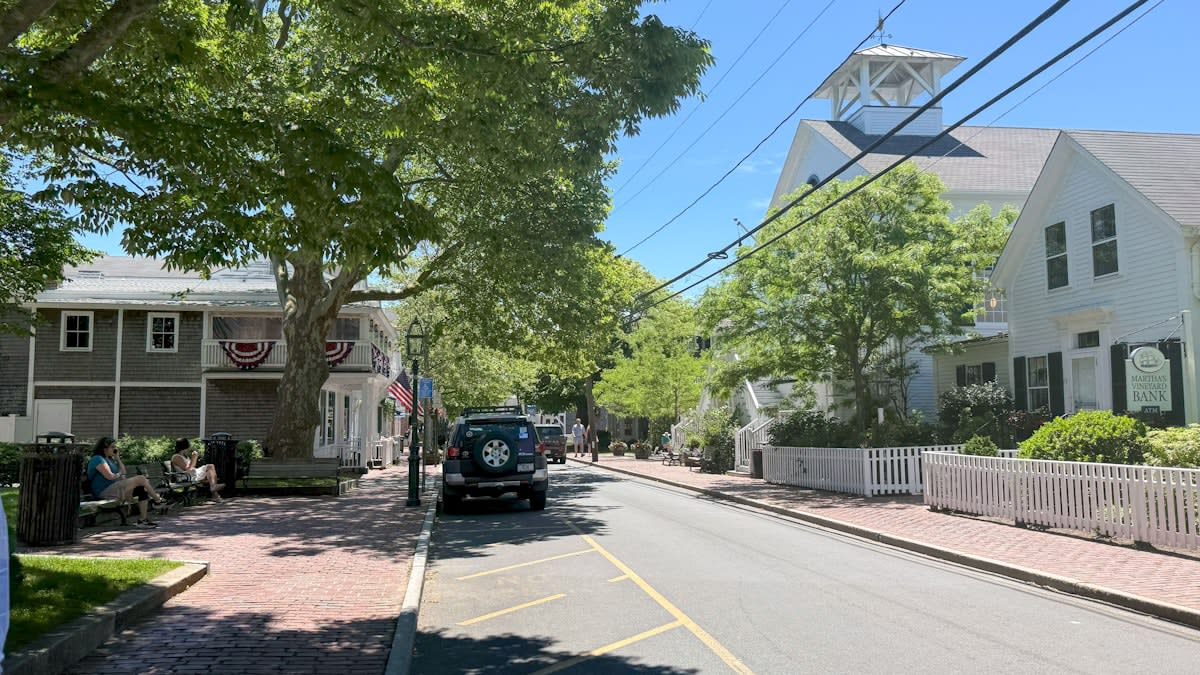
Beyond the Hype: The Strategic Implications
Why does this matter for the global economy? Because it changes the nature of competitiveness. For decades, a country's strength was measured by the power of its capital city. In a polycentric world, strength is measured by the density and diversity of its clusters. A nation with ten specialized, high-functioning hubs is more resilient than a nation with one massive, fragile center. This is a hedge against systemic shocks—be they pandemics, climate events, or economic crashes.
Furthermore, this shift democratizes opportunity. When the 'economic center' is no longer a single physical location, the barriers to entry for entrepreneurs in peripheral regions drop. We are seeing a rise in 'regional excellence,' where towns in the Midwest US, the interior of Brazil, or rural Japan are leveraging digital connectivity to dominate specific global niches. This is not a regression to rural life; it is the evolution of urbanism into a distributed network.
- Reduction in 'Dead Time': The elimination of the long-haul commute recaptures thousands of productive hours per worker annually.
- Capital Redistribution: Investment is flowing away from overvalued CBD real estate into regional infrastructure and residential development.
- Niche Agglomeration: Clusters allow for deeper specialization, as professionals with similar interests congregate by choice rather than necessity.
- Environmental Resilience: Distributed populations reduce the extreme heat-island effect and sewage/power strain associated with mega-cities.
The bottom line is that the Monolith was a product of the industrial age—a time when people had to be physically near the machines of production. In the era of the cognitive economy, the 'machine' is the network. The network doesn't require a central hub; it requires stable nodes. The Great De-Urbanization isn't an exit from society, but an exit from an obsolete organizational structure.
Fact-Check & Accuracy Note
Key claims regarding the 'Density Tax' and the decoupling of urban productivity from livability are based on general trends observed in the OECD Regional Outlook (2023) and UN-Habitat frameworks. The shift toward polycentric urbanism is an ongoing subject of debate among urban geographers, with some arguing that the 'Agglomeration Effect' still holds a dominant advantage for high-finance and political power centers.
Editorial Note
Editorial Note: This analysis adopts a contrarian strategic lens, challenging the traditional 'Mega-City' growth narrative. It prioritizes systemic shifts in economic geography over short-term real estate fluctuations.