
The Fallacy of the Volume Metric
For decades, the global tourism industry operated on a primitive KPI: arrival numbers. The logic was linear—more planes, more cruise ships, and more hotel beds equaled more prosperity. But this growth model ignored the systemic friction created when a city's infrastructure is designed for two million residents but must suddenly support ten million visitors. We are now seeing the collapse of this volume-centric paradigm. Cities are realizing that the marginal cost of the millionth tourist—in terms of waste management, noise pollution, and the erosion of local housing markets—far outweighs the marginal revenue they bring into the local economy.
Why are we suddenly seeing campaigns that practically beg tourists to stay away? It is not a sudden onset of civic misanthropy. It is a strategic reallocation of assets. When a city like Amsterdam launches a campaign explicitly telling 'party tourists' to avoid the city center, they are not attacking tourism itself; they are performing a surgical extraction of low-value, high-impact visitors (Source: City of Amsterdam, 2023). This is a shift from a 'catch-all' strategy to a 'curated' strategy, where the goal is to attract the visitor who spends more, stays longer, and respects the urban fabric.
This systemic shift is most evident in the rise of 'de-marketing.' Traditionally, destination marketing organizations (DMOs) spent millions to make their cities look irresistible. Now, the most sophisticated players are investing in 'dispersion'—the art of pushing people away from the primary hub and toward the periphery. By incentivizing visits to secondary cities or lesser-known neighborhoods, urban planners are attempting to flatten the peak of the tourism curve, transforming a concentrated surge into a manageable flow.
"The challenge is no longer about how to attract the world, but how to manage the world once it arrives. We are moving from the era of promotion to the era of orchestration."— Luca Gagliardi, Researcher in Tourism and Urbanism
The Strategic Pivot: From Attraction to Diversion
Consider the Japanese approach to overtourism. In Kyoto, the friction between residents and tourists reached a breaking point, leading to the closure of certain private alleys to the public. Rather than simply banning visitors, the Japanese government has pivoted toward 'regional dispersion' (Source: Japan Tourism Agency, 2024). The goal is to redirect the flow of visitors from the 'Golden Route'—Tokyo, Kyoto, and Osaka—toward rural prefectures. This is a masterclass in systemic balancing: using the prestige of the primary hub to validate the appeal of the secondary destination.
| Metric | Volume-Based Model (Old) | Value-Based Model (New) |
|---|---|---|
| Primary KPI | Total Annual Arrivals | Average Revenue Per Visitor (ARPV) |
| Marketing Goal | Maximum Visibility | Targeted Segmentation |
| Success Indicator | Hotel Occupancy Rate | Resident Satisfaction Index |
| Spatial Strategy | Hub Concentration | Regional Dispersion |
| Visitor Type | Mass Market / Budget | High-Spend / Low-Impact |
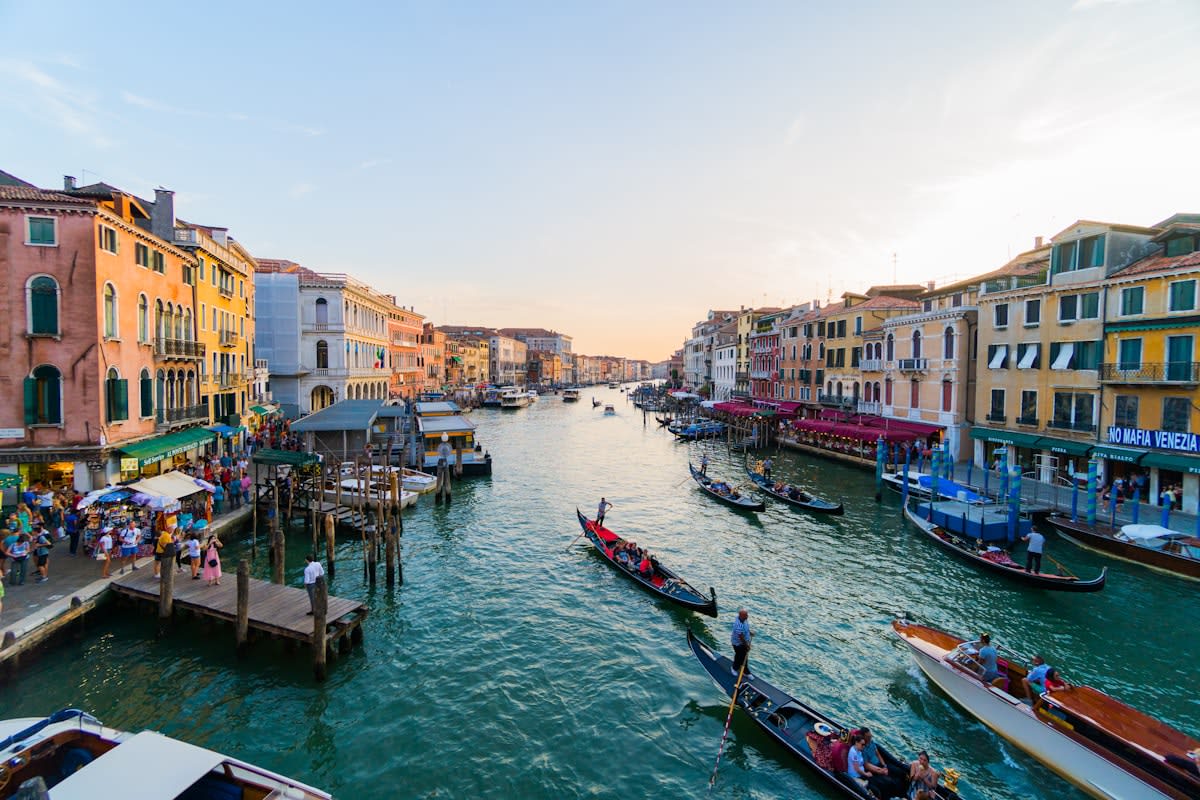
Venice has taken a more direct, fiscal approach. The introduction of the 'Contributo di Accesso'—an entry fee for day-trippers—is a bold experiment in demand management (Source: Comune di Venezia, 2024). By putting a price tag on the act of entering the city, Venice is testing the elasticity of tourist demand. Does a 5-euro fee actually deter the casual visitor? Perhaps not for the individual, but when scaled across millions of arrivals, it creates a psychological barrier that signals the city is a protected resource, not a free theme park.
From a practitioner's perspective, this is where the real friction happens. In the boardrooms of city halls, there is a constant, simmering war between the 'Growth Lobby'—hotel owners, tour operators, and airport authorities—and the 'Livability Lobby'—urban planners, environmentalists, and resident associations. The Growth Lobby argues that any restriction on volume is a surrender of economic potential. The Livability Lobby argues that if the city becomes unlivable for its residents, it loses the very authenticity that makes it a destination in the first place. The debate is no longer about whether to limit tourism, but exactly where the 'carrying capacity' threshold lies.

The Economic Logic of the Invisible Tourist
The 'Invisible Tourist' is the holy grail of modern urban management. This is the visitor who blends into the local fabric, spends significantly more than the average tourist, and avoids the overcrowded hotspots. They don't visit the Eiffel Tower at noon; they visit a boutique gallery in the 11th arrondissement at 4 PM. By shifting the incentive structure—through taxes on short-term rentals and premiums on peak-time access—cities are attempting to engineer a visitor profile that provides high economic yield with minimal social friction.
This is not just about money; it is about the survival of the urban ecosystem. When Airbnb-style rentals hollow out city centers, the local services—bakers, cobblers, bookstores—are replaced by souvenir shops and overpriced cafes. This 'touristification' creates a feedback loop where the city becomes a caricature of itself. By paying people to stay away, or at least to stay elsewhere, cities are attempting to protect the 'authentic' baseline that sustains their long-term brand value.
Is this an elitist approach? Some argue that by pricing out the budget traveler, cities are making culture the exclusive domain of the wealthy. However, the alternative is the total degradation of the site. If a destination is loved to death, it ceases to exist for everyone. The transition to a value-based model is an admission that some resources are finite and that the 'right to visit' cannot supersede the 'right to reside.'
Fact-Check & Accuracy Note
The key claims regarding Amsterdam's 'Stay Away' campaign and Venice's entry fee are sourced from official municipal announcements (City of Amsterdam, 2023; Comune di Venezia, 2024). The Japanese regional dispersion strategy is based on the Japan Tourism Agency's 2024 guidelines. The debate over 'carrying capacity' remains a central point of contention among urban sociologists and is not a settled scientific metric, but rather a political negotiation.