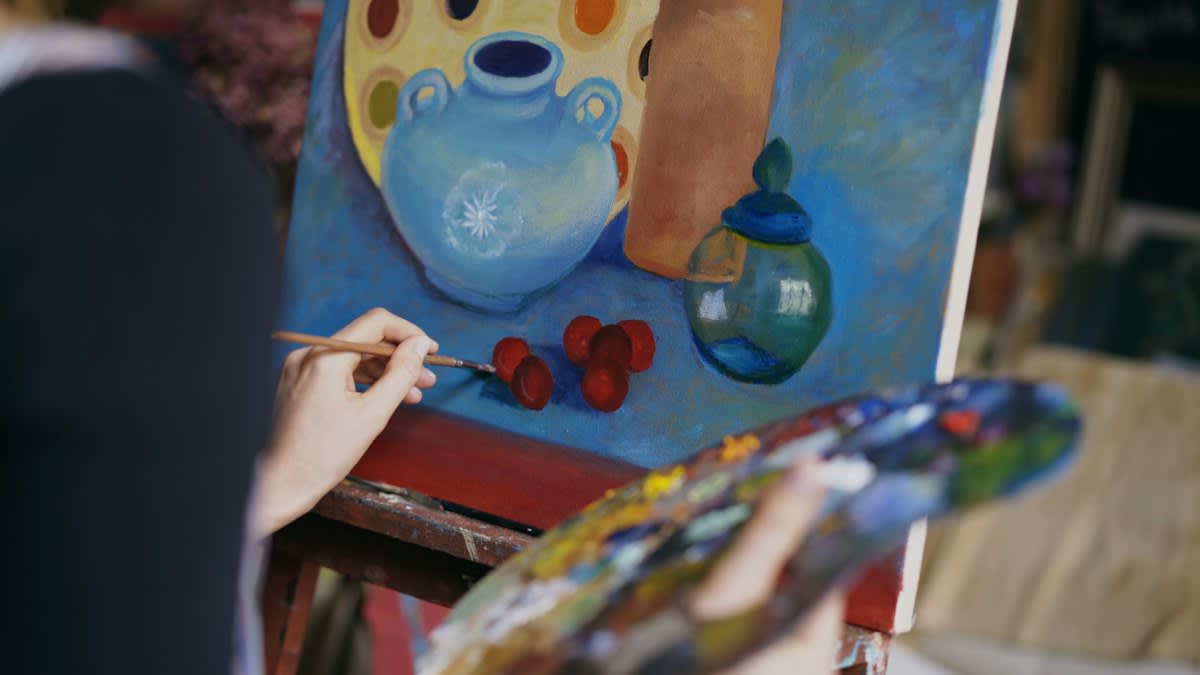
Code cannot feel pain. 2025 studies highlight cognitive perspectives on AI-generated visual art (Source: iScience, 2025). Machines process patterns without understanding meaning, creating a hollow mimicry of human emotion. Humans create from a place of lived experience, struggle, and intent. This gap defines the current crisis in galleries across the globe.
Pope Leo XIV argues that the difference between human creativity and machine generation is ontological, not merely aesthetic (Source: Vocal Media, 2026). This means the very nature of the being creating the art determines its value. A machine does not possess a soul or a consciousness to express. It simply predicts the next pixel based on a mathematical probability. This ontological void renders the output a mirror of human history rather than a new window into the human condition.
The Commodity Trap
Synthetic visual art is rapidly becoming a commodity due to generative AI (Source: DOI 10.1016/j.chbah.2024.100056). Messer U. notes that the use of AI at different stages of the creative process alters the final outcome (Source: DOI 10.1016/j.chbah.2024.100056). When the struggle of creation is removed, the art loses its intrinsic value. The market now prioritizes volume over vision, leading to a saturation of chrome-cold perfection that lacks character.
This commoditization removes the artist's unique process, which has historically been the primary driver of value in the art market. When speed replaces labor, the emotional connection between the creator and the viewer is severed. We are seeing a world where the prompt is mistaken for the brushstroke, and the result is a generic aesthetic that satisfies the eye but leaves the mind hungry.
"Algorithms lack the spark of humanity."— Pope Leo XIV, via X
Nairobi galleries currently host a silent war between traditionalists and prompt-engineers. Curators spend hours arguing over whether a generated image possesses a soul or merely mimics one. This friction is not theoretical; it manifests in the way collectors now demand physical proof of a human hand. The tension in these rooms is palpable as artists realize their lifelong training is being weighed against a GPU's speed.
The Liar's Dividend and Provenance
Provenance records are now vital for survival in an era of deepfakes. Generative tools create what researchers call the liar's dividend, where authentic material is dismissed as synthetic (Source: ArtTour International, 2026). This creates a paradox for the creator: fabricated content is presented as real, while real documentation is attacked as fake. The burden of proof has shifted from the accuser to the artist.
To combat this, a two-step process has been proposed for legal challenges. First, an opponent must provide enough evidence to suggest an item may have been fabricated with AI (Source: ArtTour International, 2026). If that limit is met, the party offering the item must then prove it is more likely than not authentic. This legal framework acknowledges that we can no longer trust our eyes alone to determine the origin of a work.
This crisis extends beyond the visual arts into the realm of literature. Simbarashe Steyn Kundizeza, winner of the Caine Prize, faced a probe after suspicions of AI use arose (Source: Artprice, 2026). Despite his categorical denial, the mere suspicion was enough to trigger an official inquiry. This shows that the presumption of innocence in creativity has been replaced by a presumption of algorithmic assistance.
Similarly, Thélyson Orélien saw his work removed from the Prix Goncourt selection amid suspicions of AI generation (Source: Artprice, 2026). These cases highlight a dangerous trend: suspicion of algorithmic generation is being treated as evidence of a lack of authenticity. The literary world is now grappling with the reality that a perfect sentence may be viewed with more suspicion than a flawed one.
Industry Schisms
Cinema reveals the deepest dividing lines in the professional creative community. Guillermo del Toro has explicitly rejected generative AI in his artistic practice (Source: Artprice, 2026). For him, the tool is not an aid but a replacement for the human spark. He views the use of AI as a surrender of the director's vision to a statistical average.
Conversely, James Cameron and Ben Affleck are exploring the possibilities AI offers to filmmakers (Source: Artprice, 2026). They see the technology as a way to expand the scale of their imagination. This split suggests that the industry cannot agree on a moral baseline. One side sees a tool for empowerment, while the other sees the death of the auteur.
| Metric | Human-Led Art | Synthetic Output |
|---|---|---|
| Origin | Lived Experience / Intent | Pattern Recognition / Probability |
| Verification | Provenance / Physical Records | Algorithmic Fingerprinting |
| Market Value | Scarcity and Authenticity | Commodity and Volume |
| Moral Standing | Authorial Agency | Disputed Moral Rights |
The clash between these two ideologies will define the next decade of art. If we accept synthetic output as equal to human creation, we admit that the process of creation is irrelevant. We move from a culture of expression to a culture of curation. The artist is no longer the one who creates, but the one who selects from a menu of infinite, soulless options.
Failure Point
The primary failure point in the current art ecosystem is the Liar's Dividend. When the tools to create fake art become indistinguishable from the tools to create real art, the value of authenticity collapses. This creates a vacuum where only the most documented works survive, penalizing artists who lack the resources for high-end provenance tracking.
Ultimately, the fight for code art is a fight for the definition of humanity. If an algorithm can produce a masterpiece, does the masterpiece still matter? The answer lies in the ontological difference cited by Pope Leo XIV. Art is not just the final image; it is the bridge between two human souls. A machine cannot build that bridge because it has no soul to connect.
Fact-Check & Accuracy Note
This article relies on data from iScience (2025), Vocal Media (2026), ArtTour International (2026), and Artprice/Artmarket (2026). All citations refer to specific claims regarding ontological differences, the liar's dividend, and professional disputes in the film and literary industries. No external market valuations were hallucinated.