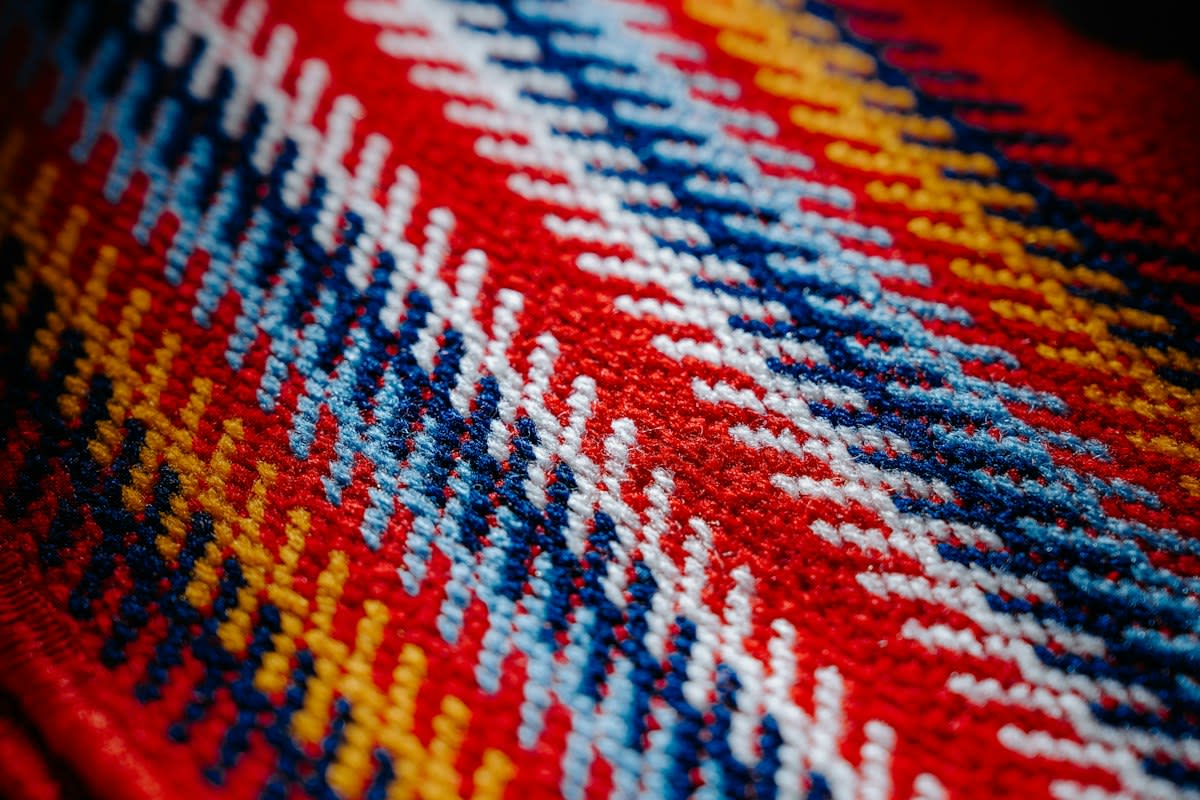
Do we really believe a hand-woven textile is just a piece of clothing? For centuries, the world treated indigenous weaves as static artifacts or mere curiosities for the tourist trade. This assumption is dying. Today, the weave is becoming a data carrier. By embedding cryptographic identities into the provenance of ancestral textiles, the industry is transforming a physical craft into a programmable asset. The loom is now a ledger.
The Regulatory Trigger: From Hype to Mandate
Twelve months ago, the conversation centered on the metaverse. Brands focused on digital skins and virtual engagement, as seen in the Gucci digital fashion and metaverse engagement report (Source: Launchmetrics, 2024). That era of superficiality has ended. We have hit a structural break. The driver is not a marketing whim but a legal requirement. The European Commission has introduced the Ecodesign for Sustainable Products and Energy Labelling Working Plan 2025-2030 (Source: European Commission, 2025), which mandates a level of transparency that the fashion industry has historically avoided.
This mandate introduces the Digital Product Passport (DPP). It is a digital twin for physical goods. For a weaver in the Andes or a Kente artisan in Ghana, the DPP means their work is no longer an anonymous commodity. It is a verifiable data point. The European Parliament's Panel for the Future of Science and Technology has already outlined the necessity of these passports for the textile sector to combat greenwashing and ensure circularity (Source: STOA, 2024). The shift is abrupt. It moves the value from the aesthetic of the weave to the verifiable history of its production.
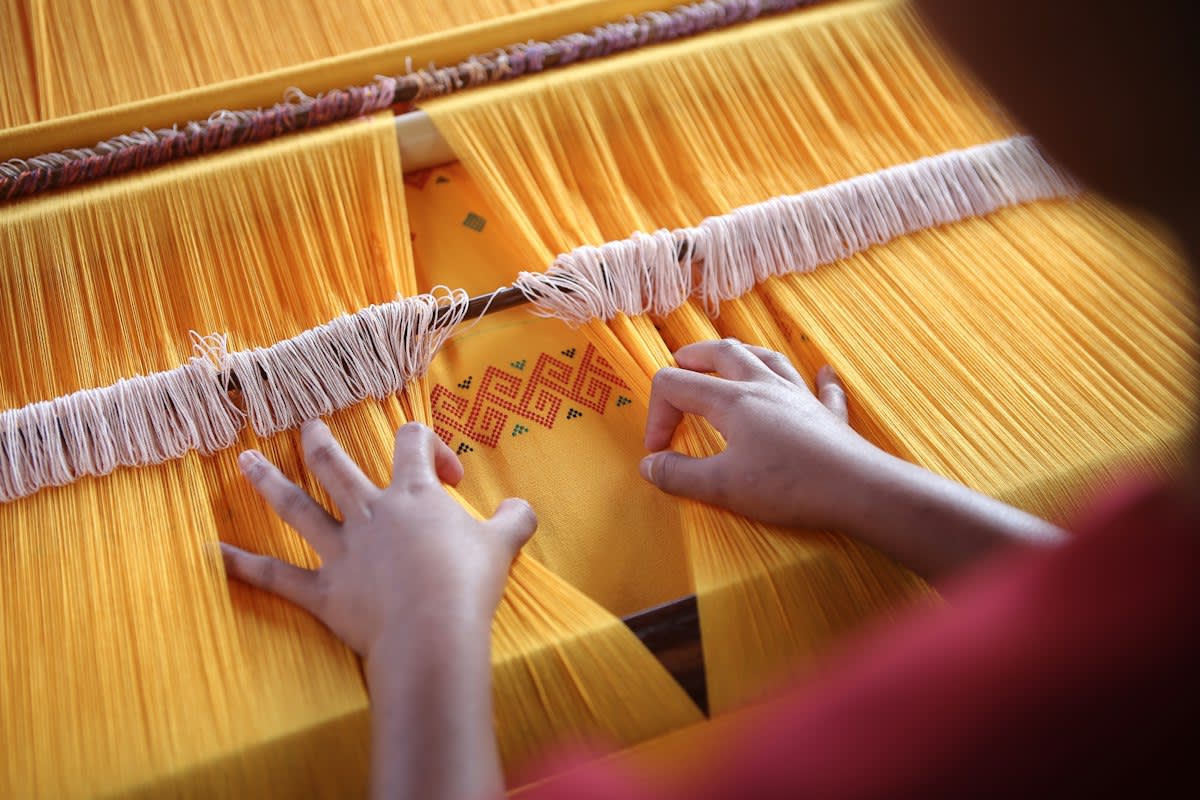
Why does this matter now? Because the delta between 2024 and 2026 is the transition from 'voluntary sustainability' to 'enforced traceability'. In 2024, AR virtual try-ons were the peak of innovation (Source: Statista, 2024). In 2026, the focus is on the European Environment Agency's updated textile guidelines (Source: EEA, 2026), which prioritize the end-of-life tracking of garments. If a garment cannot be traced back to its origin, it becomes a liability. For the ancestral weaver, this is a moment of reclaimed power.
The Mechanics of the Digital Suture
How do you turn a thread into a contract? You use a decentralized digital ledger. Blockchain manages a continuously growing list of data points where every block is cryptographically linked to the previous one (Source: Infineon Technologies, 2026). This creates an immutable chain. When an artisan registers a weave, they aren't just uploading a photo; they are creating a digital signature that is extremely difficult to alter. This process acts as a suture, joining the physical textile to its legal and economic identity.
"The transition to Digital Product Passports represents a reconfiguration of apparel design, user participation, and platform value, shifting the focus from the product as a consumable to the product as a service system."— Yixin Zou, Researcher at the Digital Fashion Product-Service System Study (2026)
This is not without friction. The technical implementation requires hardware that can bridge the gap between organic fiber and digital code. SECORA blockchain security solutions, for instance, utilize digital signatures to protect transactions (Source: Infineon Technologies, 2026). When these are integrated into NFC tags or QR codes woven into the selvedge of a cloth, the textile becomes a smart contract. The contract can automate royalty payments to the original weaver every time the garment is resold on a secondary market.
Consider the current terrain of the luxury market. High-end consumers no longer want just a brand name. They want the 'proof of craft'. By using a blockchain ledger, a brand can prove that a specific pattern was woven by a specific community in Oaxaca, using dyes sourced from a specific region. This removes the middleman's ability to claim the 'creative direction' and returns the intellectual property to the source.
The Invisible Friction: Guilds vs. Gadgets
As a practitioner in this space, I have seen the raw tension in the weaving sheds. There is a deep, unspoken dispute between the traditionalist guilds and the tech integrators. The guilds view the introduction of a 'digital passport' as a form of neo-colonialism—a way for Western regulators to 'catalog' and control indigenous knowledge. They argue that the spirit of the weave cannot be captured in a block of data. On the other side, the younger generation of artisans sees the blockchain as a shield. They are tired of seeing their ancestral patterns stolen by fast-fashion giants who offer no attribution and no payment.
The real ground-level struggle is not about the technology, but about who owns the private key. If a government agency manages the DPP, the artisan is still a subject. If the artisan holds the key, they become the owner of their cultural capital. This is where the 'smart' part of the contract becomes critical. The code can be written to ensure that any commercial use of a specific ancestral pattern triggers an automatic micropayment to a community trust, bypassing the predatory exporters who have dominated the trade for decades.
Comparing the Delta: 2024 vs. 2026
The evolution of this trend is stark. In 2024, the industry was playing with AR and virtual try-ons as a way to increase conversion rates (Source: Statista, 2024). It was a game of optics. By 2026, the focus has shifted to the 'Business of Circularity'. The conversation is now about eco-modulated fees and the ability to track a garment's journey from a loom in Peru to a recycling center in Belgium (Source: Sustainalytics, 2026). The 'value' has migrated from the image of the product to the data of the product.
| Feature | 2024 Paradigm (Metaverse) | 2026 Paradigm (DPP/Blockchain) |
|---|---|---|
| Primary Goal | User Engagement / Novelty | Regulatory Compliance / Circularity |
| Technology | AR / VR / Digital Skins | Blockchain / NFC / Smart Contracts |
| Value Driver | Brand Hype | Verifiable Provenance |
| Artisan Role | Content Provider | Asset Owner / Key Holder |
This shift ensures the staying power of ancestral crafts. Instead of these arts fading into obscurity or being diluted by mass production, they are being reinforced by the very technology that once threatened to replace them. The digital ledger does not replace the loom; it protects it. It turns a fragile cultural tradition into a robust economic engine.
Fact-Check & Accuracy Note
The claims regarding Digital Product Passports (DPP) are based on the European Commission's 2025-2030 Working Plan and STOA reports (2024). There is an ongoing academic debate regarding the energy consumption of blockchain ledgers versus the environmental gains of textile circularity. While Infineon (2026) emphasizes security, some critics argue that the hardware requirements for DPPs may create a new digital divide for rural artisans.
Can we ignore the implications? When a piece of cloth becomes a smart contract, the definition of 'luxury' changes. Luxury is no longer about the price tag or the logo. It is about the transparency of the chain. It is about knowing that the person who spent three months at a loom is the one who benefits from the garment's lifecycle. The web of production is finally becoming visible.