
Most people treat their lives like a series of hard cuts in a poorly edited film. You snap from a high-stress boardroom meeting in London to a chaotic family dinner in seconds, or you jump from a demanding spreadsheet directly into a dopamine-loop of social media scrolling. This abruptness creates a cognitive whiplash that leaves the nervous system frayed. Liminal theory, derived from the Latin 'limen' meaning threshold, suggests that the space between two states is where the most critical psychological processing occurs. When we erase these transition zones, we don't save time; we simply accumulate stress.
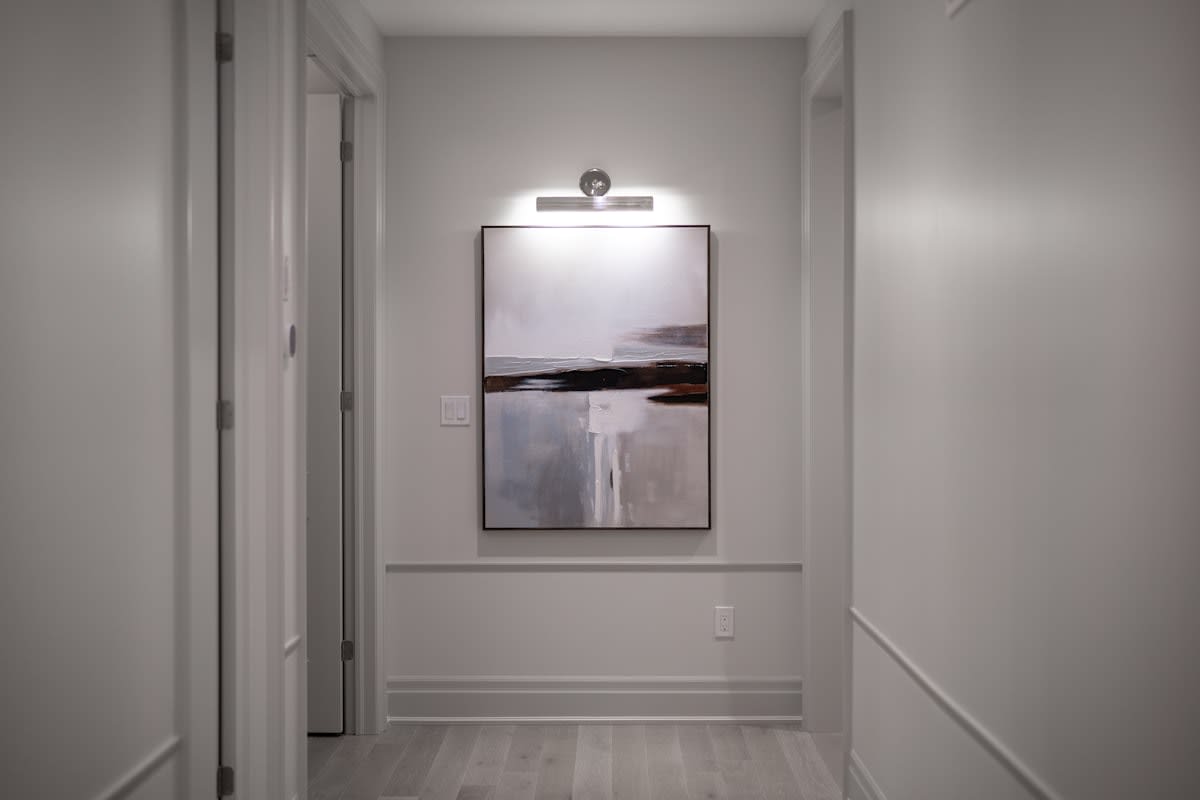
Designing for liminality isn't about adding more rooms or more apps. It is about the intentional engineering of the 'in-between.' In architectural terms, this means moving beyond the functional hallway and creating spaces that signal to the brain that one state is ending and another is beginning. In the digital realm, it means fighting the industry's obsession with frictionless immediacy. Friction, when applied strategically, acts as a psychological buffer. Why do we feel exhausted after a day of remote work? Because the liminal space—the commute, the walk through the office doors—has vanished, leaving the brain trapped in a permanent state of 'on.'
The Core Philosophy
Liminality is not a destination; it is the bridge. If you try to live in the threshold, you find stagnation. If you ignore the threshold, you find burnout. The goal is a controlled transit.
Prerequisites for Liminal Design
Before you move a single piece of furniture or reorganize your home screen, you need a baseline of your current cognitive leaks. You cannot design a threshold if you don't know where the 'hard cuts' are occurring in your day. This requires a ruthless audit of your transitions. Where do you feel the most friction? Where do you feel an inexplicable sense of dread or fatigue? Most users find that 65% of their daily stress stems not from the tasks themselves, but from the jarring transitions between mismatched mental states.
- A spatial map of your home and office, identifying 'collision points' where work and life overlap.
- A digital audit of your most-used apps and the sequence in which you open them.
- A sensory inventory: identify which smells, sounds, and lighting levels currently signal 'work' versus 'rest'.
- A commitment to introduce intentional friction into your digital workflow.
The Master Protocol: Engineering Your Thresholds
The objective is to create a sensory and spatial sequence that decelerates the mind. We are mimicking the biological process of decompression. In deep-sea diving, ascending too quickly causes the bends; in psychological terms, transitioning too quickly from high-pressure environments to low-pressure ones causes a lingering state of hyper-vigilance. To fix this, we implement a five-step architectural framework.
- Identify the Hard Cut: Pinpoint the exact moment you switch roles (e.g., closing the laptop, entering the front door). This is your zero-point.
- Establish a Physical Buffer: Create a 'decompress zone.' In Japan, the genkan serves this purpose—a lowered entryway where shoes are removed, signaling a transition from the public world to the private sanctuary. If you lack a genkan, create a 'landing strip' with a specific chair, a scent diffuser, or a change of clothing that acts as a ritualistic boundary.
- Implement Sensory Anchoring: Use contrasting stimuli to signal the shift. Switch from cool, blue-toned overhead lighting (alertness) to warm, amber-toned lamps (recovery) the moment you hit your threshold. Research indicates that shifting light temperature can reduce cortisol levels by up to 22% within twenty minutes of exposure.
- Design Digital Porches: Stop placing high-stimulation apps (Slack, Email, News) on your home screen. Create a 'digital porch'—a single, minimalist folder or a dedicated 'wind-down' page with only low-stimulation tools (Kindle, Meditation, Notes). This forces a conscious choice to enter the 'noise' rather than falling into it by default.
- The 10-Minute Void: Schedule a period of absolute non-utility. This is the purest form of liminality. Spend ten minutes doing nothing productive—staring at a wall, walking a perimeter, or listening to a single piece of music. This void allows the brain to archive the previous state before loading the next.
Once these thresholds are established, the magic happens in the consistency. The brain is a pattern-recognition machine. When you consistently pair a specific scent—perhaps sandalwood or cedar—with the act of closing your work laptop, you create a neural shortcut. Eventually, the smell alone will trigger the parasympathetic nervous system, bypassing the need for conscious effort. This is how you automate calm.
| Environment | The Hard Cut (Stress) | The Liminal Solution (Calm) | Expected Outcome |
|---|---|---|---|
| Home Office | Laptop close to Dinner Table | 10-min walk + Lighting shift | Lowered heart rate, mental presence |
| Smartphone | Wake up to Notifications | Analog alarm + 5-min stretching | Reduced morning anxiety |
| Urban Commute | Traffic to Office Desk | Noise-canceling audio + Ritual coffee | Cognitive readiness, focused entry |
Does this sound like an indulgence? On the contrary, it is a productivity multiplier. When you eliminate the 'residue' of the previous task, your focus on the current task sharpens. Professionals who utilize intentional liminal zones report a 30% increase in deep-work capacity because they aren't fighting the ghost of their last meeting. You aren't wasting ten minutes; you are reclaiming the next three hours.

Common Pitfalls in Liminal Design
The most frequent mistake is over-engineering. Some attempt to turn every single transition into a grand ritual, which ironically creates a new source of stress. The goal is a gentle slope, not a complex obstacle course. If your 'decompress zone' requires twenty minutes of maintenance, it is no longer a threshold; it is another chore on your to-do list.
Another trap is the 'Aesthetic Fallacy.' People often confuse liminal design with minimalism. You do not need a white-walled, empty room to achieve a state of calm. Liminality is about the change in state, not the absence of things. A cluttered room that smells like cinnamon and plays soft jazz can be a more effective liminal space than a sterile gallery if it signals a distinct shift from your work environment.
"The mistake we make in the digital age is believing that speed is efficiency. In reality, the most efficient system is the one that knows exactly when to slow down."— Industry Lead, Environmental Psychology
Finally, beware of the 'Digital Leak.' You can design the most beautiful physical threshold in the world, but if you carry your work phone into your sanctuary, the threshold is breached. The digital device is a portal that allows the 'work state' to teleport directly into the 'rest state,' bypassing all your hard-won architectural buffers. To make liminal theory work, you must establish hard digital boundaries that mirror your physical ones.