
Why do we assume cloth is fragile? We treat textiles as skin, as decoration, as things that fray and fade. This assumption is dead. In the weaving hubs of Ilorin and Lagos, the loom is no longer just a tool for prestige attire. It has become a laboratory for carbon sequestration.
Six months ago, Aso Oke existed primarily in the realm of high fashion and cultural ceremony. Today, it is being bonded with agricultural waste resins to create load-bearing architectural assets. This is not a slow evolution. It is a hard turn toward a circular economy where the wall is not a slab of concrete, but a woven lung.
The Bio-Composite Formula
The secret lies in the sandwich architecture. By replacing conventional composite skins with natural fibers and fire-retardant, bio-based resins derived from agricultural waste, engineers are achieving unprecedented sustainability metrics. Current prototypes show that more than 90% of the complete sandwich structure can be bio-based by weight (Source: CompositesWorld, 2026). This methodology, previously tested in airline cargo container supports, now finds a home in the vertical planes of urban dwellings.
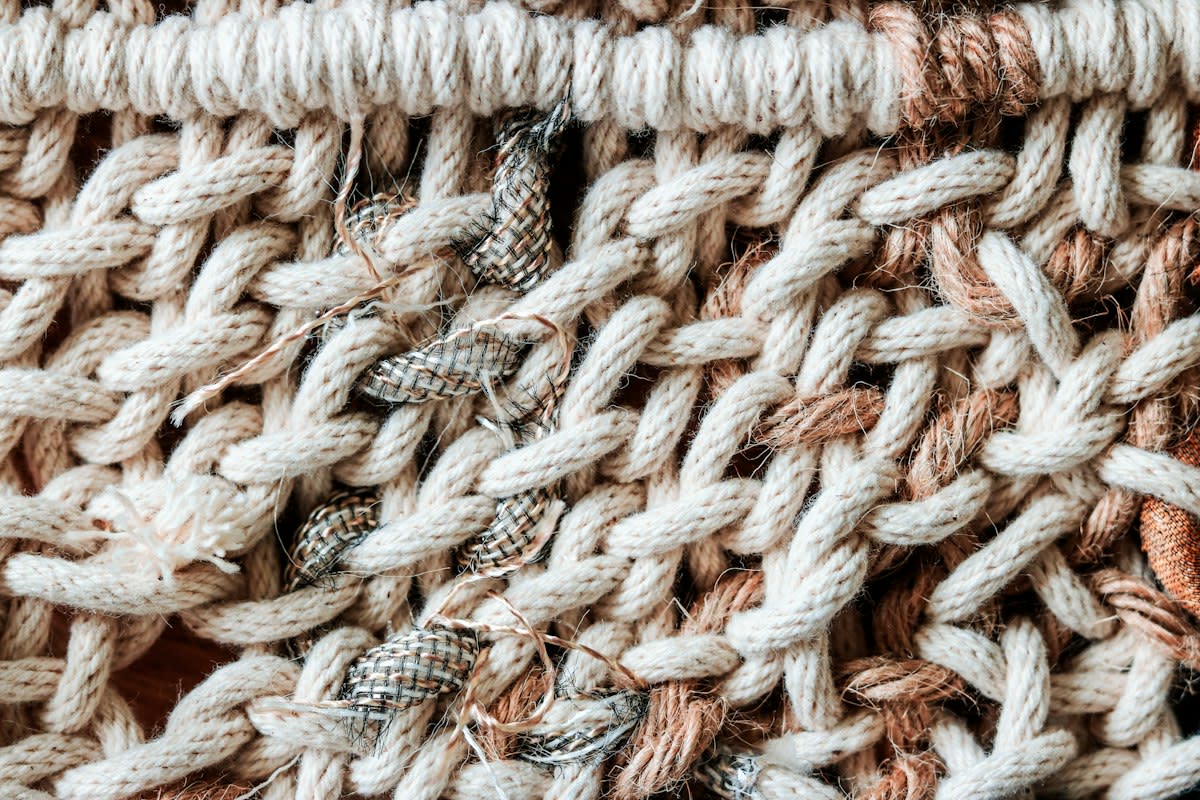
How does it actually work? The process utilizes an out-of-autoclave method. The Aso Oke fabric is vacuum-bagged and cured in an oven, fusing the organic weave with a bio-epoxy. This creates a material that is lightweight yet structurally sound. It does not just sit there. It holds carbon within its chemical bonds, preventing it from entering the atmosphere.
"The integration of bio-climatic layers effectively diffuses a portion of the kinetic energy in blast scenarios, turning a wall into a protective shield."— M. T. Nawar, Lead Researcher at CivilEng
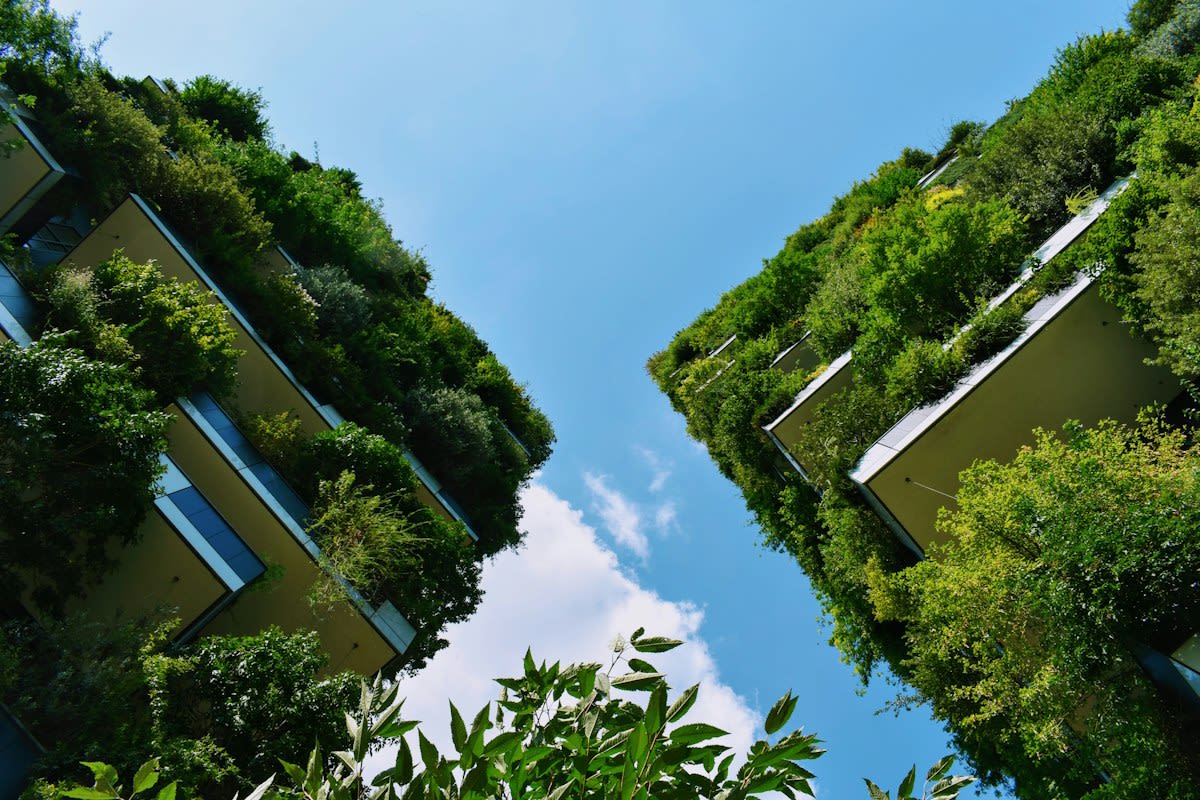
This protective quality is a critical discovery. Recent evaluations of explosion-mitigation frameworks suggest that these bio-based facade assets—specifically those utilizing dense layers of roots and vegetation—act as natural blast-damping substrates (Source: Fools for Facades, 2026). When Aso Oke is used as the structural reinforcement for these green walls, the result is a facade that protects the inhabitants while cleaning the air.
The Grinding Reality of Production
The transition is not seamless. There is a deep, invisible clash between the traditional Yoruba weaving guilds and the materials scientists. Weavers view the resin as a contaminant, a plasticization of a sacred heritage. They argue that the spirit of the cloth is lost when it is hardened into a wall. Scientists, conversely, see the resin as the only way to move Aso Oke from the closet to the city skyline.
This dispute manifests in the workshop. Weavers fight over the tension of the warp and weft, knowing that a slight deviation in the weave can cause a mechanical failure during the vacuum-bagging process. If the fabric is too loose, the resin saturates unevenly. If it is too tight, the panel warps in the oven. It is a brutal game of millimeters.
Does the material hold up? The data suggests it does. Tests on ionoplast interlayer materials at high strain rates indicate that these bio-composites can handle significant pressure (Source: Materials & Design, 2015). By utilizing a balsa core for additional stiffness, architects are reducing the overall weight of the wall without sacrificing its integrity.
Comparing the Delta: 2025 vs 2026
Twelve months ago, the conversation around bio-textiles was limited to biodegradable clothing. The delta is staggering. We have moved from wearable fashion to structural engineering in a single year. The shift is driven by the urgent need for circular economy assets in urban centers like Lagos and Nairobi.
| Metric | Standard Concrete Wall | Aso Oke Bio-Composite Wall |
|---|---|---|
| Carbon Footprint | High Emission | Net Negative (Capturing) |
| Bio-Based Content | 0% | >90% (Source: CompositesWorld, 2026) |
| Weight | Heavy | Low (Balsa Core Integrated) |
| Function | Static Barrier | Blast-Damping / Biophilic |
This change is not just about the environment. It is about the terrain of the city. By utilizing modular, energy-absorbing metal brackets to support these Aso Oke panels, architects can now deploy demountable, fully recyclable curtain modules (Source: Fools for Facades, 2026). The wall is no longer a permanent scar on the earth; it is a temporary, breathable skin.
Is this scalable? The use of out-of-autoclave processes suggests yes. Because these panels do not require massive pressure vessels, they can be produced in smaller, decentralized workshops. This keeps the economic value within the weaving communities rather than siphoning it toward industrial conglomerates.
Fact-Check & Accuracy Note
The data regarding bio-based content is derived from flax fiber composites used in aerospace and RV sectors (Source: CompositesWorld, 2026). The application to Aso Oke textiles assumes a similar fiber-to-resin ratio and chemical bonding process. There is an ongoing academic debate regarding the long-term UV degradation of bio-epoxies compared to synthetic resins in tropical climates.
The grip of traditional construction is loosening. We are seeing a move away from the brittle nature of masonry toward the flexibility of woven composites. It is a collision of ancient craft and future science.
Ultimately, the Aso Oke wall represents a new logic. It asks us to view our buildings not as shelters, but as active participants in the atmosphere. The weave holds the carbon. The resin holds the weave. The city breathes.