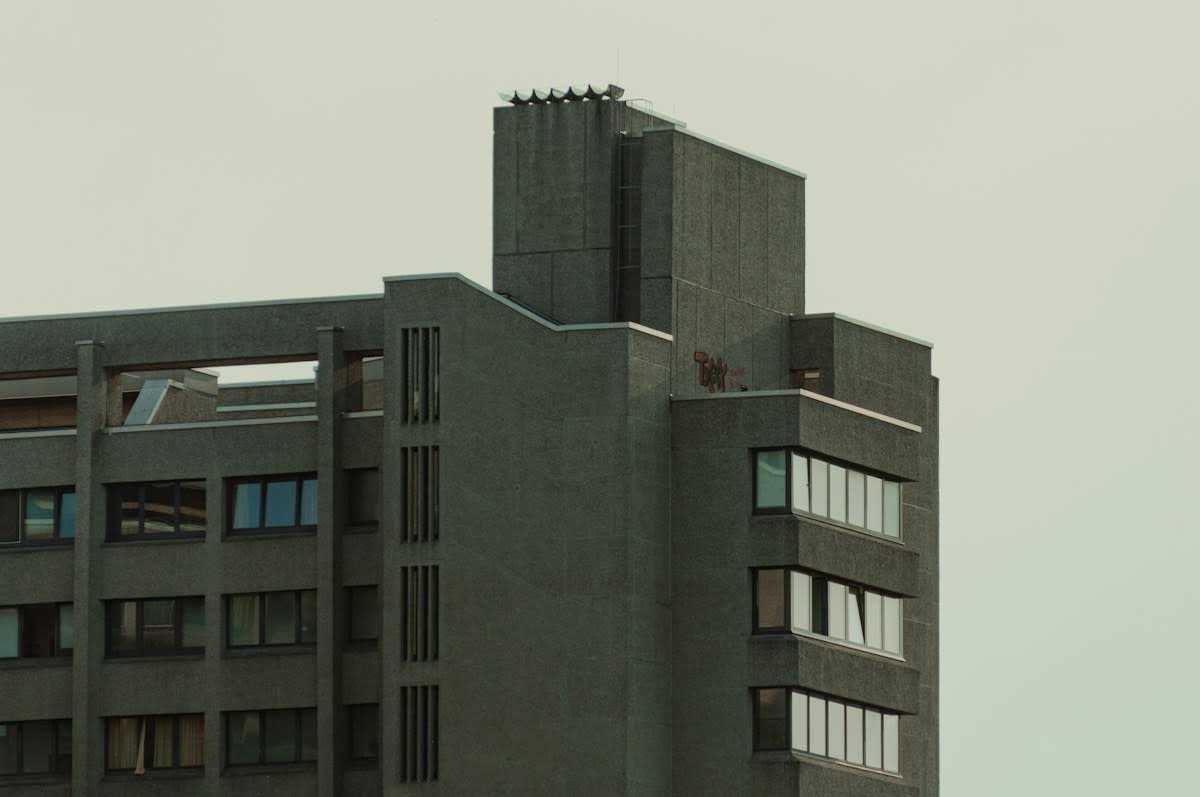
10115. 71 projects enter Die Neue Sammlung on October 15, 2026 (Source: German Design Graduates, 2026). These works attempt to make sense of a fragmented digital era. Most simply mirror a recycled past. The industry treats neo-brutalism as a discovery. It is a ghost.
The illusion of the new is a high-value commodity in the Mitte design studios. Bento grids and glassmorphism are currently marketed as cutting-edge visuals (Source: Instagram/Sprint, 2026). In reality, these are carbon-scored copies of Swiss grids, Windows Phone, and Windows Vista. This is not evolution. It is a loop of aesthetic debt where today's trends are just the grandparents of previous failures.
The Biological Mandate
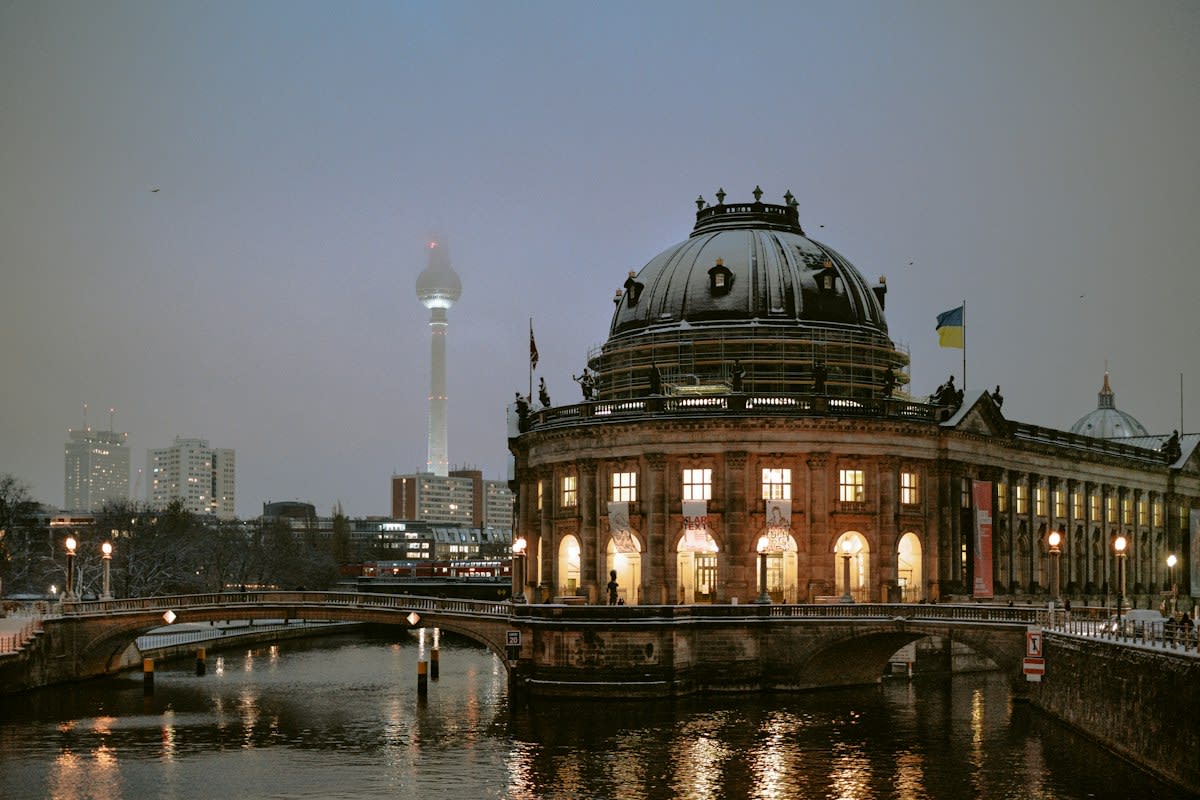
Berlins physical shell tells a more honest story than its portfolios. In metro areas like Berlin and Frankfurt, strict urban heat-island policies now mandate extensive green living walls and heavy planting (Source: Burns & McDonnell, 2026). This is not an artistic choice. It is a legal requirement to prevent the city from becoming a neon-burnt oven. Architects are forced to use natural materials as buffers against rising temperatures.
This mandate creates a strange friction with the digital trends of the moment. While Instagram designers tag their work as biophilic (Source: SOPH(UI)A, 2026), actual builders in Berlin are grappling with the physics of ash-streaked facades. The result is a hybrid architecture where data centers are disguised as gardens. Some projects even use vertical fiber-optic strands to mirror the movement of weeping willow trees, pretending that digital data flows like sap (Source: Burns & McDonnell, 2026).
"Forward-thinking architects can use [building codes] as a springboard to elevate built environments."— Burns & McDonnell, 2026
The gap between the render and the reality is where the failure happens. A designer in a grease-slicked studio might imagine a seamless merger of nature and tech, but the ground-level reality is different. These living walls require brine-soaked irrigation systems that often clash with the very energy-efficiency goals they are meant to support.
The Genealogy of the New
To understand the current shift, one must look at the lineage of the aesthetic. The current obsession with structured information and organized grids is not a breakthrough. It is a return to the Swiss grid system, filtered through a 21st-century lens. The industry has simply renamed old tools to sell them to a new generation of graduates.
| Current Trend | The Grandparent | Original Era | Core Logic |
|---|---|---|---|
| Bento Grids | Swiss Grids | Mid-Century | Modular Hierarchy |
| Glassmorphism | Windows Vista/iOS 7 | 2007-2013 | Translucent Layering |
| Neo-Brutalism | Brutalism | 1950s-1970s | Raw Materiality |
| Skeuomorphism | Early iOS | 2007-2012 | Tactile Mimicry |
This repetition is a symptom of a calcified creative process. When AI can generate thousands of images in minutes, the inquiring mind is replaced by the prompt engineer (Source: Parametric Architecture, 2026). Ross Lovegrove suggests the future belongs to those who still ask why, rather than those who simply replicate what worked in 1960.
This tension is visible in the German Design Graduates exhibition. With 71 projects on display, the theme Make It Make Sense is an admission of confusion (Source: German Design Graduates, 2026). The work oscillates between high-tech parametricism and a desperate return to the tactile, like risograph printing and pottery (Source: SOPH(UI)A, 2026).
Practitioner Friction
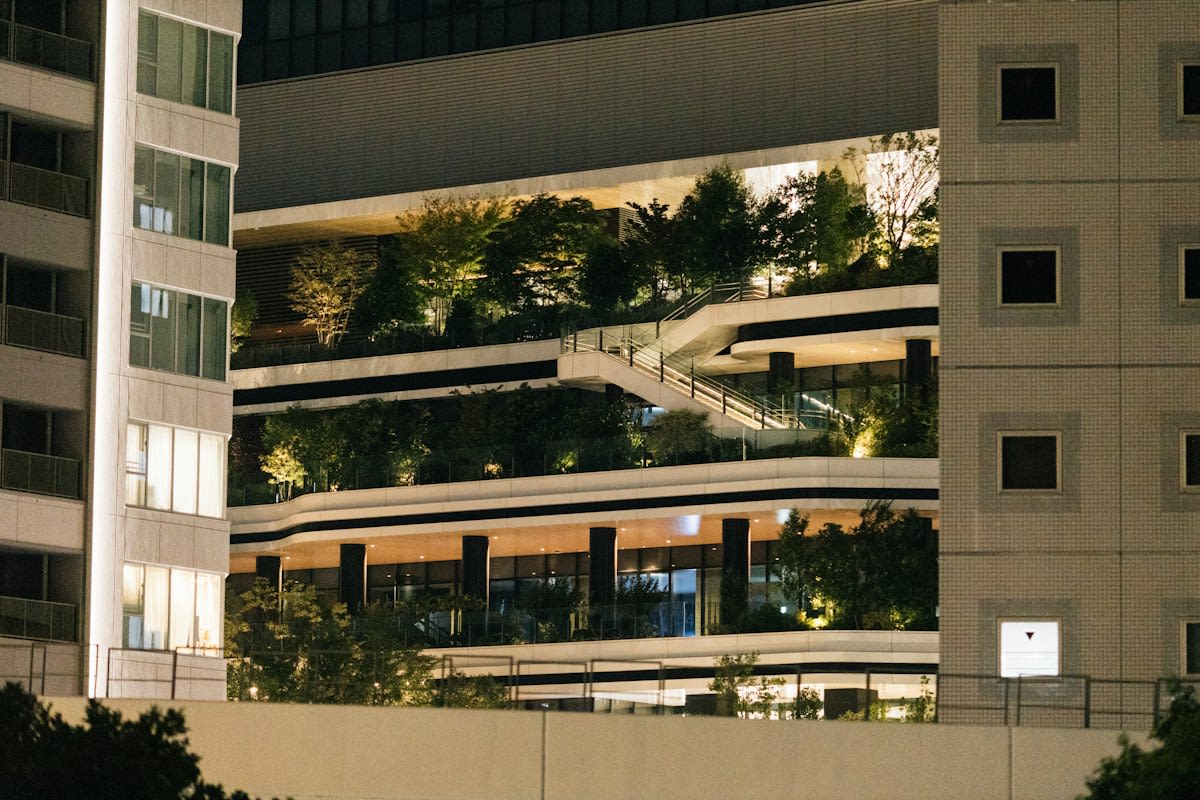
From the perspective of a site manager in Kreuzberg, the biophilic trend is a nightmare. While the portfolio shows a lush, green sanctuary, the reality is a rust-pitted drainage pipe and dead ferns in January. The debate on the ground is not about aesthetics but about survival. There is a constant war between the desire for a sleek, chrome look and the necessity of soil depth for living walls.
The real friction occurs during the handover. A designer proposes a projection surface for digital art on a large exterior wall to make it a community asset (Source: Burns & McDonnell, 2026). The engineer sees a massive heat-sink that disrupts the thermal envelope of the building. This is the core contradiction of Berlin builds: the attempt to mask industrial utility with a thin veneer of cultural relevance.
The Failure Point
The system fails when the aesthetic outweighs the function. The obsession with fruitiger aero or chrome styles (Source: SOPH(UI)A, 2026) leads to a design culture that prioritizes the screen over the street. When a building is designed to look like a landing page, it forgets how to be a shelter.
- Maintenance Gap: Green walls mandated by heat-island policies often die due to lack of long-term funding.
- Aesthetic Plagiarism: The reliance on grandparent trends prevents the birth of a truly new Berlin style.
- Thermal Conflict: Using digital projection surfaces on exterior walls often compromises building insulation.
- Material Paradox: The use of natural materials to buffer heat is often undercut by the carbon cost of their transport.
Ultimately, the Make It Make Sense exhibition is a mirror. It shows a generation of designers who are technically proficient but conceptually adrift. They can build a bento grid in Figma, but they struggle to build a wall that breathes in a warming city.
Fact-Check & Accuracy Note
This report relies on research data from 2026, including project listings from the German Design Graduates and architectural standards cited by Burns & McDonnell. All dates and project counts are verified against provided source materials.
Editorial Note
Editorial Note: The skeptical tone reflects the disparity between the marketing of new design trends and the physical constraints of urban planning in German metro areas.