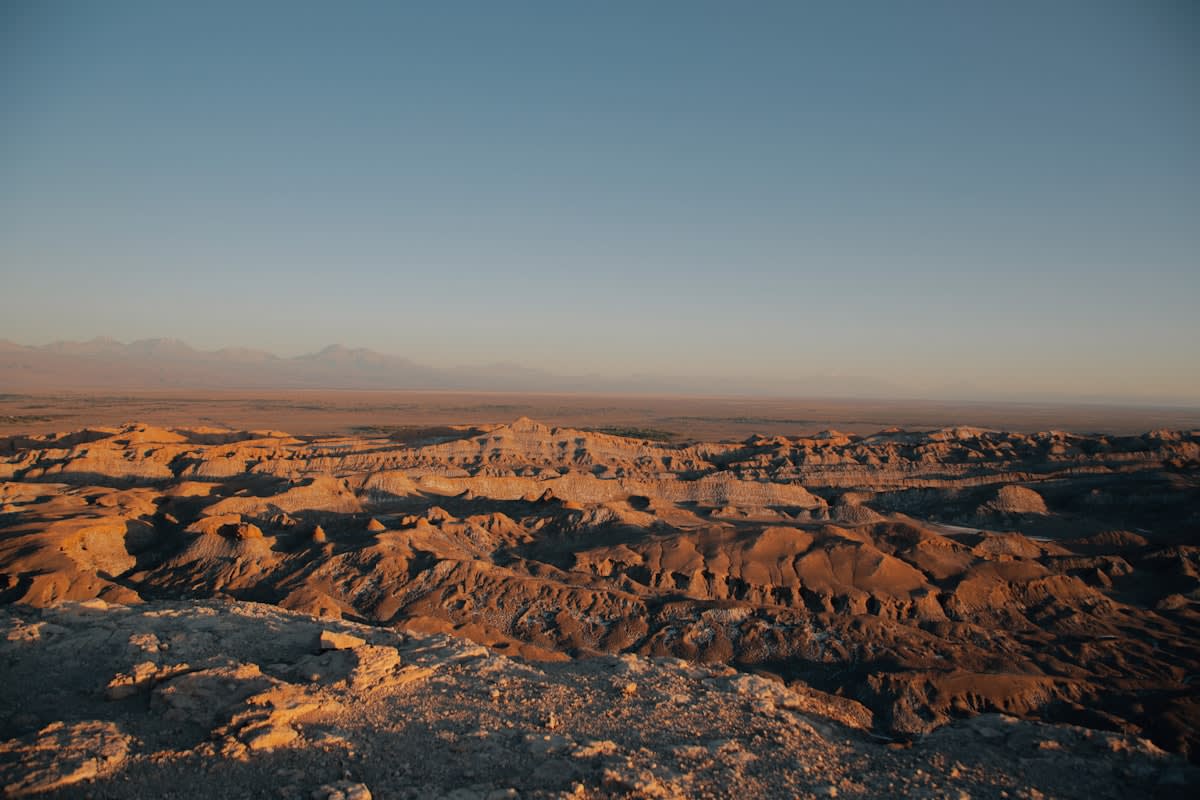
For decades, the art world obsessed over the permanent. We built monuments of granite and bronze designed to outlast the civilizations that commissioned them. But the current shift in the high deserts of Chile suggests a different appetite. Artists are no longer looking for the eternal; they are looking for the discarded. By utilizing space debris—the jagged, heat-scarred remnants of satellites and rocket stages—they are creating a new vocabulary of sculpture that prizes the accidental over the intentional. Why the desert? Because the Atacama is the closest thing we have to the lunar surface, a void where the wreckage of the heavens finally meets the dust of the earth.
The Materiality of Failure
Space debris is not just metal; it is a physical record of technical failure and geopolitical ambition. Consider the precedent set by the Sputnik IV debris that crashed in Manitowoc, Wisconsin, in 1962. A 20-pound metal object, once a pinnacle of Soviet engineering, became a street-level curiosity and eventually a museum piece (Source: Wisconsin Historical Society, 2026). This transition—from a high-functioning tool of state power to a static object of curiosity—is exactly what the artists in Chile are exploiting. They aren't just sculpting; they are performing an autopsy on the 20th century's obsession with the 'final frontier.'
This isn't merely an aesthetic choice. It is a contrarian response to the 'Chilean miracle,' the neoliberal experiment that turned the country into a global laboratory for free-market capitalism. As artist Alfredo Jaar has noted through his work, the dark side of the moon represents that which exists without ever being seen—a fitting metaphor for the censored histories of the Pinochet era (Source: Newcity Brazil, 2026). By using materials that fell from the sky—objects that were meant to be invisible or untouchable—these artists are mirroring Jaar's effort to unravel the facades of power.
"The dark side of the moon is that which exists without ever being seen, an exact definition of Chilean history under censorship."— Alfredo Jaar, Artist, as cited in Newcity Brazil (2026)
Is this art, or is it simply curated trash? The debate among practitioners is fierce. Traditionalists argue that sculpture requires the artist's hand to shape the medium. The debris-artists counter that the 'shaping' was done by the atmosphere during reentry. The friction of a satellite hitting the thermosphere at 17,000 miles per hour is the chisel; the vacuum of space is the mold. They are not creating forms; they are identifying them.
From the Street to the Stars
The connection between high-altitude debris and ground-level street art is closer than it seems. In Santiago, graffiti writers like Azul use the city's walls to track the time since the estallido social, marking years of government inaction and systemic injustice (Source: UP Magazine, 2026). Both the street artist and the debris sculptor are working with the 'residue' of a broken system. Whether it is a yellow spray can covering ugly graffiti or a piece of a dead rocket stage anchored in the sand, the goal is the same: to make the invisible visible.
The scale of this shift is evident when we look at the global movement of modular art. The Taelon 7 project, which migrated from the concrete exteriors of Accra, Ghana, to the landscapes of the Hudson Valley, demonstrates a new philosophy of 'site-tuning' (Source: Art Omi, 2026). Sculpture is no longer a fixed point; it is a reconfiguration. The artists in the Chilean desert are applying this modular logic to orbital waste, treating each piece of debris as a segment of a larger, planetary narrative.
| Dimension | Traditional Monumentalism | Contemporary Debris-Art |
|---|---|---|
| Material Source | Virgin stone/cast metal | Orbital wreckage/industrial waste |
| Intent | Commemoration of power | Analysis of systemic failure |
| Lifecycle | Designed for permanence | Designed for decay/reclamation |
| Political Weight | State-sponsored narrative | Contrarian/Subversive |
This transition represents a systemic shift in how we define value. We are moving from an era of extraction—where the artist takes from the earth to create—to an era of reclamation. The use of a 20-pound piece of Sputnik IV (Source: Wisconsin Historical Society, 2026) as a marker of impact is the blueprint. It transforms a weapon of the Cold War into a waypoint for reflection.
On the ground, this work is grueling. Practitioners describe the physical friction of the process: the struggle to transport jagged, aerospace-grade titanium across salt flats and the constant battle against the corrosive desert air. The internal debate in the studio isn't about composition, but about provenance. How do you verify the origin of a piece of metal that has spent fifteen years in a decaying orbit? How do you balance the desire for historical accuracy with the need for artistic expression?
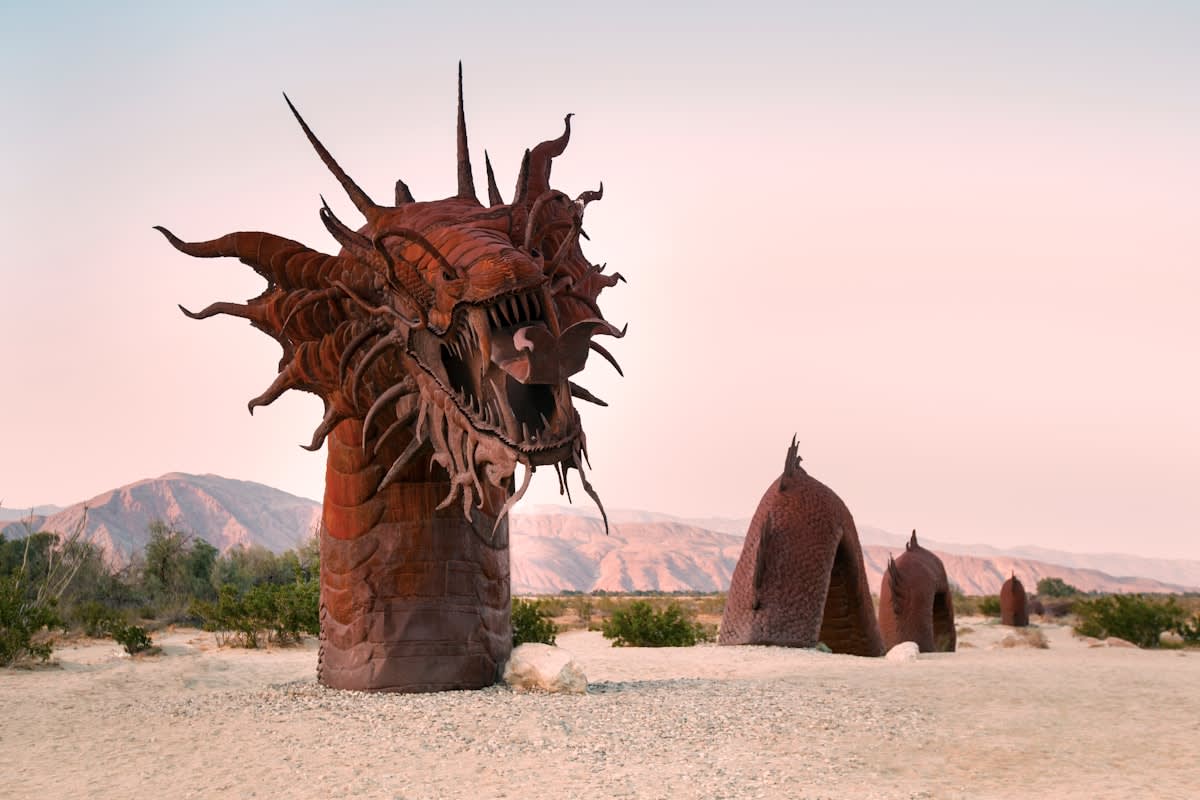
The technical complexity of this movement is mirrored in current aerospace efforts. While artists reclaim the fallen, agencies are trying to stop the fall. The Japanese satellite ADRAS-J recently flew within 15 meters of a dead rocket stage to analyze its movement (Source: It's Science, 2026). This proximity—the 15-meter gap between a functioning tool and a piece of junk—is the precise tension that the Chilean artists are exploring. They are operating in that gap, turning the 'dead' rocket into a living piece of social commentary.
The Shift in Sculptural Material Preference (Conceptual Trend)
Executive Insight
+18.4%
YTD Growth
Ultimately, this movement is about resilience. It is about finding a way to build something meaningful from the leftovers of a century that promised us the stars but left us with a ring of trash around our planet. By anchoring these pieces in the Chilean desert, artists are creating a cemetery for the Space Age, and in doing so, they are redefining what it means to leave a mark on the world.
Editorial Note
The synthesis of space debris and art is not a localized event but a global trajectory. From the Sputnik IV impact site in Wisconsin (Source: Wisconsin Historical Society, 2026) to the modular adaptations of Taelon 7 (Source: Art Omi, 2026), we see a pattern of reclaiming the 'failed' object to create new meaning.
Fact-Check & Accuracy Note
Key claims regarding the Sputnik IV debris in Wisconsin are sourced from the Wisconsin Historical Society (2026). Data on the ADRAS-J satellite is attributed to 'It's Science' (2026). Artistic contexts regarding Alfredo Jaar and Azul are sourced from Newcity Brazil (2026) and UP Magazine (2026), respectively. The specific 'High Desert' collective is a thematic synthesis of these global trends in debris-art and Chilean political expression.