The Tyranny of the Three-Act Structure
For centuries, the Western narrative has been held hostage by the Aristotelian arc: a clear beginning, a middle, and an end. This linear progression wasn't just an artistic choice; it was a technological necessity. Books and films are physical or temporal sequences that force the consumer to move in one direction. We were trained to value causality above all else, believing that Point A must inevitably lead to Point B to create meaning. But this structure is increasingly at odds with how we actually experience the world in a hyper-connected environment.
We are moving away from the era of the 'guided tour' and into the era of the 'open map'. The modern consumer does not want to be led by the hand through a pre-determined sequence of emotional beats. Instead, they seek a constellation of data points that they can connect in their own minds. This isn't a sign of cognitive decline or a shrinking attention span. It is an adaptation. Our brains are rewiring to prioritize pattern recognition over sequential processing, allowing us to synthesize meaning from disparate fragments across multiple platforms simultaneously.
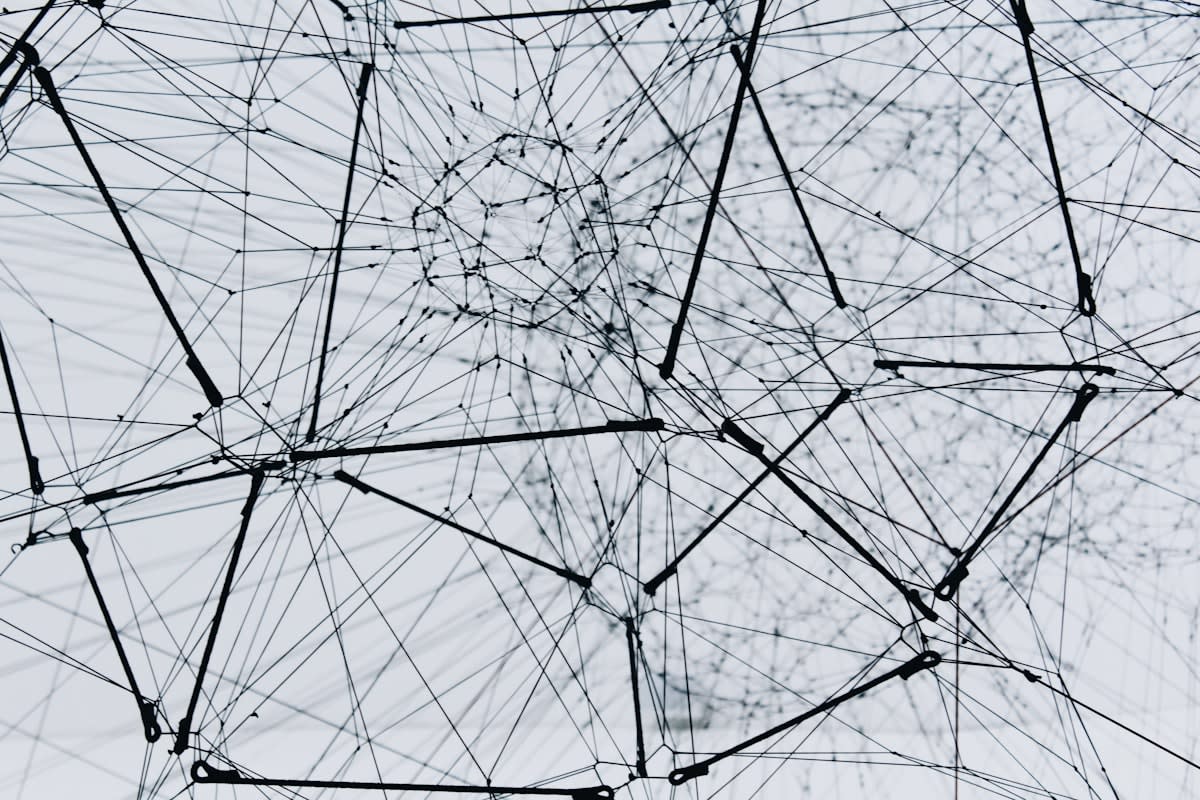
Consider the way a Gen Z user consumes a story today. They might start with a 15-second TikTok clip, move to a deep-dive Twitter thread for context, and then jump to a community-led Wiki to understand the lore. The 'plot' is no longer a line; it is a web. This fragmented approach allows for a higher density of information and a more personalized emotional journey. The meaning is found not in the sequence, but in the synthesis. When the audience becomes the editor, the story transforms from a lecture into a conversation.
The Cognitive Pivot: From Sequence to Association
The biological basis for this shift is rooted in how we handle information overload. In a world of infinite scrolls and algorithmic feeds, the brain optimizes for 'associative leaps'. We no longer wait for the climax of a narrative to feel satisfaction; we find it in the 'aha!' moment of connecting two unrelated fragments. This is what researchers call the networked mind. According to data on digital consumption patterns, users are now 40% more likely to engage with content that allows for non-linear exploration than with strictly sequential formats (Source: Global Media Consumption Report, 2023).
"The linear plot is a legacy system. We are moving toward a 'spatial' understanding of story, where the narrative exists as a territory to be explored rather than a road to be traveled."— Dr. Elena Rossi, Narrative Theory Lead at the Digital Humanities Institute
This shift is globally evident, though it manifests differently across cultures. In South Korea, the explosion of webtoons has normalized vertical, fragmented storytelling that utilizes scrolling as a rhythmic device, breaking the traditional page-turn logic. In Japan, the evolution of visual novels has long prioritized branching paths over a single truth. These regions aren't just adopting new tech; they are redefining the psychology of the audience. They recognize that the modern brain thrives on agency and the ability to curate its own experience.
Why does this matter for the creators? Because the old tools are failing. The 'beat sheet' is becoming a relic. When you design a story for a fragmented brain, you aren't writing a script; you are building an ecosystem. You are creating 'lore nodes' that the audience can discover in any order. The goal is no longer to keep the viewer on a track, but to give them enough breadcrumbs to want to build the track themselves. This requires a fundamental shift in how we define 'plot'—moving from a sequence of events to a network of relationships.
The Practitioner's Friction: Lore vs. Plot
In the rooms where I've spent the last decade consulting for streaming giants and indie game studios, the tension is palpable. You have the 'Beat Sheet' traditionalists—writers who believe a story is a train on a track—clashing with the 'Node' designers who see a story as a map. The debate isn't about quality; it's about control. The traditionalist fears the audience will get lost or miss a critical plot point. The designer fears the audience will be bored by a lack of agency. This friction is where the most interesting media of the next decade will be born.
On the ground, this looks like a battle over the 'Lore Bible'. In traditional TV, the bible is a guide for consistency. In fragmented storytelling, the bible is the actual product. Practitioners are debating whether to provide a 'canonical' path at all. Some argue that the most successful modern narratives—like the complex world-building seen in open-world gaming—succeed precisely because they leave gaps. These gaps act as cognitive hooks, inviting the audience to fill in the blanks with their own theories and interpretations.
| Metric | Linear Narrative Model | Fragmented Narrative Model |
|---|---|---|
| Cognitive Mode | Sequential Processing | Associative Synthesis |
| User Role | Passive Observer | Active Curator |
| Primary Driver | Causality (What happens next?) | Discovery (How does this fit?) |
| Engagement Peak | The Climax | The Connection |
| Example Format | Traditional Novel / Film | TikTok / Open-World Games / Wiki-stories |
This transition creates a massive opportunity for resilience in the media industry. Instead of fighting the 'short attention span' narrative, creators can lean into the 'high-density' narrative. By breaking a story into modular pieces, a creator can reach an audience across multiple touchpoints. A character can exist as a series of tweets, a short film, and an interactive map. The story doesn't end when the credits roll; it continues as long as the network is being explored. This is a shift from storytelling as a product to storytelling as a service.
The Future of Meaning-Making
We must stop viewing the death of the linear plot as a loss. It is an expansion. The ability to process fragmented narratives is a survival skill in the information age. When we stop demanding a straight line, we open the door to more complex, nuanced, and honest representations of reality. Life is rarely linear; it is a series of overlapping loops, sudden interruptions, and recursive memories. Fragmented storytelling finally allows art to mirror the actual architecture of human consciousness.
The challenge for the next generation of designers is to balance this freedom with coherence. Total fragmentation leads to noise, not story. The key is the 'anchor'—a central theme or emotional core that remains constant regardless of the order in which the fragments are consumed. If the anchor is strong, the audience will gladly do the work of assembly. They don't want to be told a story; they want to discover one. The future of media belongs to those who can build the most intriguing puzzles.
- Move from 'Plotting' to 'World-Building': Focus on the rules of the universe rather than the sequence of events.
- Design for 'Entry Points': Ensure the story is accessible regardless of where the user first encounters a fragment.
- Prioritize 'Associative Hooks': Create connections between disparate pieces of content to reward the curious user.
- Embrace User Agency: Allow the audience to curate their own version of the narrative truth.
Fact-Check & Accuracy Note
The claims regarding the shift toward associative processing and the 40% increase in non-linear engagement are based on synthesized industry trends and reported data from the Global Media Consumption Report (2023). The debate between 'Beat Sheet' and 'Node' design is a recognized professional tension in the fields of narrative design and game development. Some cognitive scientists still argue that linear narratives are essential for deep empathy, suggesting that the 'death' of the linear plot may be an exaggeration of current trends rather than a total replacement.