Why do we struggle to maintain focus for more than twenty minutes in our own homes? The answer is rarely a lack of discipline. Instead, it is an environment that screams for our attention. From the flicker of a poorly shielded LED bulb to the distant hum of a refrigerator, our homes are often minefields of micro-stimuli. These sensory interruptions trigger constant, subconscious context-switching, draining our mental energy before we even open a laptop. We are not failing our work; our spaces are failing us.
Engineering serenity requires a shift in perspective. You must stop viewing your home as a collection of rooms and start viewing it as a sensory ecosystem. In high-density urban centers like Tokyo or New York, the challenge is external noise infiltration. In sprawling suburban landscapes, the challenge is often an abundance of visual clutter. Regardless of geography, the goal remains the same: to minimize the 'noise-to-signal' ratio of your physical surroundings so that the only signal remaining is the task at hand.
Prerequisites: The Sensory Audit
Before buying a single piece of acoustic foam or a new lamp, you must conduct a rigorous sensory audit. Most people are blind to the stimuli they have habituated to. Spend three hours in your primary workspace in total silence. Note every time your eyes are drawn to an object, every time a sound breaks your concentration, and every time you feel a physical irritation, such as a draft or a scratchy fabric. This data is the blueprint for your redesign.
- A handheld decibel meter or a calibrated smartphone app to track baseline noise levels.
- A lighting checklist to identify flickering, glare, and harsh color temperatures.
- A 'clutter map' to identify high-traffic visual zones that distract the eye.
- A tactile inventory of surfaces that cause physical discomfort or distraction.
The Science of Distraction
Cognitive load is a finite resource. Research suggests that visual clutter can reduce focus by up to 40%, as the brain spends precious energy processing irrelevant information in the periphery of your vision.
Step-by-Step Implementation
The transition to a low-stimulus environment is a process of subtraction. We often try to solve focus issues by adding tools—noise-canceling headphones, productivity apps, or ergonomic chairs. But the master practitioner knows that the most effective tool is the removal of the obstacle. By systematically eliminating triggers, you create a vacuum that your focus naturally fills.
- Neutralize the Visual Palette: Replace high-contrast patterns and bold colors with a monochromatic or analogous color scheme. Use matte finishes to eliminate specular reflection and glare, which can cause subconscious eye strain. In Scandinavian design, this is reflected in the use of muted tones that blend with natural light, reducing the 'visual noise' the brain must process.
- Engineer the Acoustic Envelope: Target noise levels below 40 decibels for deep work. Install heavy, floor-to-ceiling curtains to dampen external traffic noise and use area rugs to kill the echo in rooms with hard floors. For those in open-plan living spaces, utilize acoustic panels or strategic bookshelves to create a physical and sonic barrier between the 'work zone' and the 'living zone'.
- Optimize Circadian Lighting: Eliminate overhead fluorescent lighting, which often flickers at a frequency that causes cognitive fatigue. Shift to layered lighting: diffused ambient light for general movement and a focused, warm-spectrum task lamp for work. Ensure your light source is positioned to avoid screen glare, and transition to amber tones after sunset to prevent the 50% reduction in melatonin associated with blue light exposure.
- Curate Tactile Comfort: Remove textures that are distracting or irritating. Swap synthetic, 'scratchy' fabrics for natural linens or organic cottons. Ensure your primary contact points—your desk surface and your chair—are thermally neutral. A desk that is too cold or a chair that traps heat becomes a tactile distraction that pulls you out of a flow state.
- Establish Digital Boundaries: Physically isolate your hardware. Use cable management sleeves to hide the 'visual chaos' of tangled wires. Establish a 'device parking lot' outside your focus zone to remove the temptation of the smartphone, which acts as a constant psychological trigger for distraction.
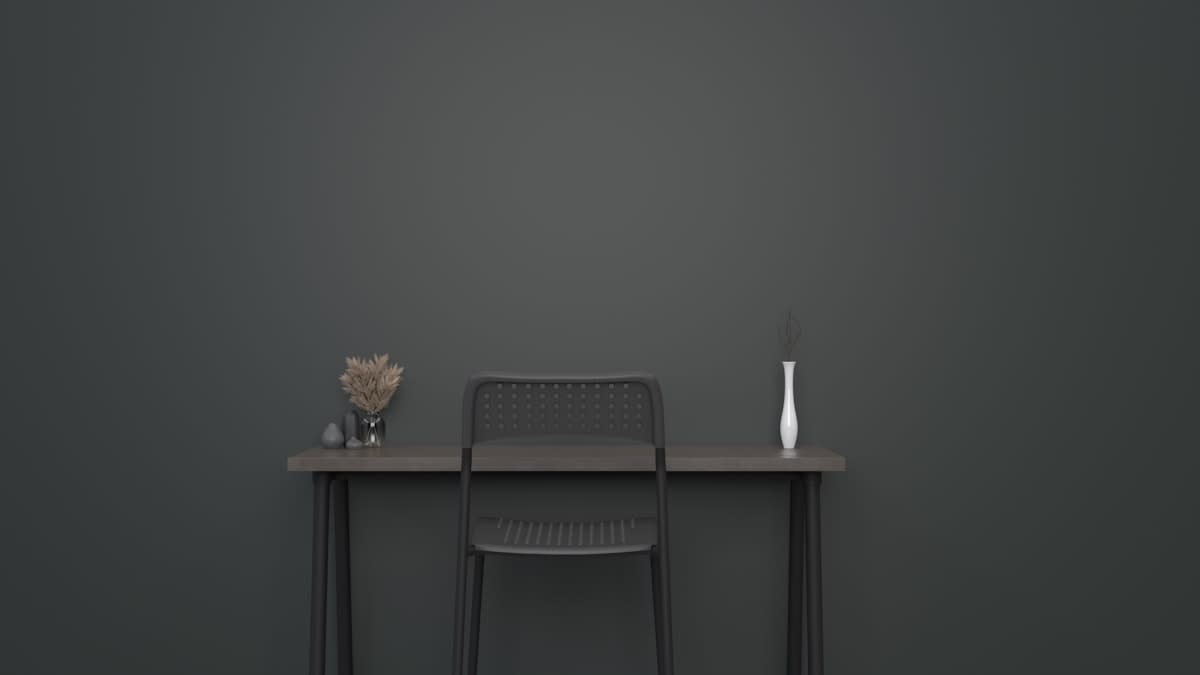
Once these physical changes are in place, the environment begins to act as a psychological trigger. When you enter a space that is visually and auditorily 'quiet', your brain receives a signal that the time for high-intensity focus has arrived. This is the essence of environmental priming. You are no longer fighting your surroundings; you are using them to propel you into a state of deep work.
The Impact of Sensory Modulation
| Stimulus Type | High-Stimulus Trigger | Low-Stimulus Alternative | Estimated Focus Gain |
|---|---|---|---|
| Visual | Bright patterns/Clutter | Matte neutrals/Hidden storage | High |
| Auditory | Intermittent noise (>55dB) | Consistent white noise/Dampening | Medium-High |
| Lighting | Cool-white overheads | Warm, diffused task lighting | Medium |
| Tactile | Synthetic/Irritating fabrics | Natural, breathable textiles | Low-Medium |
Does this mean your home should feel like a sterile laboratory? Absolutely not. There is a critical distinction between a low-stimulus environment and a sensory-deprivation chamber. The goal is to remove distractions, not pleasures. Incorporating biophilic elements—such as a single, well-placed plant or a view of nature—can actually lower heart rates by 5-10%, enhancing your ability to remain calm under pressure.
"The most productive spaces are not those filled with the latest gadgets, but those that provide the fewest excuses for the mind to wander."— Architectural Psychology Principle
Common Pitfalls in Low-Stimulus Design
Many enthusiasts fall into the trap of 'over-sterilization'. They strip their environment of all color and personality, creating a space that feels oppressive rather than serene. This can lead to under-stimulation, which ironically causes the brain to seek out distractions more aggressively. The key is balance: keep the periphery quiet, but allow for a few 'anchor points' of personal meaning that provide emotional stability.
Another frequent error is neglecting the 'invisible' stimuli. You might have a perfectly white room, but if your air filtration system is humming at a frequency that irritates your nervous system, the visual minimalism is useless. Always prioritize the auditory and olfactory senses before finalizing the visual design. A scent that is too strong—even a 'relaxing' one—can become a distraction during intense cognitive tasks.
Finally, avoid the mistake of static design. Your sensory needs change throughout the day. A low-stimulus environment for deep work in the morning might feel too isolating for collaborative work in the afternoon. Build flexibility into your space using adjustable lighting and movable partitions. Serenity is not a fixed state; it is a dynamic adjustment to your current cognitive needs.