
The Chemical Fingerprint
Pasto, Colombia. pXRF analyses identify surface decoration pigments in Maridiaz ceramics (Source: ReverseactionP, 2026). This is not an exercise in art history but a clinical strip-down of material composition. The objective is to isolate the specific metallic markers that define a culture's output. When the eye sees a shade of red, the scientist sees a concentration of iron oxide or a specific trace of manganese. This shift toward archaeometry represents a fundamental distrust of the visual, replacing the curator's intuition with the spectrometer's data.
The current terrain of pigment analysis focuses on identifying anachronistic materials that betray a forgery (Source: MDPI, 2026). A painting purportedly from the 17th century that contains a pigment synthesized in the 19th century is an immediate failure. This forensic approach treats the artwork as a crime scene. Experts now hunt for binders and supports that are inconsistent with the claimed period. The goal is to reconstruct the material history of an object, ensuring that the chemical weave matches the historical narrative.
The Machinery of Authenticity
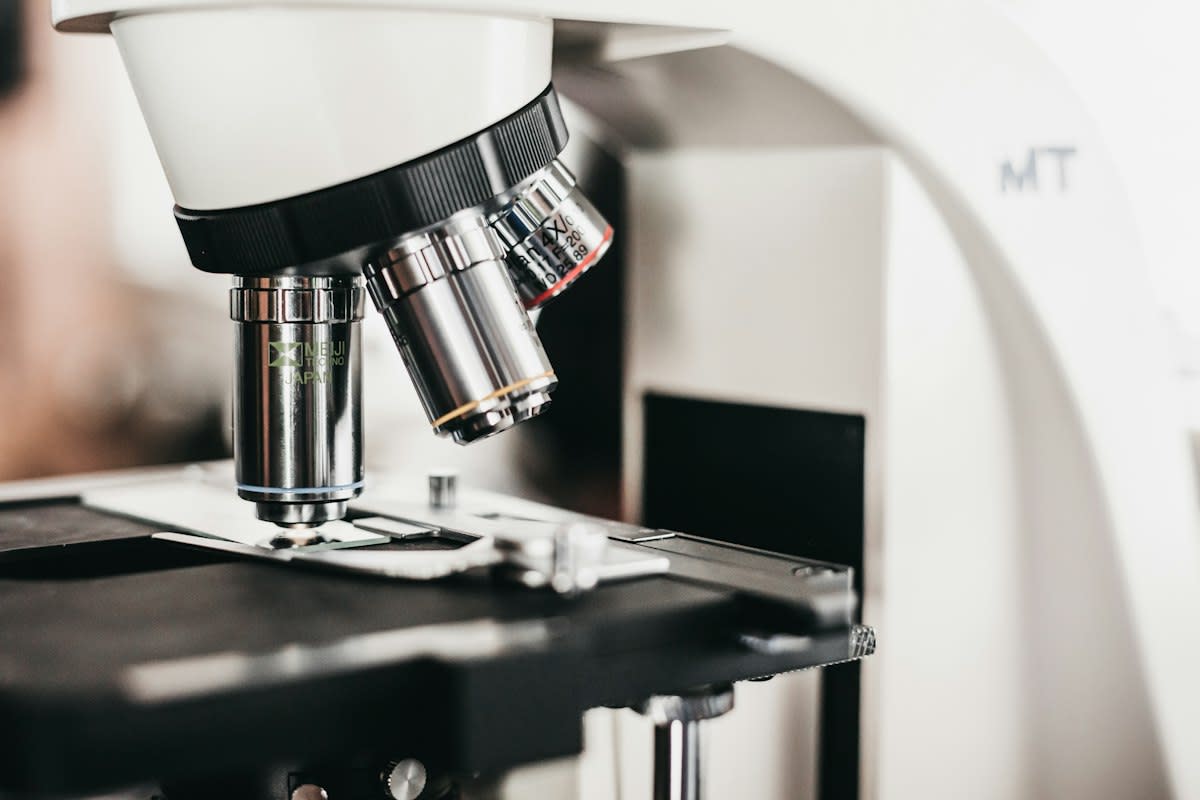
Microscopy with Energy Dispersive X-ray Spectroscopy (SEM-EDX) provides a level of detail that renders traditional observation obsolete (Source: MDPI, 2026). It combines ultra-high magnification with chemical analysis to evaluate particle shape and size distribution. This is where the real friction occurs: the ability to distinguish between manual grinding and modern industrial mechanical grinding. Manual grinding leaves irregular, carbon-scored edges on the pigment particles. Industrial processes produce uniform, rounded spheres that are a neon-burnt giveaway of modern origin.
Beyond the shape, the chemical makeup reveals the provenance of the material. Detecting trace elements such as Fe, Ni, Pb, and Cu provides essential information regarding the origin of alloys and pigments (Source: MDPI, 2026). This data allows researchers to map the trade routes of the ancient world. If a blue pigment found in a specific district contains trace impurities unique to a mine in Afghanistan, the object's journey is no longer a guess. It is a documented fact of mineralogical movement.
"Cultural Heritage and archaeometric research deal with investigations of samples originating from all sorts of culturally important artefacts: those procured by archaeologists in excavations, medieval buildings, handmade artefacts of all kinds, pieces of art, written materials."— CHART (Cultural Heritage and Archaeometric Research Team), University of Southern Denmark
In Odense, Denmark, the CHART team at the University of Southern Denmark (SDU) is institutionalizing this approach (Source: Nature Careers, 2026). Their mandate is to secure a hard collaboration between natural science and the humanities. This is not a polite partnership but a necessary collision. The chemist provides the data on parchments and bricks, while the historian attempts to fit that data into a cultural context. The result is a more rigid, evidence-based understanding of how heritage materials survived to the present day.
| Technique | Primary Metric | Application | Invasiveness |
|---|---|---|---|
| pXRF | Elemental Composition | Ceramic Pigments | Non-destructive |
| SEM-EDX | Morphology/Size | Pigment Grinding | Micro-invasive |
| Molecular Analysis | Chemical Binders | Authenticity Verification | Micro-invasive |
The Materiality of Rust and Resin
The hunt for color extends into the realm of textile innovation, where ancient processes are reconstructed through a technical lens. Reiko Sudō, creative director of Nuno, utilizes Sabi-zome, or rust dye, to create works exhibited at the Los Angeles County Museum of Art (Source: World of Interiors, 2026). This is not merely an aesthetic choice but a study in oxidation and chemical reaction. The rust-pitted textures of the fabric are the result of a controlled chemical interaction between metal and fiber, blending ancient craft with a precise, modern understanding of material science.
The reconstruction of the meisen process highlights the fragile nature of this knowledge. Sudō collaborated with a team of artisans, whose average age was 83, to recreate stencil-dyed yarns (Source: World of Interiors, 2026). This is where the practitioner's reality becomes visceral. The knowledge is not in a manual but in the muscle memory of a few surviving experts. When these artisans vanish, the process becomes a puzzle for the archaeometrist to solve using chemical remnants and fragmented records.

In niche markets, the appeal of organic dyes is often used as a hallmark of authentication. For instance, modal silk sarees dyed with pomegranate peel or luxury silk dresses crafted from 2.7 meters of fabric dyed with coconut husk and indigo leaves (Source: Facebook, 2026; Etsy, 2026). While these are marketed as 'plant-based,' the forensic analyst looks for the chemical markers of these organics. The presence of synthetic additives in a '100% plant dye' product is a common failure point in the luxury textile market.
The Practitioner's Friction
On the ground, the tension between the curator and the scientist is constant. The curator views a micro-invasive sample—a tiny chip of pigment the size of a salt grain—as a desecration of the work. The scientist views the refusal to sample as a willful blindness to potential fraud. This is the grease-slicked reality of the lab: fighting for a few milligrams of material to prove that a billion-dollar painting is a modern fabrication. The debate is no longer about whether the color is 'right,' but whether the molecular structure is possible for the given era.
Failure Point: The Analytical Gap
Despite these advances, a critical gap remains in the analytical techniques used to combat illicit trafficking of cultural heritage (Source: MDPI, 2026). Many current methods are too slow or too expensive for real-time customs enforcement. While SEM-EDX can identify anachronistic pigments in a controlled lab, it cannot be deployed at a border crossing. This lag creates a window for the movement of forged or stolen artifacts, where the 'hunt' for color is outpaced by the speed of the black market.
Editorial Note
The shift from visual connoisseurship to archaeometry is not a choice but a necessity. As industrial mechanical grinding becomes more sophisticated, the 'eye' of the expert is no longer a load-bearing tool for authentication.
Fact-Check & Accuracy Note
All data cited is derived from research publications and institutional listings dated between 2024 and 2026, including MDPI, Nature Careers, and the World of Interiors. Morphological data regarding pigment grinding is attributed to SEM-EDX forensic standards.