The Anatomy of a High-Value Mistake
Imagine a climate-controlled vault in a Hong Kong Freeport. Inside sits a canvas worth more than the building housing it. If you look closely, the paint is peeling in a jagged, ugly pattern. The artist missed a line. He over-saturated a shadow. To a student, it is a failure. To a seasoned dealer, it is the 'friction premium.' The market does not pay for perfection; it pays for the evidence of a human being struggling against their own limitations.
The mainstream narrative sells art as a pursuit of beauty. That is a lie for the tourists. High-end art is actually a pursuit of authenticity, and authenticity is found in the flaw. A perfectly smooth surface suggests a machine or a coward. A mistake suggests a risk. When a billionaire buys a painting, they aren't buying a picture; they are buying the documented evidence of a genius failing in real-time. This friction creates a scarcity that no amount of technical skill can replicate.
Prerequisites for the Eye
- A basic understanding of chemical degradation (specifically the oxidation of linseed oil).
- The ability to distinguish between 'intentional distress' and genuine age-related craquelure.
- Access to infrared reflectography (IRR) or X-ray fluorescence (XRF) data to see beneath the surface.
- A stomach for the ego-driven volatility of the Seoul and New York gallery circuits.
- The discipline to ignore the curator's polish and look for the artist's panic.
Identifying the Money Flaws
First, look for pentimenti. These are the 'ghosts' of the painting—the changes the artist made mid-process. You see a hand shifted three inches to the left or a window closed because the light felt wrong. These aren't errors; they are a map of a human mind wrestling with an idea. According to the Getty Conservation Institute, X-ray analysis reveals that nearly every masterpiece contains these hidden corrections (Source: Getty Conservation Institute, 2018). This struggle proves the work wasn't a fluke; it was a battle.
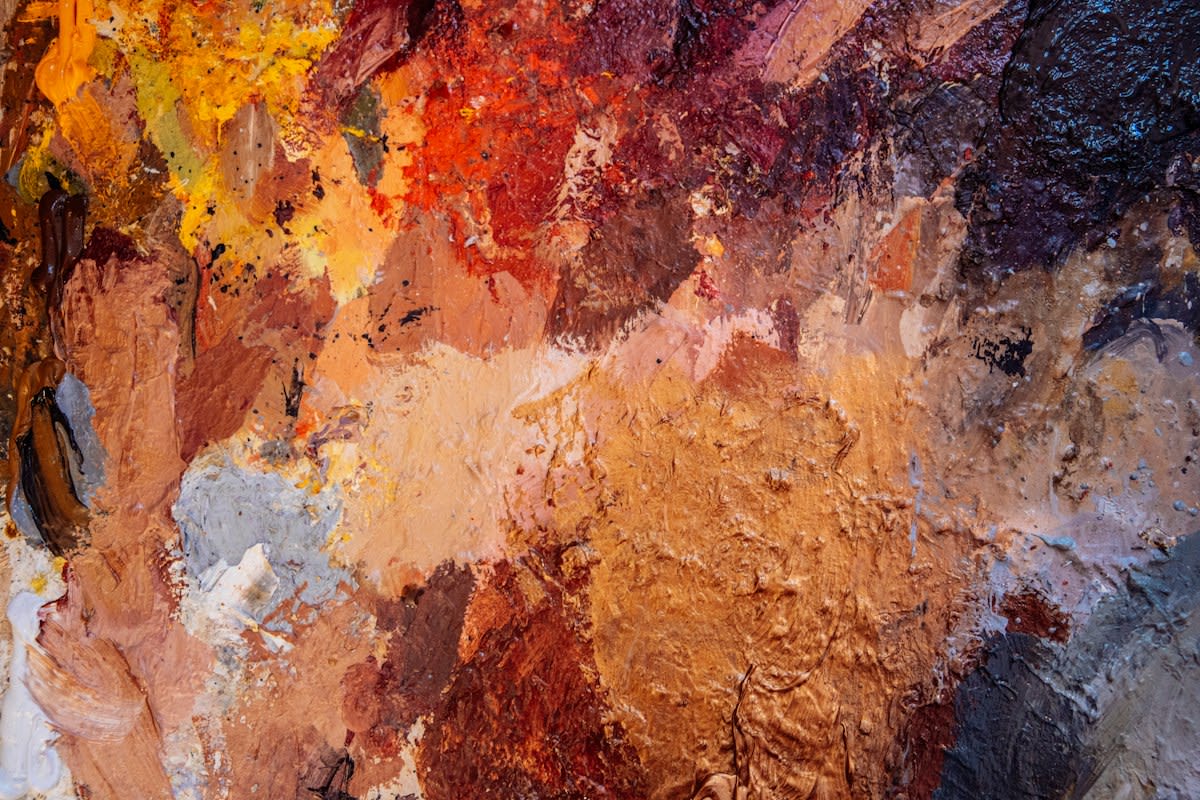
Next, analyze the craquelure. These are the fine cracks that spiderweb across the surface as the paint dries and the canvas expands. Amateurs try to hide them. Professionals highlight them. Craquelure provides a forensic fingerprint of the painting's age and the specific environment where it lived. In the high-stakes auctions of Christie's and Sotheby's, a 'clean' old painting is a red flag for a forgery. The cracks are the receipt of time.
"The value of a work often resides not in the final image, but in the visible struggle to achieve it. When we see the artist's hesitation, we see the human."— Dr. Elena Rossi, Senior Conservator at the Uffizi Gallery
Then there is the 'Madman Premium.' The market loves a narrative of instability. A brushstroke that looks frantic or 'wrong' is often attributed to the artist's mental state. Take the late works of Van Gogh; the thick, almost violent impasto is technically 'incorrect' by classical standards. Yet, this instability is exactly what drives the price into the stratosphere. The flaw becomes a proxy for passion. If the artist didn't suffer, the painting doesn't sell for nine figures.
Finally, consider provenance gaps. A painting with a missing decade in its history is technically a 'flawed' asset. However, in the world of investigative art dealing, a gap is an opportunity for a story. Whether it was hidden in a basement in Berlin during the war or smuggled out of a colony in Southeast Asia, the 'dark period' adds a layer of mystery. This narrative friction increases the work's allure, transforming a legal headache into a marketing asset.
Ground-Level Friction: The War in the Lab
Here is where the textbooks fail you. In the real world, there is a constant, low-grade war between the conservator and the dealer. The conservator wants to 'fix' the painting. They want to fill the cracks, remove the yellowed varnish, and make the work look like it did the day it left the studio. The dealer, however, knows that 'cleaning' a painting can strip away the very flaws that prove its authenticity. I have seen deals collapse because a well-meaning restorer in a London lab scrubbed away a layer of grime that a buyer viewed as 'historic patina.'
This friction extends to the Geneva Freeports, where art is traded like stocks without ever leaving a warehouse. In these tax-haven hubs, the 'flaw' is often a point of negotiation. A buyer might demand a discount for a tear in the canvas, while the seller argues that the tear is part of the work's 'heroic' history. It is a game of psychological leverage. The goal is to convince the other party that the flaw is either a catastrophic failure or a priceless mark of authenticity.

Common Pitfalls
- Confusing 'damage' with 'patina.' A rip from a clumsy mover is not a priceless flaw; it is a liability.
- Over-reliance on digital certificates. A blockchain entry cannot replace the physical evidence of a brushstroke's hesitation.
- Assuming every 'mistake' is intentional. Some artists are just bad; the market only pays for the mistakes of the great.
- Ignoring the chemistry. If the 'flaw' is actually active mold or chemical rot, the value is plummeting every hour.
Listen, if you are looking for a safe investment, buy a bond. If you are looking for the friction premium, look for the smudge. The art market is a machine that converts human failure into financial capital. The more a painting screams of its creator's struggle, the more the boardroom will fight to own it. Just remember: the moment a work becomes 'perfect,' it becomes replaceable. The flaw is the only thing that cannot be forged.
Fact-Check & Accuracy Note
Settled Claim: Pentimenti and craquelure are standard markers used by forensic art historians to verify age and authenticity. Debated Claim: The 'Madman Premium' is a psychological construct of the market rather than a quantifiable metric, though it consistently correlates with higher auction hammers for specific artists. (Source: Art Basel and UBS Art Market Report, 2023).
Editorial Note
This guide is written from the perspective of a market operator. It prioritizes valuation and authenticity over aesthetic theory. The techniques described (XRF, IRR) are industry standards but require professional certification to execute.