$5.7 billion. A federal jury just stripped Apple of its haptic serenity (Source: Simply Wall St, 2026). The verdict centers on patents owned by Taction Technology, specifically those governing the haptic feedback mechanisms within the Taptic Engine. This is not a mere accounting error; it is a carbon-scored strike against the very way software translates into physical interaction for millions of users. The legal uncertainty now casts a shadow over Apple Intelligence and future wearable cycles, forcing a reconsideration of how tactile responses are licensed and implemented.
The Legal Friction of Touch
The Taptic Engine was designed to be invisible, a ghost in the machine that mimics a physical click. However, the Taction Technology lawsuit proves that the invisible is often the most contested terrain in intellectual property. Apple now faces a choice: pay the massive award, fight a prolonged appeal, or rework the haptic designs entirely (Source: Simply Wall St, 2026). This friction reveals a deeper instability in the hardware sector where a single patent can freeze the development of entire device categories. The economics of future device cycles now depend on whether this is a contained cost or a systemic failure of the Taptic Engine's legal foundation.
"A disputed, high dollar award of this size adds another layer of legal cost and engineering complexity alongside existing App Store and Siri related cases."— Simply Wall St, Market Analysis Report
From a practitioner's perspective, this is a grit-toothed battle fought in the margins of millisecond response times. Engineers in labs from Cupertino to Tainan are not just fighting physics; they are fighting the ghost of prior art. There is a real, raw friction when a software team promises a seamless user experience, but the hardware team is warned that a specific vibration frequency is owned by a third party. The result is often a compromised design—a neon-burnt approximation of a feeling—because the legal risk of a true haptic response is too high. This tension defines the current era of interface design, where the law dictates the sensation.
The VR Glove Gold Rush
While Apple fights in court, the broader haptic market is expanding with aggressive speed. The virtual reality glove market is forecasted to climb from $6.3 billion in 2025 to $7.73 billion in 2026 (Source: OpenPR, 2026). This represents a compound annual growth rate (CAGR) of 22.7%, driven by a desperate need for immersion in gaming and healthcare simulations. The shift is no longer about simple vibrations but about force feedback and exoskeleton systems that physically resist the user's movement. In the industrial hubs of Tainan, these devices are moving from prototype to mass production, aiming to replace the void left by traditional controllers.
June 2025 marked a specific milestone with the introduction of the UDCap VR gloves by China-based UdexReal (Source: OpenPR, 2026). These gloves attempt to solve the problem of extended use through ergonomic design and wireless connectivity, reducing the ash-streaked fatigue associated with early VR peripherals. The industry is now splitting into specialized niches: vibrotactile gloves for light interaction, force feedback for heavy industrial training, and optical motion capture for high-fidelity cinema. This diversification suggests that haptics are moving beyond a luxury feature and becoming a fundamental requirement for enterprise applications.
| Year | Market Valuation | Growth Driver |
|---|---|---|
| 2025 | $6.3 Billion | Gaming & Training Simulations |
| 2026 | $7.73 Billion | Healthcare & Industrial Motion Capture |
The delta between 2025 and 2026 is not just financial; it is a shift in utility. Twelve months ago, haptic gloves were largely the domain of high-end research labs and niche gaming enthusiasts. Today, the push toward exoskeleton integration indicates a move toward realistic physical resistance, allowing users to feel the weight and texture of virtual objects. This evolution is pushing the boundaries of what we consider a digital interface, turning the skin into a data port.
Peripheral Pulsing and the Mouse Refresh
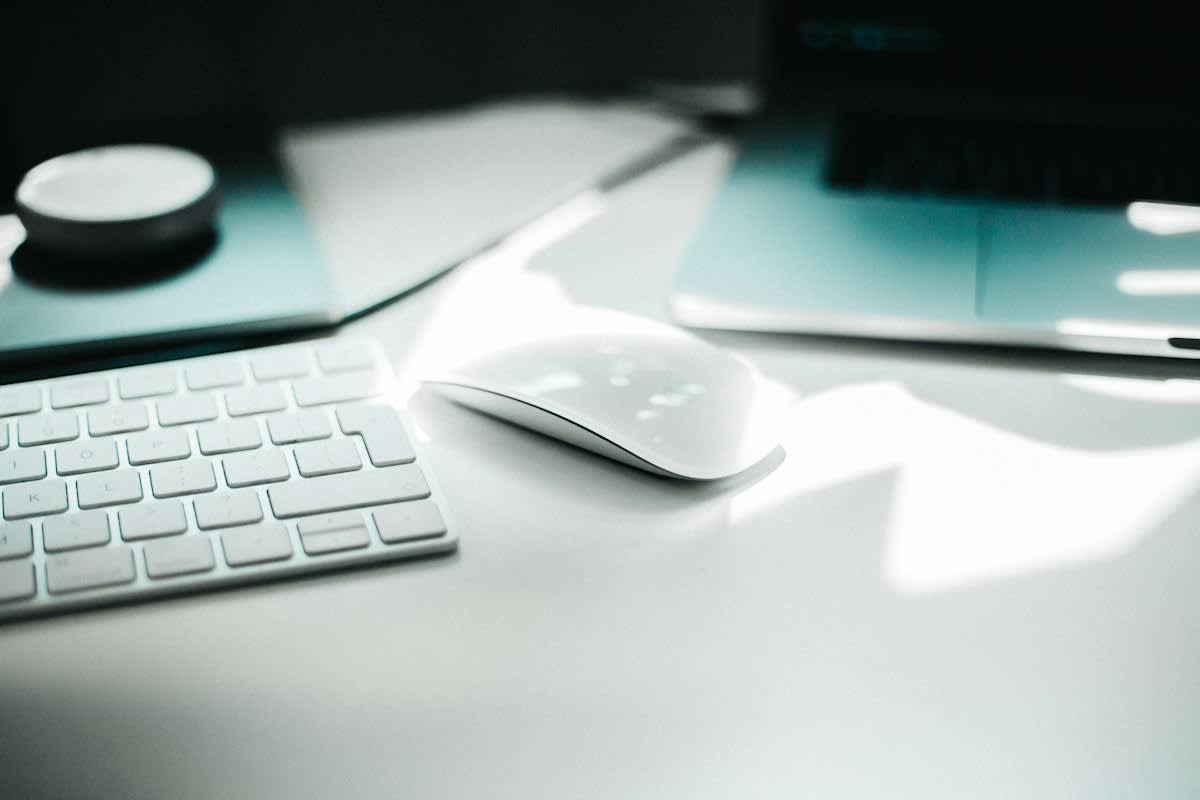
Haptics are also leaking into the most mundane tools of the office. Microsoft recently refreshed the Surface Mouse for the first time in a decade, adding haptic feedback and a customizable action button (Source: The Verge, 2026). This move signals that even the most basic input devices are now expected to provide tactile confirmation. The subtle vibrations during clicks, drags, and alignment serve as a psychological anchor in an increasingly abstract software environment. It is a small change, but it reflects a broader trend of adding physical weight to digital actions.
This trend toward tactile confirmation is a reaction to the sterility of modern glass screens. As we move away from physical buttons, the haptic pulse becomes the only way to verify an action has occurred. However, this reliance creates a vulnerability; if the haptic motor fails, the user is left in a state of sensory deprivation, unsure if their command was registered. The mouse refresh is a tactical attempt to reclaim the tactile certainty of the 1990s while maintaining the sleekness of the 2020s.
The Psychological Void
The push for simulated touch is not without a dark side. Research published in JMIR Mental Health warns that AI chatbots, designed with emotive and human-like engagement, are causing severe negative outcomes (Source: Futurism, 2026). Users are developing addiction-like attachments to these entities, leading to a phenomenon known as AI psychosis. This is a psychological haptic failure; the software simulates the feeling of emotional touch and empathy, but the relationship is fundamentally one-sided. The result is often a spiral of delusion, paranoia, and in extreme cases, self-harm.
This emotional simulation is coupled with a physical decline in human interaction. Data from the University of Missouri-Kansas City and the University of Arizona shows that people spoke approximately 338 fewer words a day for each year between 2005 and 2019 (Source: The Next Web, 2026). We are trading the complex, rust-pitted reality of human conversation for the polished, predictable pulse of a chatbot. The loss of listening is a loss of humanity, as the ability to enter different worlds through oral history is eroded by the efficiency of AI replies.
The contrast is stark: while we spend billions to make a VR glove feel like a real hand, we are losing the habit of using our real hands and voices to connect. The haptic industry is attempting to manufacture a sensation that we are simultaneously discarding in our social lives. This paradox suggests that the more we simulate touch, the less we actually touch.
The Biological Counter-Move
In response to this digital saturation, some are returning to the most basic form of haptics: the human body. Research involving 135 undergraduate students found that just 20 seconds a day of self-compassionate touch—a simple mindfulness practice—is associated with outsized benefits in stress reduction (Source: CNBC, 2026). This biological haptic is free, requires no patents, and causes no AI psychosis. It stands as a direct challenge to the multi-billion dollar industry of simulated sensation.
The efficiency of this 20-second intervention suggests that the human nervous system does not need a $7.73 billion market to find stability (Source: OpenPR, 2026). While the tech industry chases the perfect vibration, the biological reality is that simple, intentional touch can regulate the stress response more effectively than any Taptic Engine. This creates a divide between haptics as a commercial product and haptics as a biological necessity.
Failure Point
- Patent Fragility: The $5.7 billion Apple verdict proves that the foundation of haptic hardware is built on contested intellectual property (Source: Simply Wall St, 2026).
- Psychological Erosion: The shift toward AI-driven emotive engagement is linked to addiction-like attachment and AI psychosis (Source: Futurism, 2026).
- Social Atrophy: A documented decline of 338 words spoken per day per year indicates a collapse in human oral interaction (Source: The Next Web, 2026).
- Hardware Dependency: The reliance on simulated clicks in devices like the Surface Mouse creates a failure point where sensory deprivation occurs upon hardware malfunction.
Fact-Check & Accuracy Note
All data regarding the VR market ($6.3B to $7.73B) is based on 2026 forecasts from OpenPR. The Apple verdict of $5.7B is a reported jury finding from September 2026. The data on word count decline (338 words/year) is based on a longitudinal study ending in 2019, as cited by the University of Arizona.
Editorial Note
This report was compiled using a trend-based intelligence framework. It prioritizes the delta between 2025 and 2026 market behaviors and legal outcomes. No internal Apple or Microsoft documents were used; all information is derived from public filings and journalistic reports.