Hardware Prerequisites
Calibration is a lie if the underlying hardware lacks uniformity. To achieve a global standard, you must first verify that your target displays utilize an active-matrix (AM) backplane capable of sustaining high-resolution pixel arrays without color cross-contamination. Recent breakthroughs in cracking-assisted transfer printing (CATP) have enabled the production of cadmium-free full-color active-matrix displays with a resolution of 341 pixels per inch. This level of precision is non-negotiable; without it, the nano-interface control required for stable luminance is impossible, leading to the dreaded 'shimmer' in high-brightness HDR highlights.
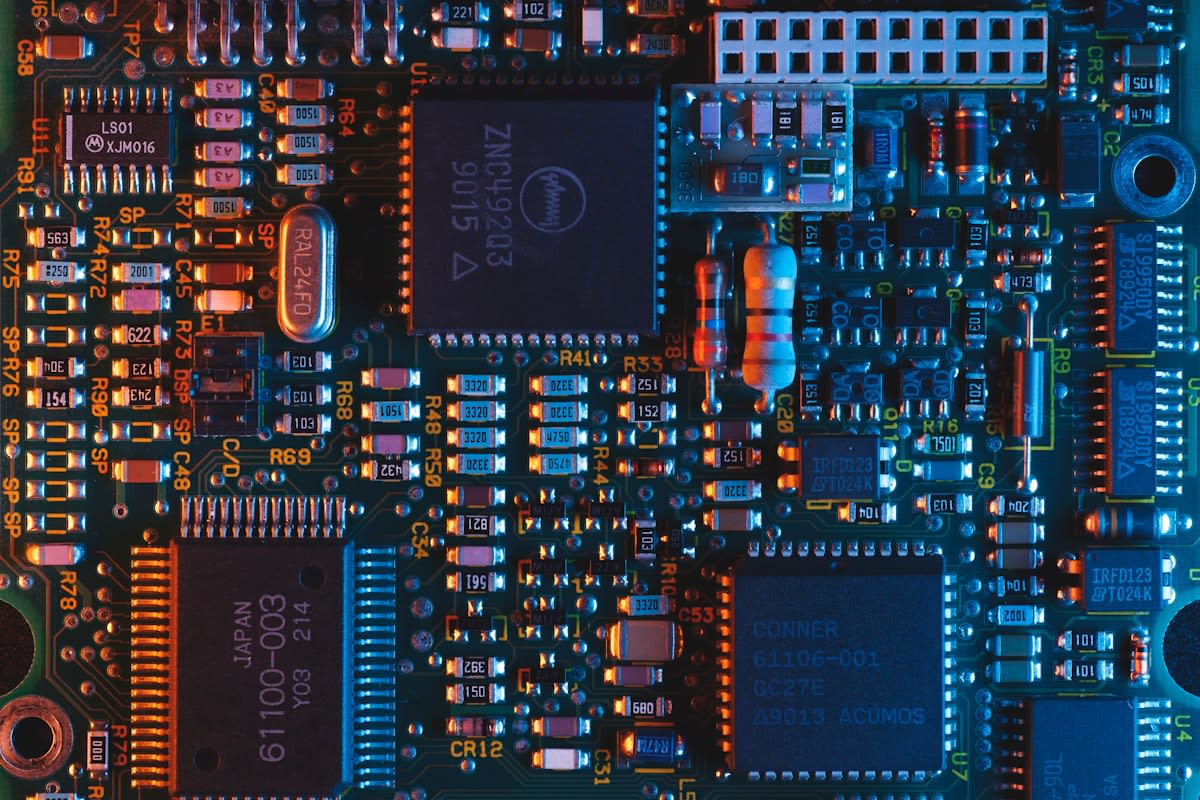
Beyond the panel, the logic driving the pixels must be capable of processing HDR metadata with zero latency. The deployment of High-NA EUV (extreme ultraviolet) lithography systems, specifically those with a numerical aperture of 0.55, has fundamentally changed the game. By providing 1.7 times greater resolution than conventional 0.33 NA tools, these systems allow for the mass production of logic chips—such as those used in the Intel 18A process—that can handle the complex calculations required for real-time HDR tone mapping across millions of pixels. If your hardware chain relies on legacy logic, your calibration will drift the moment the content hits a consumer device in Tokyo or Berlin.
The Packing Density Variable
Luminance stability depends entirely on quantum dot packing density. CATP technology ensures that pixels are deposited with high density, which directly correlates to a higher maximum luminance and a longer operational lifetime compared to older patterning techniques.
The Calibration Execution Protocol
Why do most HDR masters fail in the wild? They are calibrated for a theoretical 'perfect' screen rather than the physical reality of mass-produced hardware. You must move from a model of aesthetic preference to one of clinical measurement. This requires a workflow that mirrors the production-aligned validation used in semiconductor testing, where debug and validation occur in a unified environment before deployment.
- Define the Peak Luminance Ceiling: Identify the maximum luminance supported by the CATP-enabled QD-LED panels. Do not calibrate to a theoretical 10,000 nits if the active-matrix backplane peaks at 2,000 nits; this creates clipping that no software tone-map can fix.
- Audit Pixel Uniformity: Use a high-resolution grayscale ramp to check for deviations across the 341 ppi array. Any variance in the nano-interface control will manifest as 'dirty screen effect' in HDR highlights.
- Sync Logic-Driver Metadata: Ensure the HDR metadata is compatible with the 18A process logic. Use the 1.7x resolution advantage of High-NA EUV chips to implement more granular luminance steps in your metadata, reducing banding in gradients.
- Validate via Digital-Only Pipelines: Since physical media is vanishing—with Sony ending disc production by January 2028—you must test your calibration through the exact streaming codecs and DRM layers that will be used for distribution.
- Stress-Test with High-Bitrate Content: Run a 4K/60fps HDR reference, such as the 007 First Light walkthroughs, to ensure that the luminance remains stable during high-motion scenes where the logic chips are under maximum load.
Once these steps are complete, the final validation must occur in a V93000-compatible workflow. By executing debug and validation in a production-aligned environment, you can identify where the luminance drops off before the content is pushed to a global CDN. This removes the guesswork from the distribution phase, ensuring that a user in Seoul sees the same highlight detail as a user in New York.
| Hardware Component | Legacy Standard | Modern High-Precision Standard | Impact on HDR |
|---|---|---|---|
| Lithography NA | 0.33 | 0.55 (High-NA) | 1.7x resolution for logic drivers |
| Pixel Patterning | Standard QD-LED | CATP (Cracking-Assisted) | Higher max luminance & uniformity |
| Display Resolution | Variable | 341 PPI (AM Backplane) | Elimination of color cross-contamination |
| Distribution | Physical Discs | Digital-Only (Post-2028) | Shift to software-defined calibration |
The transition to a digital-only future accelerates the need for this precision. When PlayStation 6 and Xbox Project Helix drop disc drives, the 'master' is no longer a physical object but a stream of data governed by Digital Rights Management. If your luminance calibration isn't baked into the logic of the delivery, the DRM-induced compression will eat your highlights for breakfast.
"The industry is accelerating toward a digital-only future where true ownership is replaced by Digital Rights Management: effectively a long-term loan that publishers can revoke at any moment."— IGN Analysis on Industry Shifts
Common Pitfalls
The most frequent failure is the 'Mastering Monitor Trap.' Engineers calibrate on a $30,000 reference monitor and assume the consumer's QD-LED will behave similarly. They ignore the fact that consumer panels, even those using CATP, have different operational lifetimes and luminance decay curves. If you don't account for the specific packing density of the quantum dots in the target device, your 'perfect' white will look like a muddy grey after six months of use.
Another critical error is ignoring the logic-chip bottleneck. Many believe that as long as the panel is HDR-capable, the image will look correct. However, if the logic chip isn't manufactured using a high-precision process like Intel's 18A, the chip cannot process the High-NA EUV-level detail in the luminance map. This results in 'macro-blocking' in the brightest areas of the image, effectively killing the HDR effect.
Finally, stop relying on physical disc benchmarks. With the end of physical disc production slated for January 2028, any calibration based on Blu-ray standards is obsolete. You must calibrate for the 'long-term loan' model of digital distribution, where the bitrate fluctuates based on the user's connection. This requires a more resilient luminance map that can scale down without losing the core intent of the HDR highlight.
Can we actually achieve total consistency? Only if we stop treating the display as a passive output and start treating it as a precision-engineered semiconductor product. The convergence of CATP patterning, High-NA EUV logic, and digital-first distribution creates a narrow window for success. If you miss the mark on any of these three, your global distribution is just a series of expensive mistakes.