
Perfection is now a commodity. For decades, the pinnacle of design was the elimination of variance—the pursuit of the seamless joint, the pixel-perfect gradient, and the absolute consistency of a mass-produced line. But when every smartphone can generate a mathematically flawless image and every CNC machine can mill a part to a micron of accuracy, perfection ceases to be a signal of quality. It becomes a signal of automation. We have reached a saturation point where the absence of error is no longer an achievement; it is the baseline. The result? A systemic shift in value perception. The market is no longer paying for the absence of mistakes, but for the presence of the human.
This is the Imperfection Premium. It is the psychological and economic phenomenon where consumers intentionally seek out and pay more for products that exhibit 'human' flaws. This isn't merely a nostalgic yearning for the past or a quirky trend in artisanal coffee shops. It is a sophisticated hedge against the commoditization of synthetic beauty. When the cost of generating a perfect aesthetic drops to near zero, the only remaining scarcity is the authentic mistake. The smudge, the asymmetry, and the tactile irregularity are the new fingerprints of provenance.
The Paradox of Algorithmic Mastery
Why does a hand-thrown ceramic bowl from a Kyoto studio command a price ten times higher than a factory-perfect equivalent? The answer lies in the narrative of effort. Algorithmic design removes the friction of creation. It bypasses the struggle, the hesitation, and the physical limitation of the artist. When we look at a perfectly symmetrical object, our brains recognize the efficiency of the process. When we see a slight wobble in the glaze or a thumbprint in the clay, we recognize a moment of human decision-making. We are not paying for the error itself, but for the evidence that a sentient being occupied the space between the raw material and the finished product.

This shift is visible across global design capitals. In Milan, luxury furniture houses are reintegrating 'natural variance' into their high-end lines, moving away from the sterile minimalism of the early 2000s. In New York and London, branding agencies are abandoning the clean, corporate sans-serif fonts in favor of bespoke, slightly irregular typography that mimics the bleed of ink on paper. These choices are not accidental. They are strategic attempts to signal authenticity in a digital landscape that feels increasingly simulated. The goal is to create a visceral connection that a perfectly rendered vector simply cannot evoke.
"The more the machine mimics the human, the more the human must embrace the machine's inability: the capacity to fail beautifully."— Strategic Analysis of Aesthetic Value
Consider the resurgence of analog media. The global explosion of vinyl records and the stubborn persistence of 35mm film are not just exercises in retro-fetishism. They are reactions to the sterility of the stream. A digital file is a perfect reproduction; it is an infinite series of ones and zeros that never degrades. A vinyl record, however, has pops, clicks, and a physical warmth born of mechanical friction. These 'errors' provide a tactile anchor to reality. They remind the listener that music is a physical event, not just a data transfer.
The Value Shift
The Imperfection Premium creates a new luxury tier: 'The Authenticated Flaw.' In this market, the value is derived from the provable inability of a machine to replicate the specific nature of the error.
We are seeing this manifest in the pricing models of high-end goods. A standard luxury handbag is expected to be perfect. But a 'limited edition' piece that showcases raw edges or hand-stitched irregularities often commands a higher premium. Why? Because the imperfection proves the item was handled by a master artisan rather than a robotic arm. The error becomes the certificate of authenticity. It is a signal of exclusivity that cannot be scaled, because true human error is unpredictable and therefore un-automatable.
Quantifying the Shift: Precision vs. Authenticity
To understand the systemic nature of this shift, we must look at the drivers of value in the modern economy. For the last century, value was tied to the elimination of variance (Six Sigma, Lean Manufacturing). Now, value is shifting toward the curation of variance. The following table illustrates the divergence in how the market perceives precision versus authenticity in the current design landscape.
| Attribute | Algorithmic Precision | Human-Centric Imperfection |
|---|---|---|
| Primary Value Driver | Efficiency & Consistency | Provenance & Soul |
| Market Perception | Commodity / Utility | Luxury / Collectible |
| Cost Structure | Decreasing (Scalable) | Increasing (Non-scalable) |
| Emotional Response | Satisfaction / Trust | Connection / Desire |
| Risk Factor | Obsolescence via AI | Difficulty of Quality Control |
The economic implication is clear: scalability is the enemy of the Imperfection Premium. The moment a 'human' error is codified into a digital filter or a programmed machine instruction, it loses its value. If a software plugin can add a 'vintage grain' to a photo, that grain is no longer a sign of authenticity; it is just another preset. The market quickly identifies the difference between a genuine mistake and a simulated one. This creates a constant arms race between those trying to automate the 'human touch' and those seeking the truly unrepeatable.
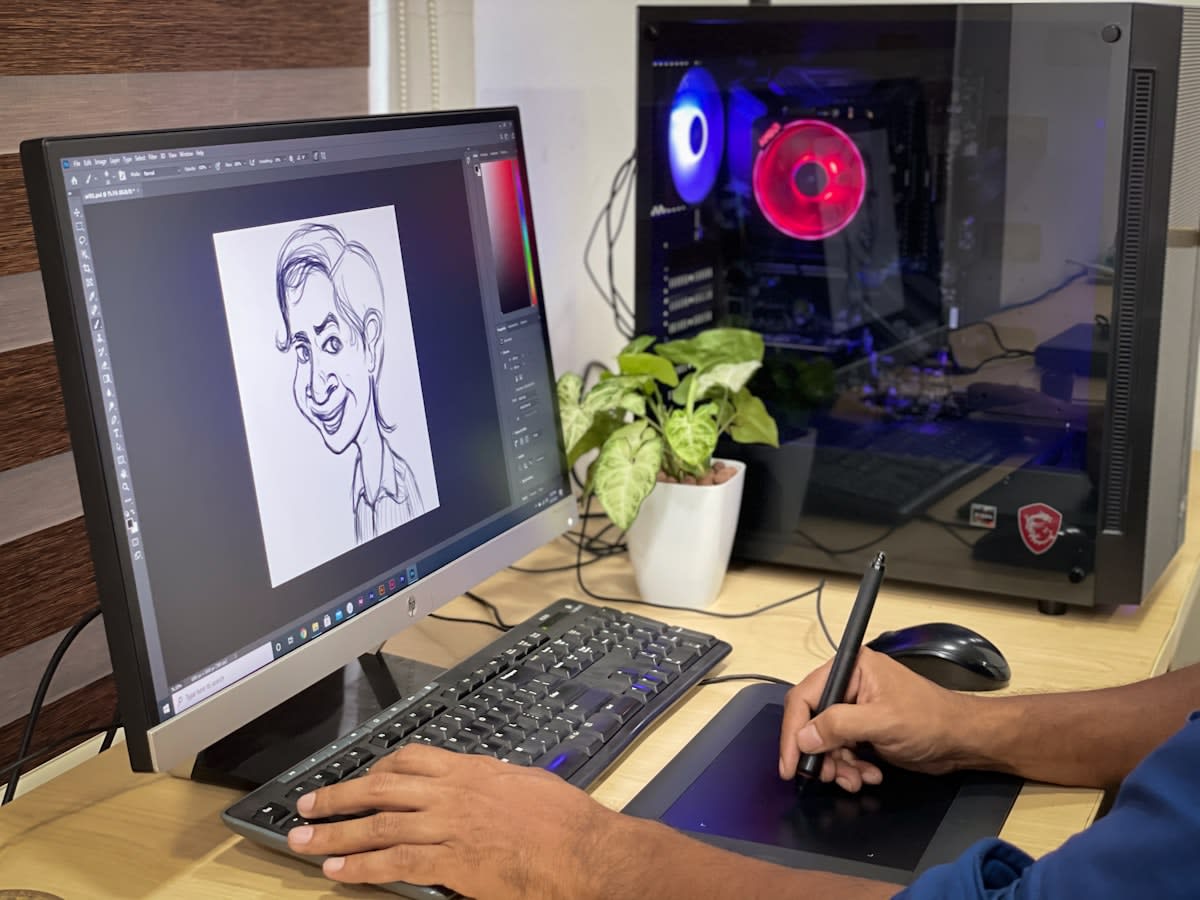
Does this mean we should abandon precision? Absolutely not. Precision remains the foundation of safety, utility, and infrastructure. You do not want an 'imperfection premium' on the bolts of an airplane wing or the circuitry of a pacemaker. The shift is happening in the realms of expression, identity, and luxury. We are bifurcating our world into two distinct categories: the Utilitarian (where perfection is mandatory) and the Expressive (where perfection is a liability).
This bifurcation is redefining the role of the designer. The modern expert is no longer just a master of the tool, but a curator of the flaw. The skill now lies in knowing which errors to leave in and which to remove. It is the difference between a messy product and a soulful one. Strategic imperfection requires more discipline than total precision because it requires a deep understanding of human psychology and the ability to execute a 'mistake' that feels intentional yet organic.
The Future of Intentional Error
As we move further into the age of generative AI, the Imperfection Premium will only accelerate. We are entering an era of 'Hyper-Authenticity,' where the most valuable assets will be those that can prove their biological origin. We will see the rise of 'Proof of Human' design—certifications that guarantee a product was created without algorithmic intervention, highlighting the very flaws that make it human.
- The rise of 'Analog-First' workflows in high-end creative agencies.
- A premium on physical materials that age and degrade naturally (leather, raw denim, solid wood).
- The integration of 'controlled randomness' in luxury architecture to avoid the feel of a render.
- Increased market valuation for artists who embrace visible process over polished results.
The strategic opportunity for brands today is not to compete with the machine on its own terms. Trying to be 'more perfect' than an AI is a losing battle. Instead, the opportunity lies in embracing the friction. By leaning into the irregularities of the human experience, designers can create products that don't just function, but resonate. The future of luxury is not a flawless diamond, but the raw, unpolished stone that tells a story of where it came from and who found it.
Ultimately, the Imperfection Premium is a testament to our resilience as a species. In the face of a digital mirror that reflects a sanitized, optimized version of reality, we are choosing the grit. We are choosing the smudge. We are choosing the beautiful, clumsy, unpredictable nature of being human. In a world of infinite copies, the only thing that truly matters is the one thing that cannot be copied: the honest mistake.