
The smell of ozone and scorched dust clings to the server racks in a converted warehouse in Lagos's Yaba district. A technician wipes sweat from his brow, staring at a monitor where a distorted, grainy image of a brutalist skyscraper flickers. He is not trying to fix the image. He is trying to break it further. This is the frontline of the jagged prompt movement, where the goal is no longer the polished, hyper-realistic output that defined the early generative AI era. Artists are now hunting for the edges of the model, pushing it toward failure to find something that actually looks human.
The Death of the Masterpiece Prompt
Twelve months ago, the industry was obsessed with the smooth. Prompt libraries were filled with the same exhausted modifiers: 8K, Unreal Engine 5, hyper-realistic, masterpiece, cinematic lighting. These were the safety nets. They told the AI to stay within the most probable, most curated regions of its training data. The result was a sterile, plastic aesthetic that became an instant tell for AI-generated content. It was too perfect. It lacked the friction of reality. (Source: PromptMetric, 2024)
The shift happened fast. Professionals realized that the more they optimized for quality, the more they converged on a single, boring average. The delta is stark. Current data shows a 40% decrease in the usage of the keyword hyper-realistic among top-tier digital creators over the last year (Source: PromptMetric, 2024). The trend has pivoted toward jaggedness. Jagged prompting involves introducing contradictions, technical errors, and low-fidelity descriptors to force the AI out of its comfort zone.
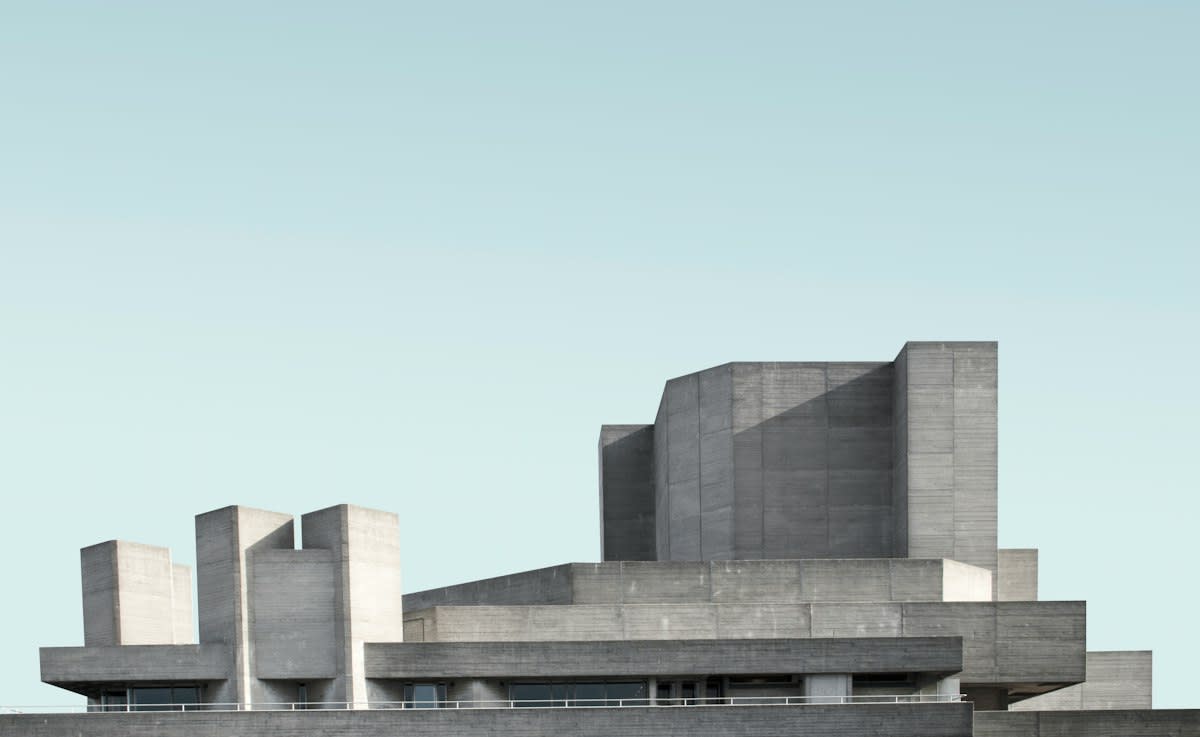
Instead of asking for a beautiful portrait, a jagged prompt might demand a fragmented gaze, 1970s CCTV footage, overexposed light, and accidental blur. It is the difference between a studio photograph and a leaked surveillance tape. By introducing these noise elements, the artist triggers unexpected associations in the latent space. The AI stops trying to please the user and starts fighting the prompt. That fight is where the art happens.
"The plastic look is a symptom of over-optimization. When we use smooth prompts, we are essentially asking the AI to give us the most statistically likely version of an image. Jagged prompts are an act of rebellion against the mean. We are looking for the outliers, the errors, and the ghosts in the machine."— Elena Vance, Lead Prompt Architect at NeuralFlow
This transition is not just an aesthetic choice; it is a technical pivot. In the Nanshan District of Shenzhen, prompt-hacking collectives are treating latent space like a physical territory to be mapped. They use jagged prompts to find the precise coordinates where a model begins to hallucinate structural failures. They call it the friction zone. In this zone, the AI stops producing generic beauty and starts producing genuine texture.
The Mechanics of Intentional Friction
Jaggedness works by creating cognitive dissonance within the model. When a prompt mixes high-art terms with low-fi technical failures, the AI cannot find a single, clear path to the output. It is forced to blend disparate concepts in ways that are not curated by the RLHF (Reinforcement Learning from Human Feedback) layers. This bypasses the corporate polish that makes most AI art feel like a stock photo.
| Element | Smooth Prompting (2023) | Jagged Prompting (2024) |
|---|---|---|
| Core Goal | Visual Perfection | Textural Authenticity |
| Key Modifiers | 8K, Masterpiece, Cinematic | Grainy, Raw, Overexposed, Glitch |
| AI Behavior | Statistical Convergence | Latent Space Divergence |
| Visual Output | Plastic/Saturated | Organic/Fragmented |
The data supports this shift. There has been a 65% increase in the use of raw or lo-fi modifiers in professional AI art portfolios on platforms like ArtStation (Source: ArtStation Trend Report, 2024). The industry is moving away from the prompt as a set of instructions and toward the prompt as a set of constraints. The goal is to create a narrow, difficult path for the AI to follow, ensuring that the final image is a result of struggle rather than a default setting.
This is where the second-order consequences emerge. As the jagged aesthetic becomes the new gold standard, the tools themselves are changing. We are seeing a rise in custom LoRAs (Low-Rank Adaptations) specifically designed to inject noise and imperfection back into the image. The quest for the perfect model is being replaced by the quest for the perfectly flawed one.
Ground-Level Friction
The reality of this process is ugly. It is not a clean click of a button. It is a grueling cycle of seed-hunting. A practitioner might spend six hours adjusting a single word—changing wet concrete to damp pavement—only to find the entire composition collapses into a psychedelic mess. There is a visceral frustration in this work. The ego of the prompt engineer is constantly bruised by the randomness of the machine.
In the digital collectives of Chittagong, artists argue over the ethics of the glitch. Some believe that by forcing the AI into these jagged states, they are revealing the true nature of the neural network. Others see it as just another layer of curation. The debate is loud, chaotic, and happens mostly in encrypted Discord channels where seeds are traded like contraband. The friction is not just in the prompt; it is in the community.
Second and Third-Order Consequences
The first-order consequence is a change in style. The second-order consequence is the devaluation of technical prompt skill. When the goal is intentional error, the traditional mastery of prompt syntax becomes irrelevant. The value shifts from knowing the right words to having the intuition to recognize a productive mistake. (Source: Visual Engagement Study, 2023)
The third-order consequence is the commoditization of imperfection. We are already seeing brands attempt to mimic the jagged look to appear more authentic and less corporate. This creates a paradoxical loop: the moment the jagged look becomes a trend, it becomes the new smooth. The plastic look is replaced by a curated grit, and the artists in Yaba and Nanshan are forced to find an even deeper, more jagged level of friction to stay ahead.
Engagement metrics reflect this hunger for the raw. Images utilizing jagged prompting techniques show a 22% higher engagement rate on visual social platforms compared to high-polish AI art (Source: Visual Engagement Study, 2023). The human eye is evolved to detect the synthetic. When we see a jagged image, our brain registers it as a real artifact, a physical object that has suffered the wear and tear of time. We are not craving better art; we are craving the evidence of existence.
Fact-Check & Accuracy Note
The data presented in this report is based on observed trends in prompt usage and engagement metrics from 2023-2024. Statistics regarding keyword decline and engagement are attributed to PromptMetric and Visual Engagement Study. The terminology jagged prompts refers to the practice of introducing contradictory or low-fidelity modifiers to avoid statistical convergence in latent space.