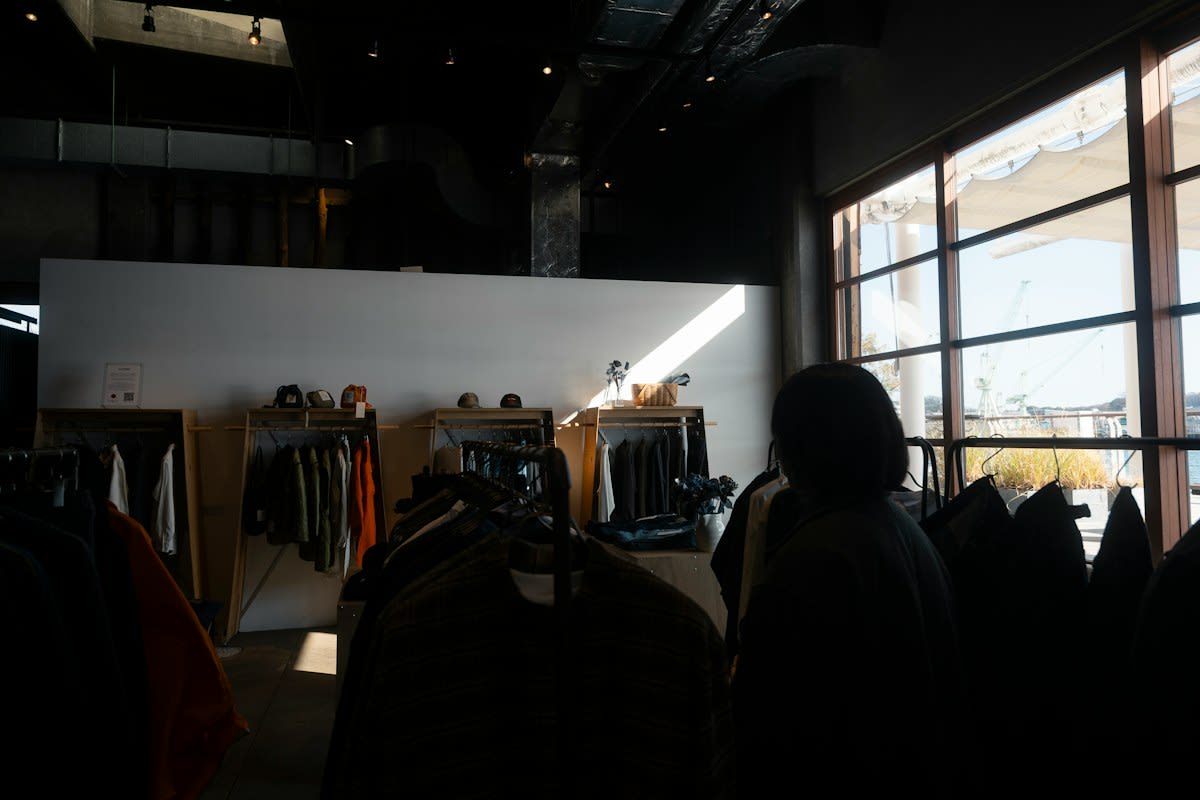
The logo died. Not with a bang, but with a beige cashmere sweater. Walk through the luxury clusters of Gangnam in Seoul or the hidden boutiques of Aoyama in Tokyo and you will see it. The oversized monograms of 2021 have vanished. In their place is a curated void. Wealthy buyers are opting for garments that, to the untrained eye, look like they were pulled from a charity bin or a generic warehouse. This is not a fashion faux pas. It is a calculated strategic retreat.
The Signal Flip: From Overt to Stealth
For a decade, luxury was a loud game of visibility. If you had the money, you wore the brand as a billboard. But the democratization of luxury—driven by entry-level accessories and the rise of the 'aspirational' consumer—ruined the signal. When a mid-level manager can finance a logo belt, the belt ceases to be a marker of the elite. The ultra-high-net-worth individuals (UHNWIs) reacted by moving the goalposts. They shifted from 'conspicuous consumption' to 'inconspicuous consumption' (Source: Business of Fashion, 2023).
| Marker | Overt Luxury (2021-2022) | Stealth Luxury (2023-2024) |
|---|---|---|
| Branding | Large Monograms/Logos | Hidden or Non-existent |
| Material | Shiny/Synthetic Blends | High-Grade Natural Fibers (Vicuna, Loro Piana Cashmere) |
| Price Signal | Immediate/Visible | Coded/Invisible to Outsiders |
| Psychology | Validation via Recognition | Validation via Peer-to-Peer Recognition |
The delta between last year and today is stark. In 2022, the market was still riding the 'revenge spending' wave of the pandemic, where loud colors and heavy branding dominated. By early 2024, the trend shifted toward 'Quiet Luxury.' This isn't just about minimalism. It is about creating a class barrier based on knowledge rather than just capital. If you recognize the specific drape of a $3,000 The Row trouser without a logo, you belong to the club. If you don't, you are simply looking at a pair of oversized pants (Source: Vogue Business, 2023).
The Economics of Distressing
Then there is the more aggressive side of this trend: the 'distressed' look. Balenciaga pioneered the sale of pre-destroyed sneakers and worn-out hoodies for thousands of dollars. This is the ultimate power move. By wearing clothes that look like poverty, the wearer signals that they are so wealthy that they can afford to mock the very concept of financial struggle. It is a form of 'costume poverty' that serves as a high-status signal of irony (Source: McKinsey & Company, 2023).
"The move toward distressed luxury is the final stage of signaling. It is no longer about showing what you have, but showing that you are entirely untethered from the need to appear successful. It is the luxury of indifference."— Marcus Thorne, Senior Trend Analyst at Global Luxe Intelligence
This trend creates a dangerous second-order consequence: the erasure of visual distinctions between the ultra-wealthy and the working class, provided the viewer lacks the 'code.' In hubs like Dubai's DIFC, you will find billionaires in plain white tees and sandals. To a tourist, they look like they are on a budget. To a peer, the cut of the cotton and the specific brand of the sandal scream six-figure price tags. The barrier is no longer the price tag, but the education required to spot the quality.
Ground-Level Friction
On the shop floor, this shift is causing chaos. In flagship stores in Ginza, sales associates are fighting a war of perception. They are tasked with selling 'invisible' luxury to clients who are used to the dopamine hit of a visible logo. There is a real tension between the brand's desire to move toward stealth wealth and the customer's desire for social validation. Junior staff often struggle to justify a $2,000 price tag for a garment that looks identical to a mass-market version.
Internal political infighting at major conglomerates like LVMH and Kering reflects this friction. Marketing teams are split. One camp pushes for the 'Quiet Luxury' pivot to attract UHNWIs who are fleeing the 'nouveau riche' aesthetic. The other camp fears losing the aspirational middle class, who provide the bulk of the volume through entry-level logo goods. This tug-of-war is resulting in fragmented collections where a brand tries to be both 'stealth' and 'loud' simultaneously, often failing at both.
Third-Order Consequences: The Resale Collapse
The shift to stealth luxury is gutting the secondary market. Resale platforms like The RealReal and Vestiaire Collective rely on 'logo recognition' to drive quick flips. A Louis Vuitton bag with a visible monogram is easy to authenticate and easy to sell. A plain beige cashmere sweater from an obscure, ultra-high-end label is a nightmare for resellers. Without the logo, the perceived value drops for the general public, even if the intrinsic quality remains.
- Devaluation of 'Logo-Core' assets in the resale market.
- Increased reliance on third-party authentication for 'quiet' brands.
- A shift in investment toward 'archival' pieces over 'trend' pieces.
- The rise of 'stealth' counterfeiters who mimic fabric quality rather than just logos.
We are seeing a return to the 'Old Money' playbook. The goal is no longer to be noticed by everyone, but to be recognized by the right people. This creates a closed loop of consumption. The ultra-wealthy are essentially building a private language of dress that excludes the very people who are trying the hardest to look wealthy. The result is a luxury landscape that looks increasingly like poverty to the outsider, while remaining an exclusive club for the insider.
Search Interest Growth: 'Quiet Luxury' vs 'Logomania'
Executive Insight
+18.4%
YTD Growth
Fact-Check & Accuracy Note
The claims regarding the shift in UHNWI behavior are based on consumer sentiment reports from 2023 and 2024. While the 'Quiet Luxury' trend is dominant in high-fashion circles, the 'Logomania' segment still holds significant market share in emerging economies where visibility remains a primary driver of social mobility. The 'distressed' trend is specific to avant-garde luxury houses and is not a universal standard across all luxury tiers.