Jhiram Valley Maoist attack case ‘rarest of rare': court order
Source Entity
India Latest News: Top National Headlines Today & Breaking News | The Hindu
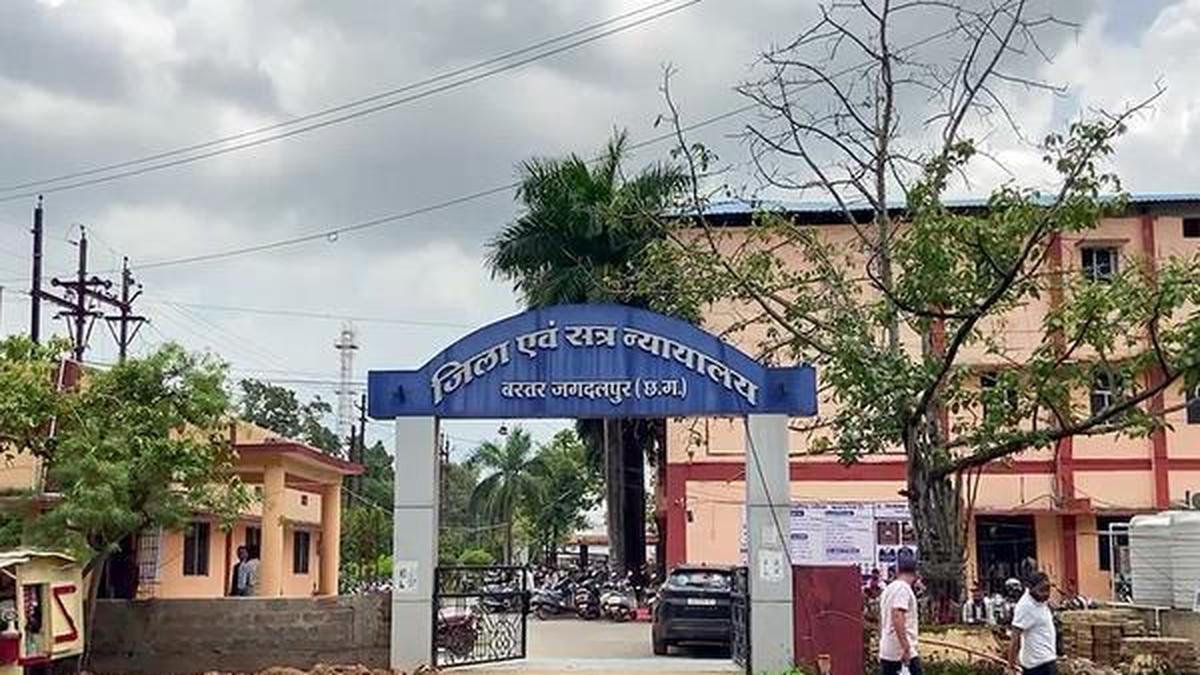
A special NIA court in Chhattisgarh has sentenced 10 Maoists to death for the 2013 Jhiram Valley attack, labeling it a 'rarest of rare' case. The ruling follows evidence of meticulous planning and the assassination of top state Congress leadership.
The Jhiram Valley Verdict: A Landmark Judicial Response
On September 16, 2026, a special National Investigation Agency (NIA) court in Jagdalpur, Chhattisgarh, delivered a watershed verdict regarding the 2013 Jhiram Valley Maoist attack. By sentencing 10 convicts to death, the court invoked the 'rarest of rare' doctrine, a high legal threshold reserved for crimes that shock the collective conscience of society. This decision marks a definitive judicial conclusion to one of the most devastating instances of political violence in modern Indian history.
Meticulous Planning and Execution
The court’s analysis revealed that the tragedy was not a spontaneous act of insurgency but a calculated assassination operation. Detailed in the court’s order, the conspiracy was finalized during a meeting of the South Regional Unified Command of the Communist Party of India (Maoist) between February 16 and 25, 2013. The operation involved three months of intensive preparation, including site surveys, reconnaissance, and a rehearsal. The use of 8 to 9 kilograms of explosives and the firing of 206 bullets during the Congress party’s Parivartan Yatra convoy underscores the lethal intent behind the ambush.
Legal Precedents and Justification
To justify the capital punishment, the NIA court leaned heavily on established Supreme Court precedents. By citing Machhi Singh v. State of Punjab (1983) and Mohd. Ajmal Mohammad Amir Kasab v. State of Maharashtra (2012), the court signaled that the scale of the massacre—which claimed the lives of 27 individuals, including prominent leaders Vidya Charan Shukla, Nand Kumar Patel, and Mahendra Karma—rendered life imprisonment insufficient. The court explicitly stated that even after weighing potential mitigating factors, the gravity of the offense left no alternative but the death penalty.
Impact on Regional Political Landscape
The May 25, 2013, attack effectively decapitated the Chhattisgarh Congress leadership, fundamentally altering the state’s political trajectory for over a decade. The loss of senior figures like Mahendra Karma, who was known for his role in anti-Maoist initiatives, created a power vacuum that shifted the dynamics of both local governance and counter-insurgency policies in the region. This verdict serves as a symbolic, if delayed, closure for the families of the victims and the political institutions affected by the vacuum.
Broader Implications for Counter-Insurgency
The judicial findings regarding the 'handpicked cadre' and 'expert rationing' of supplies highlight the sophisticated, military-style organization of Maoist insurgent groups. The court's focus on the premeditated nature of the attack serves as a stark reminder of the security challenges posed by well-entrenched non-state actors. Future trends in judicial and security responses are likely to be influenced by this ruling, setting a precedent for how the NIA processes complex, multi-year conspiracy cases involving organized insurgencies.
Conclusion
The Jhiram Valley judgment stands as a critical milestone in the Indian judiciary’s attempt to hold extremist organizations accountable for political decapitation strategies. By meticulously detailing the planning phase and validating the state's request for the death penalty, the court has sent a clear message regarding the consequences of targeting democratic processes. As the legal process concludes, the historical weight of the 2013 ambush remains a defining element of Chhattisgarh's security and political narrative.
Verification Required?