Nvidia announces native GPU programming in Rust
Source Entity
Hacker News
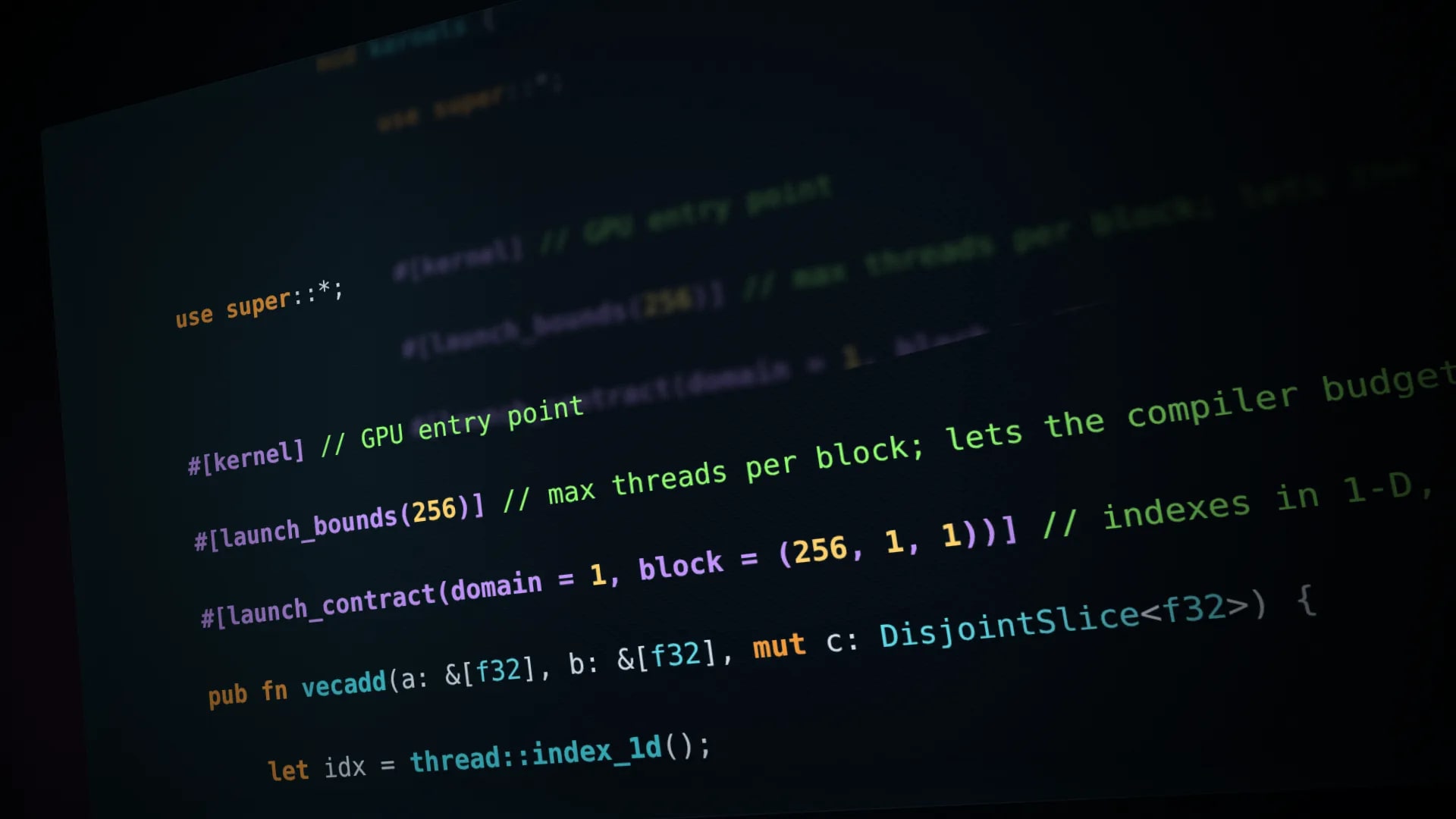
Nvidia is expanding its software ecosystem by introducing native GPU programming support for Rust. This strategic shift aims to integrate Rust's memory safety and performance benefits directly into GPU kernel development by 2027.
Nvidia Embraces Rust for Native GPU Programming
In a significant evolution for the semiconductor and software landscape, NVIDIA announced in September 2026 its commitment to fostering native GPU programming within the Rust ecosystem. While NVIDIA’s CUDA C++ and CUDA Python toolchains have long served as the bedrock of enterprise-grade AI and high-performance computing, the company is now actively maturing its CUDA Rust capabilities. This initiative marks a pivot toward integrating Rust’s unique safety features directly into the hardware-software interface, with plans for continued expansion throughout 2027 and beyond.
The Shift Toward Memory-Safe Infrastructure
The modern AI systems layer—comprising inference engines, serving infrastructure, and agent runtimes—is undergoing a rapid transformation. As these systems grow in complexity, developers are increasingly turning to Rust to mitigate memory-related vulnerabilities. By catching entire classes of bugs at compile time without sacrificing the raw performance required for deep learning workloads, Rust has become the preferred language for critical systems-level architecture. NVIDIA’s adoption of Rust is a strategic response to this industry-wide shift, ensuring their software stack remains robust against the modern threat landscape.
Provenance and Current Implementations
NVIDIA is not new to the Rust ecosystem; the company has already demonstrated its commitment through several key projects. The Nova Linux driver is written in Rust, and the NVIDIA Dynamo platform is built upon a Rust core. Additionally, NVTX (NVIDIA Tools Extension) already includes Rust bindings, signaling that the transition to Rust is a foundational element of their long-term technical strategy. These existing implementations provide a stable base upon which the new native GPU kernel support will be constructed.
Overcoming the Kernel Development Bottleneck
Despite the proliferation of Rust in drivers and middleware, the GPU kernel has remained a notable holdout. Previously, while developers could launch kernels from a Rust-based environment, the kernels themselves required implementation in C++ or other languages. By enabling native GPU programming in Rust, NVIDIA aims to eliminate this architectural fragmentation. This will allow developers to maintain a unified language across the entire stack, simplifying code maintenance and reducing the cognitive load associated with multi-language projects.
Future Implications and Industry Trends
Looking toward 2027, the maturation of CUDA Rust will likely accelerate the development of more complex and reliable AI agents and inference engines. As the AI industry continues to churn through new model architectures and optimization techniques, the ability to write high-performance kernels in a memory-safe language will become a competitive advantage. This move by NVIDIA not only aligns with broader trends in systems programming but also sets a new standard for performance-critical hardware development, potentially encouraging other semiconductor giants to follow suit in prioritizing Rust support.