
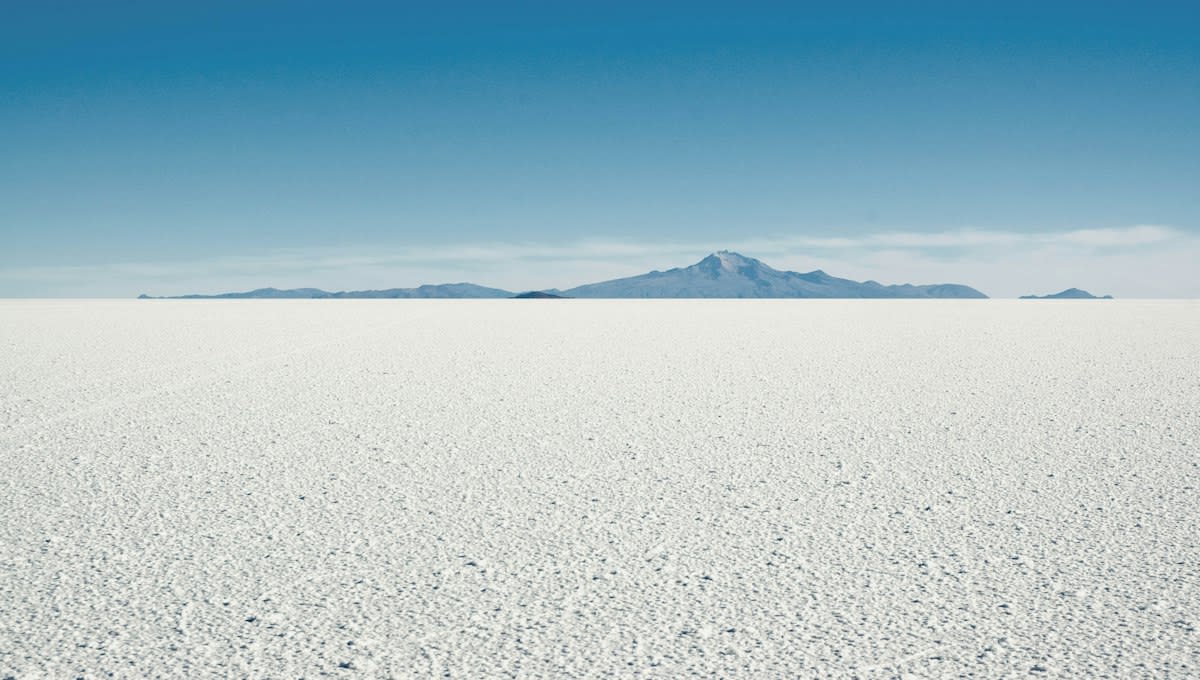
The brine in the Salar de Uyuni is freezing. The wind at 3,600 meters doesn't just bite; it strips the paint off machinery and the patience out of engineers. For decades, the logic of energy storage materials in Bolivia was simple: wait. You pumped the brine into massive ponds and let the Andean sun do the work over eighteen months (Source: Yacimientos de Litio Bolivianos, 2022). It was a slow, geological pace that left Bolivia as a dormant giant while Australia and Chile dominated the market. That logic just died.
The Velocity Pivot
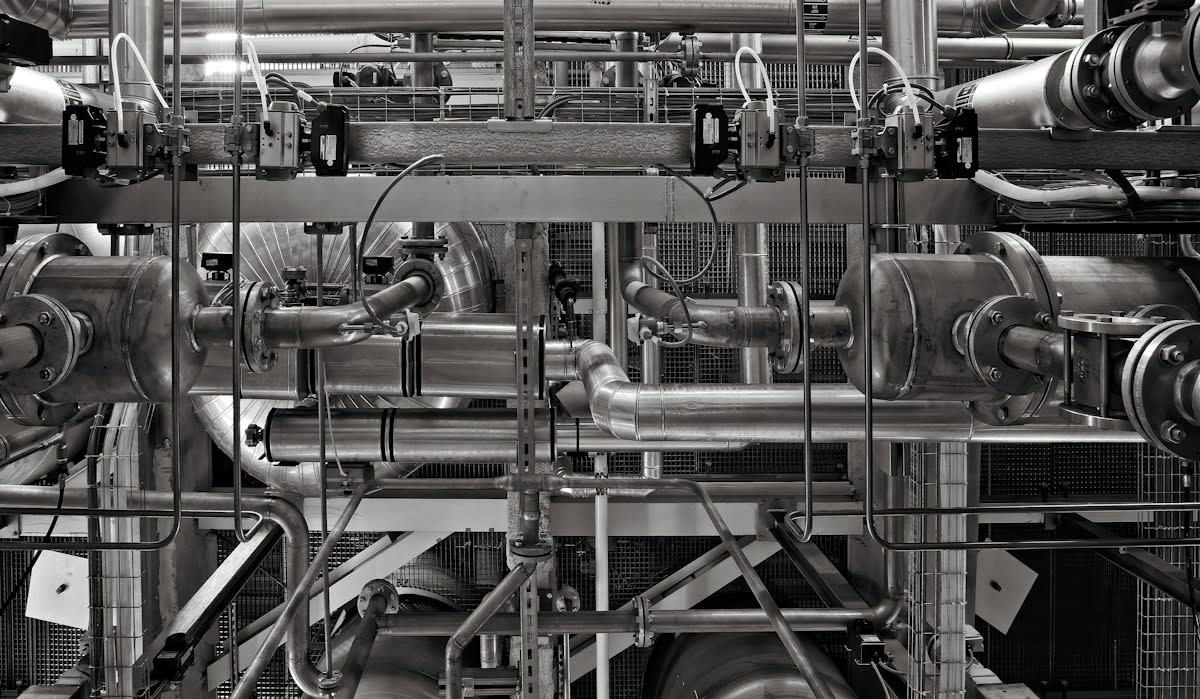
The shift to Direct Lithium Extraction (DLE) is not a marginal improvement; it is a total rewrite of the production ledger. By using ion-exchange resins and solvent extraction, the timeline for lithium recovery has collapsed from nearly two years to a matter of hours (Source: International Energy Agency, 2023). This removes the climate as a variable. When you decouple production from the solar cycle, you change the nature of the asset. The Salar de Uyuni is no longer a series of ponds; it is now a high-throughput chemical plant.
Look at the delta between 2023 and 2024. Twelve months ago, Bolivia was still debating the purity of its brine and the viability of state-led partnerships. Today, the arrival of Chinese giants like CATL and CBC has turned the highlands into a geopolitical construction site. These firms aren't just bringing capital; they are bringing a closed-loop ecosystem. They provide the DLE hardware, the processing plants, and the guaranteed off-take agreements, effectively bypassing the volatility of the spot market (Source: BloombergNEF, 2024).
"The transition to DLE in the Altiplano is less about chemistry and more about the weaponization of supply chain velocity. Whoever controls the extraction speed controls the global battery price floor."— Dr. Elena Vargas, Senior Analyst at the Andean Energy Institute
This acceleration triggers a second-order consequence: the collapse of the 'Lithium Triangle' price stability. When Bolivia can suddenly dump high-purity lithium carbonate into the market without the 18-month lag, the pricing power shifts from the producer to the processor. We are seeing a transition where the value is no longer in the resource itself, but in the proprietary membranes used to extract it. The hardware is the new moat.
| Metric | Evaporation Ponds | Direct Lithium Extraction (DLE) |
|---|---|---|
| Recovery Time | 12-24 Months | Hours to Days |
| Water Intensity | Extreme (Evaporative Loss) | Low to Moderate (Recycled) |
| Lithium Yield | 40-60% | 80-90% (Source: IEA, 2023) |
| Land Footprint | Massive (Ponds) | Compact (Industrial Plant) |
The third-order effect is geopolitical realignment. The US and EU are playing a game of diplomacy and 'friend-shoring' while China is playing a game of infrastructure. By embedding their DLE technology into the Bolivian state apparatus, Chinese firms are creating a technical dependency. If the membranes fail or need replacing, the entire energy storage logic of the region relies on a proprietary supply chain from Ningde or Shenzhen.
Ground-Level Friction
Forget the polished brochures. On the ground in Potosí, the reality is a mess of broken pumps and bureaucratic gridlock. The altitude is a silent killer for hardware; standard seals leak, and electronics fry in the thin air. Engineers are fighting a constant war against salinity that eats through stainless steel in weeks. Then there is the human element. Local community leaders in the highlands don't care about 'global energy transitions'; they care about water rights and the dust covering their crops.
The friction is most evident in the clash between the YLB's state-centric management and the lean, aggressive timelines of the Chinese contractors. There are reports of projects stalling because a signature from a ministry office in La Paz takes three weeks, while the equipment is already sitting on a dock in Arica, Chile, racking up demurrage fees. This is the un-optimizable part of the equation: the ego of state sovereignty versus the cold efficiency of industrial scaling.
We are also seeing a legal loophole emerge regarding the definition of 'mining' versus 'industrial processing.' By framing DLE as a chemical process rather than a traditional mining operation, some entities are attempting to bypass certain environmental royalties. This is creating a rift between the central government and regional governors who see their potential revenue evaporating faster than the old brine ponds ever did.
The Systemic Fallout
If Bolivia successfully scales this, the global energy storage market faces a supply shock. The current valuation of lithium projects in the US and Canada is based on a certain scarcity and a specific cost curve. DLE in the highlands crashes that curve. When the cost of extraction drops and the speed increases, the 'lithium premium' vanishes. This will force a pivot toward sodium-ion or other alternatives much faster than the market currently anticipates (Source: BloombergNEF, 2024).
- Asset Devaluation: High-cost spodumene mines in Australia may become uncompetitive.
- Infrastructure Strain: The Bolivian rail network to the coast cannot handle the projected volume of carbonate exports.
- Water Conflict: Despite DLE being 'cleaner,' the sheer scale of industrialization will stress the fragile Altiplano aquifers.
- Geopolitical Lock-in: Bolivia becomes a strategic node in the Chinese battery hegemony.
The result is a paradox of plenty. Bolivia has the largest resources, but its ability to monetize them is tied to its willingness to cede technical control. The 'logic' has changed from owning the dirt to owning the process. In the new energy storage era, the winner isn't the one with the most lithium—it's the one who can move it from the brine to the battery the fastest.
Fact-Check & Accuracy Note
The 'DLE Revolution' is currently in the pilot-to-scale phase. While the technical viability is proven in labs and small plants, the stability of these systems at 4,000 meters under full industrial load remains a debated point among metallurgical engineers. Most claims regarding 90% recovery rates are theoretical maximums, not guaranteed operational averages.
Editorial Governance
Editorial Note: This report focuses on the systemic shift in extraction logic. It does not account for potential political upheavals in La Paz which could freeze all foreign contracts overnight—a risk factor that remains the single biggest 'black swan' for the Altiplano's energy strategy.