How OpenAI Used Its Own LLMs to Design Its Jalapeño Chip
Source Entity
Hacker News
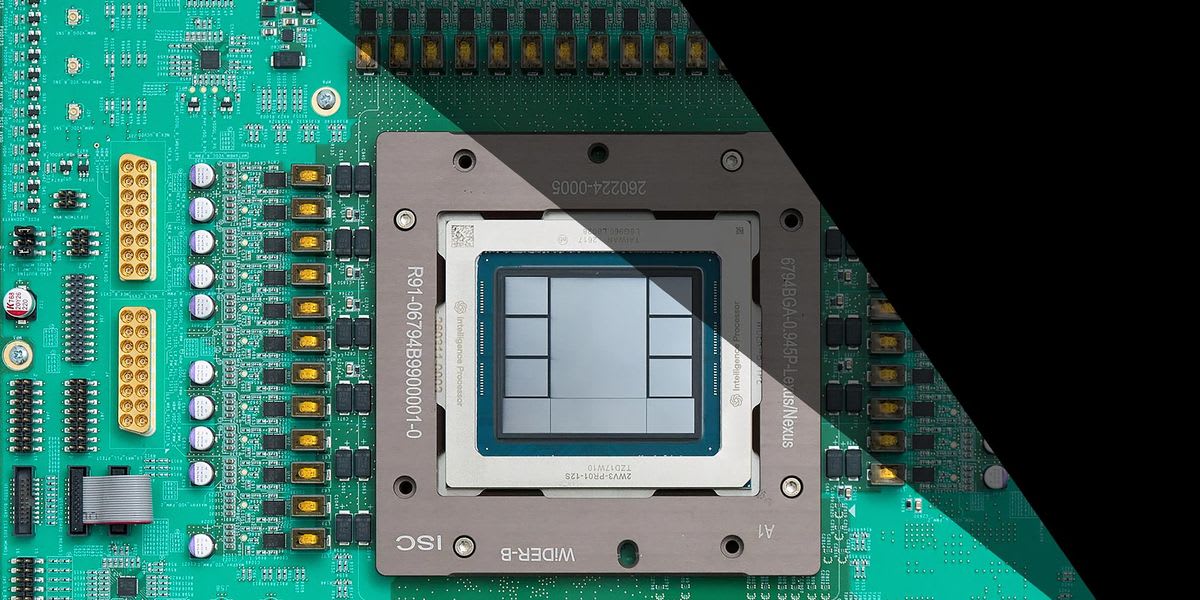
OpenAI has unveiled its debut AI accelerator chip, Jalapeño, designed using its own LLMs to optimize compute performance. The chip promises significant improvements in latency and power efficiency compared to existing hardware like the Nvidia GB300.
The Dawn of OpenAI’s Silicon Era
On August 25, OpenAI officially entered the hardware arena with the unveiling of Jalapeño, its first proprietary AI accelerator chip. This move marks a pivotal shift in the company's trajectory, transitioning from a pure software and model-research entity into a verticalized powerhouse capable of designing its own physical infrastructure. By moving beyond reliance on third-party hardware, OpenAI aims to address the specific computational bottlenecks inherent in large-scale machine learning.
Technical Specifications and Performance Metrics
The specifications for Jalapeño are formidable, boasting 13.4 petaflops of 4-bit compute and 232 gigabytes of high-bandwidth memory. The chip achieves a data transfer rate of 15.4 terabytes per second, a metric that highlights the company's focus on minimizing memory-access latency. These raw figures suggest a hardware architecture purpose-built for the massive, iterative processing requirements of transformer-based models.
Challenging the Industry Standard
Perhaps the most significant claim surrounding Jalapeño is its performance relative to the Nvidia GB300. OpenAI reports that its new chip can reduce end-to-end latency by up to 3.6 times while simultaneously lowering power consumption. For a company that operates vast inference fleets, such a reduction in latency—the time between a user's prompt and the generation of the final token—could be transformative for real-time user experiences.
The Role of AI in Hardware Design
The design process behind Jalapeño offers a glimpse into the future of hardware engineering. OpenAI utilized its own Large Language Models (LLMs) to accelerate the design cycle, effectively using AI to build the foundations of future AI. This recursive design methodology suggests that we are entering an era where hardware development cycles may shorten significantly, as human engineers are increasingly augmented by AI systems capable of optimizing physical layouts and logic gates.
Broader Implications for the Industry
While these benchmarks are impressive, the industry remains cautious. Real-world performance often diverges from controlled laboratory benchmarks once hardware is integrated into complex, diverse production environments. Whether Jalapeño can maintain these efficiency gains across OpenAI’s entire inference fleet will be the true test of its market viability and its potential to disrupt the current hardware status quo.
Future Outlook
If Jalapeño proves successful, it could fundamentally alter the competitive landscape for AI infrastructure. By decoupling its roadmap from external supply chains and optimizing hardware specifically for its own model architectures, OpenAI is positioning itself to gain greater control over both cost and performance. This development signals a broader industry trend where top-tier AI firms are increasingly becoming silicon designers, prioritizing custom efficiency over general-purpose computing.