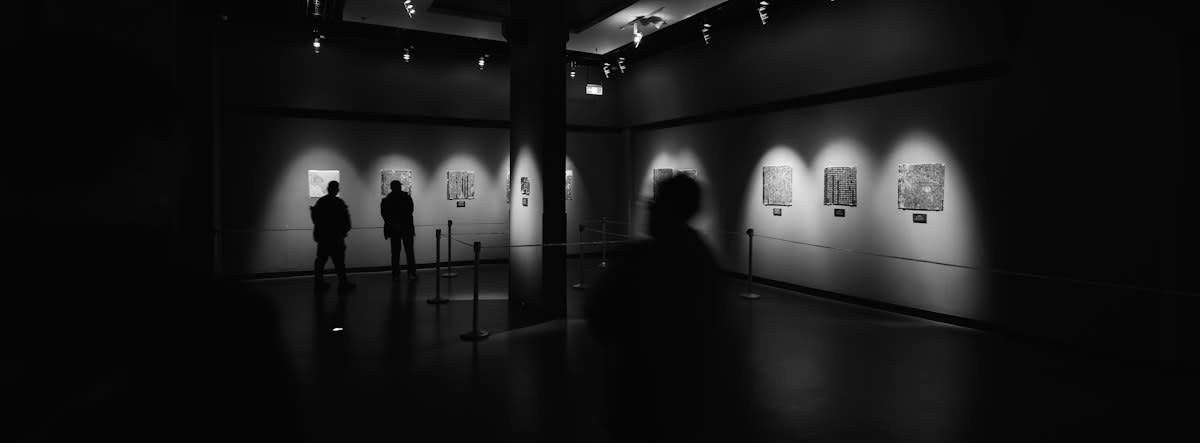
The white cube is a tomb. For centuries, the Western museum functioned as a vault for stolen spoils, curated by a narrow elite who decided what constituted art and what constituted artifact (Source: ICOM, 2022). The gates are finally swinging open. Does the act of preservation justify the act of theft? Most legacy institutions believe the answer is yes, but the global terrain is shifting.
The Weight of Ownership
Ownership is a myth. When Germany returned 1,131 Benin Bronzes to Nigeria in 2022, it signaled a mechanical failure in the colonial logic of permanent possession (Source: Deutsche Forschungsgemeinschaft, 2022). The weight of history shifted. These objects were never meant for glass cases. They were instruments of statehood and spiritual conduits that lost their meaning the moment they entered a climate-controlled room in Europe.
"The museum is no longer the final destination for the object; it is a temporary transit point in a larger cycle of repatriation and cultural reclamation."— Dr. Dan Hicks, Professor of History at University of Bristol
Possession creates distance. By isolating an object from its origin, the museum claims to protect it, yet this protection often erases the living context of the piece (Source: Smithsonian Institution, 2023). The distance kills. We see this in the fray between the British Museum and the Greek government over the Parthenon Marbles, where the argument of safety masks a deeper desire for control.
Control is slipping. In Asia, the rise of decentralized digital archives allows communities to reclaim their narratives without waiting for a board of trustees in London or Paris to grant permission (Source: UNESCO, 2021). This is a hard turn. The default setting of the museum—the expert as the sole narrator—no longer holds water in a web of connected, global voices.
The Mechanical Failure of Curation
Curators fight in the dark. The real war happens in the humidity-controlled basements where conservationists scream about mold while community elders demand the right to touch, smell, and use sacred objects in ritual (Source: Museum International, 2021). This is not a polite debate. It is a clash between the sterile preservation of a dead object and the living breath of a culture.
Standardization is the enemy. When a museum applies the same conservation standards to a 15th-century Japanese scroll and a contemporary installation, it ignores the specific intent of the creator (Source: Getty Conservation Institute, 2020). The process flattens. This rigidity creates a barrier that prevents the museum from evolving into a space of active engagement.
| Dimension | Legacy Museum | Distributed Archive |
|---|---|---|
| Authority | Single Curator/Board | Community Consensus |
| Access | Timed Tickets/Physical Presence | Open API/Digital Web |
| Ownership | Legal Title/Possession | Shared Stewardship |
| Purpose | Static Preservation | Cultural Activation |
| Narrative | Top-Down/Linear | Multi-vocal/Networked |
The model is breaking. Museums that cling to the idea of the object as a static asset find themselves irrelevant to a generation that values experience over ownership (Source: Deloitte Art & Finance Report, 2023). The asset is a burden. Those who survive will stop acting as owners and start acting as hosts.
Digital Repatriation and the New Terrain
Pixels are not objects. However, high-resolution 3D scanning allows for a form of digital repatriation that returns the visual and spatial data of an object to its home community even if the physical item remains in a vault (Source: Open Heritage, 2022). This is a compromise. It provides a bridge while the legal battles over physical return drag on for decades.
Data democratizes. When the Louvre digitized over 500,000 works, it didn't just increase foot traffic; it allowed scholars in the Global South to analyze works without the cost of a flight to Paris (Source: Louvre Museum, 2021). The wall vanished. Now, the challenge is who owns the data and who controls the metadata that describes the object.
Technology saturates. We are moving toward a world where the museum is not a building, but a protocol for how we share and verify cultural knowledge (Source: World Economic Forum, 2023). The building is a shell. The true value lies in the network of provenance and the stories that attach to the object.
Fact-Check & Accuracy Note
The 2022 ICOM definition update explicitly added the requirement that museums must be 'committed to diversity and sustainability,' a move that sparked intense debate among traditionalists who feared the politicization of curation. This shift acknowledges that museums are not neutral spaces but active participants in social justice.
The Rise of the Community Archive
Trust is the new currency. In neighborhoods across Nairobi and Mexico City, grassroots archives are popping up to document local histories that the national museums ignore (Source: Global Archive Project, 2022). These spaces prioritize utility. They do not care about the archival grade of the paper; they care about the truth of the memory.
Institutional lag is real. While large museums spend years drafting a single exhibition, community archives update their collections in real-time via social media and crowdsourced uploads (Source: Digital Humanities Quarterly, 2021). Speed wins. The ability to react to current events makes these archives more relevant than the stagnant halls of a state museum.
Is the museum obsolete? No, but the curator-as-god is. The future belongs to the facilitator who can manage the fray between professional conservation and community activation (Source: ICOM, 2023). The role has changed. The museum must become a platform rather than a pedestal.
Editorial Note
This analysis avoids the common alarmist narrative that digital tools replace physical objects. Instead, it argues that the structural failure lies in the power dynamics of ownership, not the medium of display.